All About Reading Review: Is It the Best Homeschool Reading Curriculum for Struggling Readers?
When people ask me for the best homeschool reading curriculum for struggling readers, there's one program that comes up again and again: All About Reading. After years of reviewing homeschool curriculum, talking with hundreds of homeschool parents, and helping families choose reading programs, I've heard more success stories about All About Reading than almost any other reading curriculum on the market.
That's a big statement and it gets my attention.
Partly because my own son Luke struggled to learn to read. He has dyslexia, and there was a season when reading lessons often ended in frustration, tears, and both of us wondering if we'd ever get there. Today he's nearly nine and happily reads a few chapters of the Bible every day, but the journey to get there wasn't always easy.
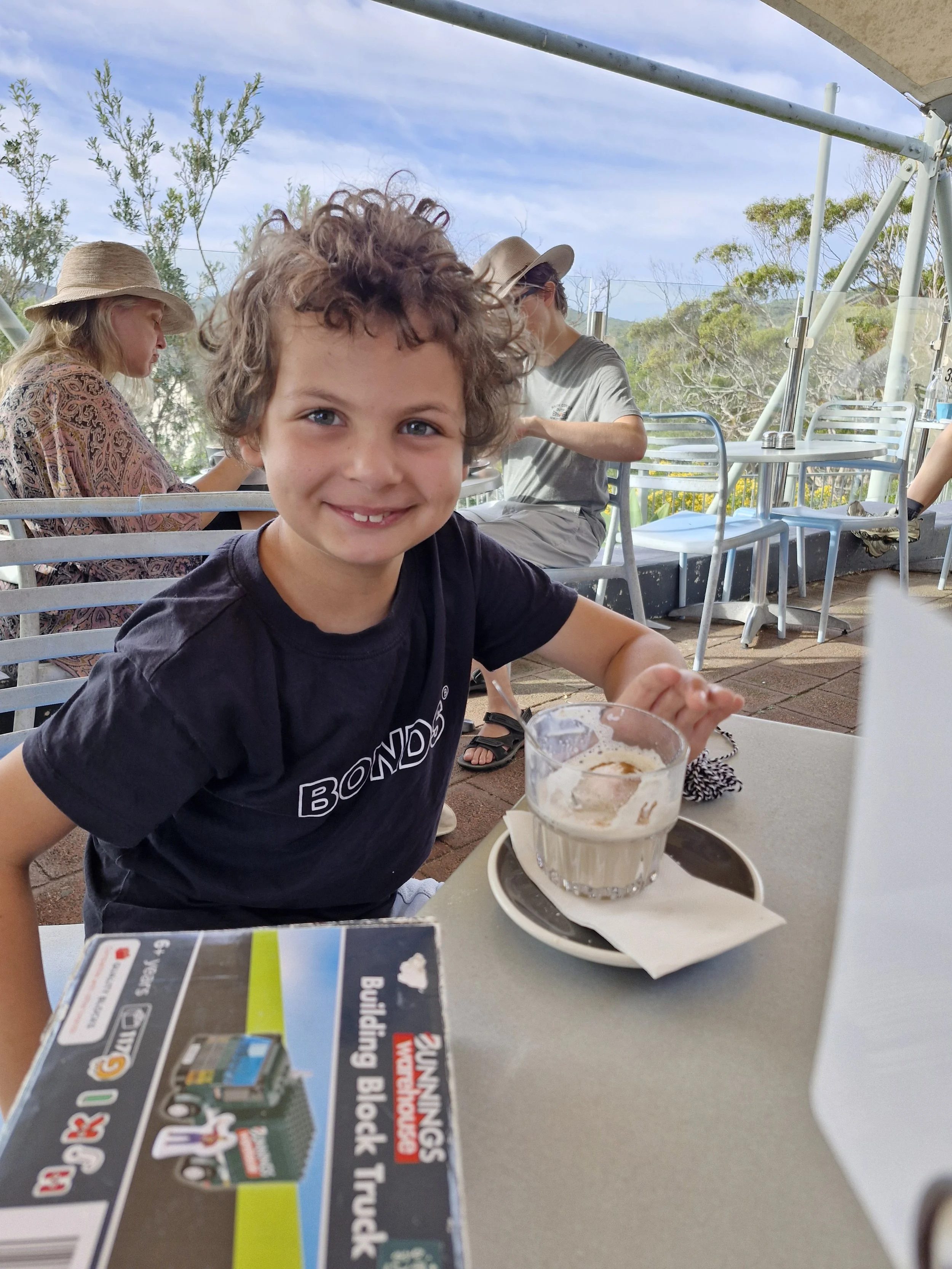
Luke is my highly intelligent, gorgeously dyslexic, struggling reader (and writer!).
So when homeschool moms consistently tell me that a reading curriculum helped their struggling reader finally "click" with reading, I listen.
And they say this about All About Reading.
But what makes this homeschool reading program different?
In short, it's a multisensory, mastery-based phonics program designed to teach reading step-by-step. Rather than expecting children to pick up reading naturally through exposure to books, All About Reading explicitly teaches the skills children need to become confident readers.
It's particularly popular among homeschool families teaching frustrated readers, reluctant readers, and children with dyslexia with a hands-on approach.
And while we didn't personally use All About Reading as our main reading program (I'll tell you why later), I own the curriculum, have spent years researching it, and have talked with countless families who have used it successfully. In fact, I've heard so many positive reports over the years that I’ve found it impossible to ignore them.
So is All About Reading worth the hype?
For many families, yes.
But there are also a few things you should know before investing in the program.
If you're wondering whether All About Reading is worth it, whether it's good for dyslexia, whether it's better than Abeka or BJU Press, or whether it's the best homeschool reading curriculum available today, this review will help you decide.
Also, before we start, something that may save you a lot of time: I created a free comparison spreadsheet of some of the most popular homeschool Language Arts curriculum options, including All About Reading, Abeka, BJU Press, and several others. Grab the free resource here ⬅️

You can see how fun All About Reading looks! For struggling readers, it reduces the overwhelm and makes reading fun and hands-on, so they're learning in a multi-sensory way.
Affiliate disclosure: Some links in this article may earn us enough to keep the homeschool coffee flowing. Thank you for supporting our family at no extra cost to you!
What Is All About Reading?
All About Reading is a complete phonics-based reading curriculum created by Marie Rippel and published by All About Learning Press.
The program is built around the idea that reading should be taught systematically and explicitly.
Instead of asking children to memorize hundreds of sight words, students learn the phonograms, rules, and decoding skills they need to read unfamiliar words independently.
Lessons include:
Explicit phonics instruction
Reading practice
Fluency activities
Hands-on review games
Multisensory learning activities
Decodable readers
One thing parents often notice immediately is how interactive the program is. Children use letter tiles, word cards, readers, and games rather than simply completing workbook pages.
For some children, that hands-on approach is exactly what finally makes reading click.

AAR couldn't be easier to teach. It shows you what to say and do.
What Is the Orton-Gillingham Approach?
One reason All About Reading is so popular among struggling readers is that it is based on the Orton-Gillingham approach.
If you've ever found yourself asking, "What is Orton-Gillingham?" or "What is the Orton-Gillingham method?", you're not alone. The term gets mentioned constantly in discussions about dyslexia and reading intervention.
Put simply, the Orton-Gillingham approach is a way of teaching reading that is explicit, systematic, sequential, and multisensory. Rather than expecting children to discover reading patterns on their own, each phonics rule is taught directly, practised repeatedly, and reviewed until it becomes automatic.
That's why All About Reading uses tools like letter tiles, word cards, hands-on activities, and decodable readers.
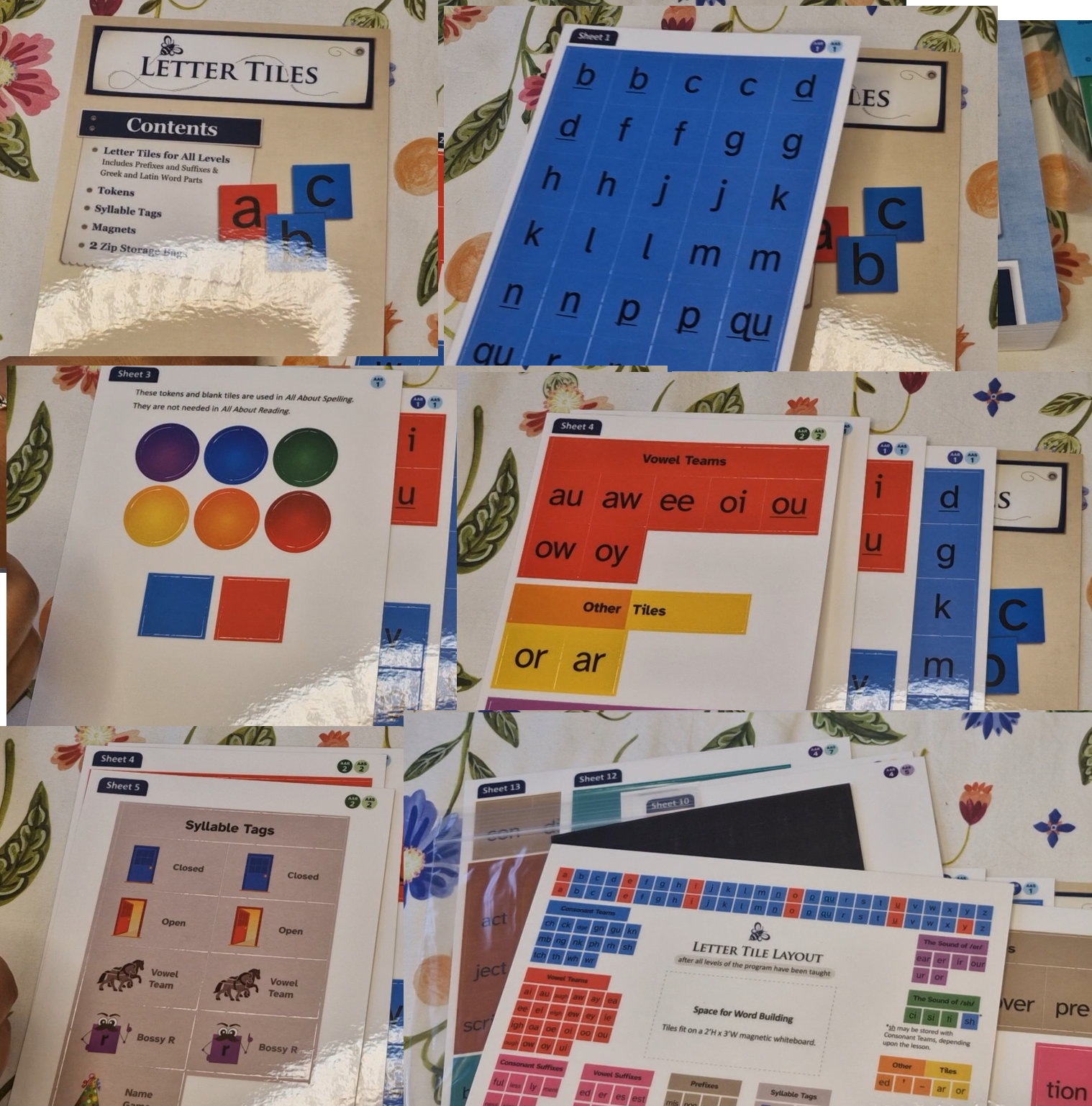
This is the letter tile pack that came with my All About Reading program.
Children aren't just seeing words on a page.
They're hearing sounds, saying them aloud, building words, and engaging multiple senses at once.
The Orton-Gillingham method is widely recommended for children with dyslexia because it breaks reading into small, manageable steps and provides far more review than many traditional reading programs.
However, many homeschool families find that the approach works well for all children, not just those with learning difficulties.
That's one of the biggest reasons All About Reading has become such a popular choice among homeschooling families looking for a structured reading curriculum.
Why So Many Homeschool Families Love It
The biggest strength of All About Reading is that it was designed for children who aren't learning to read easily.
Many reading programs work beautifully for naturally strong readers. But children who struggle often need more review, more repetition, and more direct instruction.
That's where All About Reading shines.
The curriculum breaks reading into small, manageable steps and doesn't rush children forward before they are ready. Mastery matters more than keeping up with a grade level.
Over the years, I've seen homeschool groups fill with comments from parents saying things like:
"This is the program that finally worked."
That's not because it's magic.
It's because the program is extremely intentional about teaching reading skills systematically.
It's also one of the most commonly recommended programs among homeschooling families teaching children with dyslexia.
A Quick Word About Dyslexia
Reading struggles are one reason All About Reading initially caught my attention.
My son has dyslexia, and reading was one of the most difficult parts of our homeschool journey for several years.
Although we ultimately used a different phonics program, that experience gave me a strong interest in reading instruction and why some programs work better for struggling readers than others.
The more I researched All About Reading, the more I understood why so many parents recommend it.
The program's structured, sequential, multisensory approach aligns closely with many of the teaching methods commonly recommended for children with dyslexia.
While no curriculum works for every child, All About Reading has built a very strong reputation in this area.

Can you teach your struggling reader using this teacher's manual? I think you could as you can see!
What I Like About All About Reading
1. It Doesn't Assume Reading Will Happen Naturally
One thing I appreciate about All About Reading is that it doesn't leave important reading skills to chance.
Children are taught exactly what they need to know.
That sounds obvious, but many programs assume students will absorb certain concepts through exposure and practice. Some children do.
Many struggling readers don't.
2. The Readers Are Designed for Success
The included readers are carefully controlled so children only encounter words containing phonics concepts they've already learned.
That means children spend less time guessing and more time successfully decoding.
Success builds confidence.
Confidence encourages more reading.
And more reading creates stronger readers.
3. It's Easy to Teach
Parents don't need a teaching degree to use this program.
Lessons are clearly scripted and easy to follow only taking 20 minutes a day!
That's especially helpful if you're teaching your first child to read and don't feel particularly confident teaching phonics.
4. It Works Well Across Multiple Ages
Because the program is mastery-based rather than strictly grade-level based, children can begin wherever they need to begin.
That's helpful for both advanced learners and struggling readers.
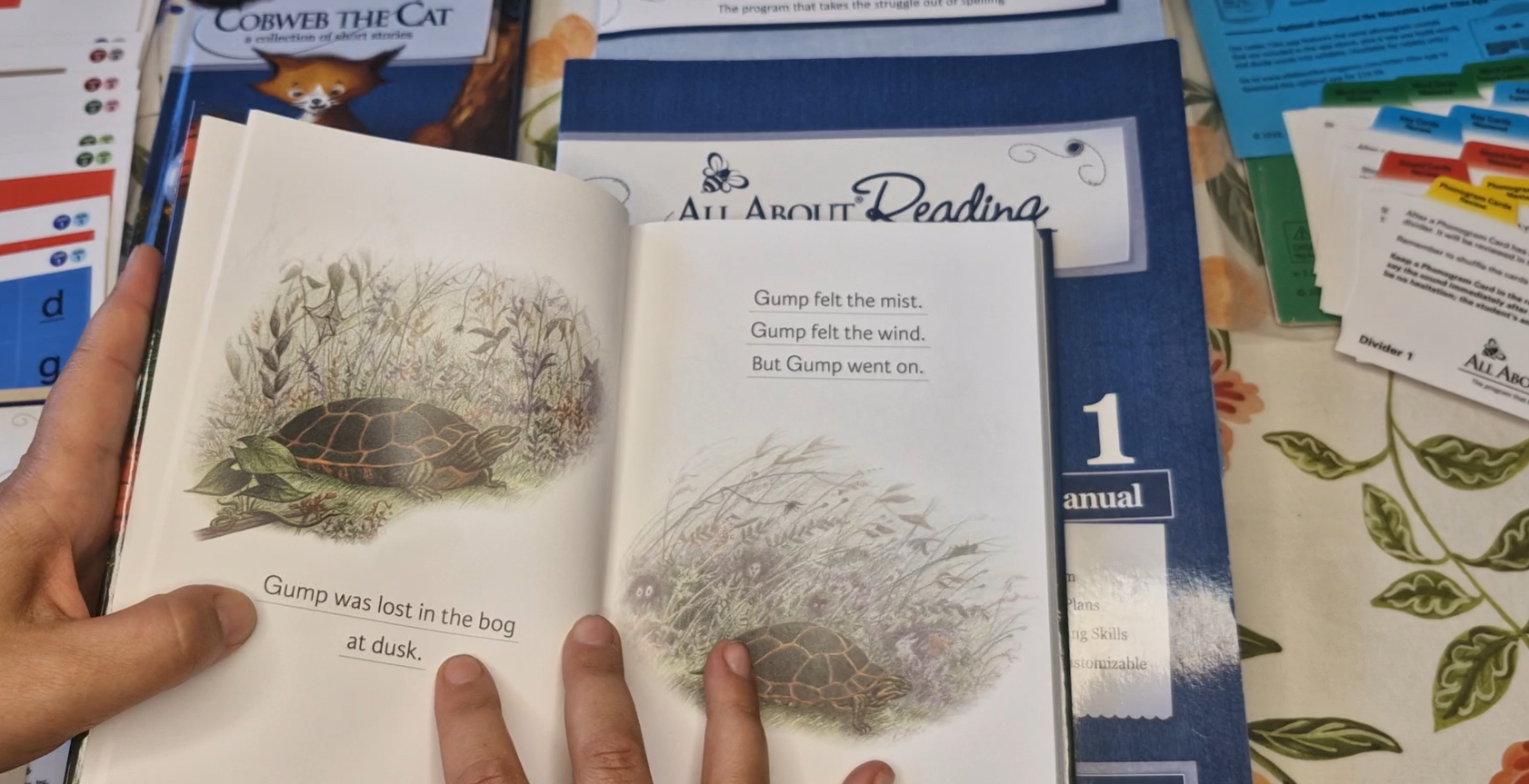
I love that AAR has hardback books for subsequent children!
What Some Families Don't Like
No curriculum is perfect.
1. It's Expensive
This is probably the biggest complaint.
By the time you purchase the teacher's manual, student materials, readers, and letter tiles, the initial investment can feel significant.
Many families consider it worthwhile because materials can often be reused with younger siblings, but the upfront cost is still substantial.
2. It's Teacher Intensive
If you're looking for an independent curriculum, this probably isn't it.
All About Reading works best when a parent sits alongside the child and actively teaches the lesson.
For many families that's a positive.
For others, particularly large families, it can become challenging.
3. Some Children Outgrow the Games
Many younger children love the hands-on activities.
Older students who start the program later sometimes find parts of the curriculum a little juvenile.
That's not always the case, but it's something worth considering.
How Much Does All About Reading Cost?
All About Reading isn't the cheapest reading curriculum on the market, but it's not the most expensive either.
The Pre-Reading program costs around $120, while Level 1 costs around $204 once you include the materials package, Reading Review Box, and Letter Tiles.
That means if you purchase both Pre-Reading and Level 1, you're looking at an investment of roughly $324 before shipping.
However, many parents don't realise that Pre-Reading isn't always necessary. If your child already knows their letter names and basic letter sounds, you may be able to skip Pre-Reading and begin with Level 1 instead. That can save both time and money.
Reusability!
The other thing worth knowing is that most of the program is reusable with younger siblings. The teacher's manual, readers, review box, and letter tiles are generally one-time purchases. After your first child, you'll typically only need to replace the consumable student workbook and activity pages.
For that reason, many homeschool families consider All About Reading a good long-term investment, particularly if they plan to use it with multiple children.
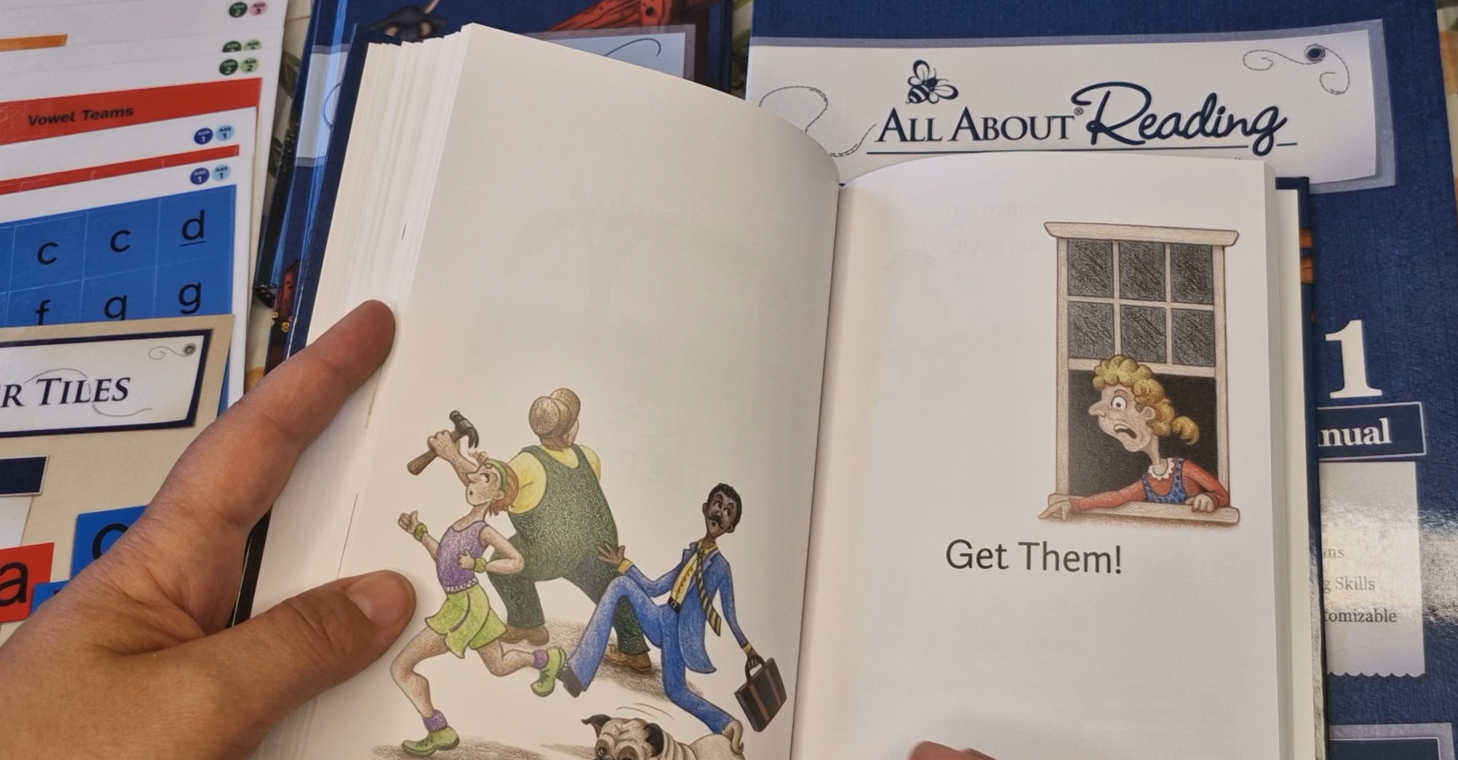
All About Learning books are beautifully illustrated.
Do You Need All About Reading Pre-Reading?
Not necessarily.
One thing many parents don't realise is that you can often skip All About Reading Pre-Reading entirely if your child already knows their letter names and basic letter sounds.
Pre-Reading is designed for younger children who are still learning foundational readiness skills through games, stories, crafts, and hands-on activities. It's a lovely program, but it isn't essential for every child.
For example, if your child is already confidently identifying letters and sounds, many families start directly with Level 1 instead.
That's worth knowing because it can save a significant amount of money. Pre-Reading costs substantially less than Level 1 (only about $120), but if your child is ready for Level 1, there's no reason to spend extra time or money working through material they've already mastered.
As always, I recommend using the placement information provided by All About Reading to make sure you're starting at the right level.
All About Reading vs Logic of English
This is one of the most common comparisons because both programs use an Orton-Gillingham approach and are frequently recommended for children with dyslexia.
The biggest difference is that All About Reading focuses solely on teaching reading, while Logic of English combines reading, spelling, handwriting, grammar, and language arts into a much broader program.
If your main goal is simply teaching a child to read as effectively as possible, I would probably lean toward All About Reading. The lessons are straightforward, the readers are excellent, and the program feels very focused.
Logic of English offers more value if you're looking for a complete language arts curriculum and want everything integrated into one program. However, some parents find it more teacher-intensive and a little more overwhelming to implement.
In short:
Choose All About Reading if your primary goal is teaching reading.
Choose Logic of English if you want a broader language arts curriculum built around the same Orton-Gillingham philosophy.
All About Reading vs Abeka
If I had to summarise the difference in one sentence:
Abeka moves faster. All About Reading teaches more deliberately.
Abeka works very well for many children who naturally pick up reading skills quickly.
All About Reading tends to provide more support for children who need additional practice and review.
If your child is struggling, I'd generally lean toward All About Reading.
If your child is thriving and enjoys a traditional school-style approach, Abeka may work just as well.
All About Reading vs BJU Press
BJU Press combines phonics, reading, literature, and language arts into a broader program.
All About Reading focuses almost entirely on teaching reading exceptionally well.
For families specifically looking to solve reading difficulties, I would generally choose All About Reading first.
For families wanting a complete Christian language arts program, BJU Press may be a better overall fit.
Is All About Reading Christian?
This is one of the most common questions I receive.
All About Reading is not overtly Christian.
It's generally worldview-neutral rather than explicitly biblical.
That won't bother some homeschooling families.
Others strongly prefer reading programs that incorporate Scripture and biblical content throughout the lessons.
Personally, I prefer explicitly Christian curriculum whenever possible. However, if I were choosing a reading curriculum based purely on reading instruction quality, I can understand why so many Christian homeschoolers still choose All About Reading.
So…Why Didn't We Use All About Reading?
The reason is simple: I didn't know about it.
When Luke was learning to read, we were already using a different phonics program. It wasn't until years later, after reviewing curriculum and talking with other homeschool families, that I discovered All About Reading.
By then, Luke was already reading.
Looking back, though, knowing what I now know about dyslexia and the Orton-Gillingham approach, it's one of the first programs I'd consider if I had another struggling reader.
My Final Verdict: Is All About Reading Worth It?
If I had another child tomorrow who struggled with reading the way Luke did, I would buy All About Reading without hesitation.
That might surprise some people because I'm a Christian homeschool mom and All About Reading is a secular curriculum. Normally, I strongly prefer Christian curriculum because I want every subject to help point my children toward Christ.
But reading is different.
If a child can't read, they can't easily read the Bible for themselves. They can't independently enjoy missionary biographies, Christian classics, or great books that strengthen their faith.
And that's why I think All About Reading fills such an important role.
The question isn't whether the phonics is good. The question is whether you're willing to trade a biblical worldview for outstanding phonics instruction.
For a neurotypical child, I'm probably choosing Abeka Phonics because worldview matters deeply to me and Abeka does an excellent job teaching reading.
For a struggling reader, though, especially a child with dyslexia, I'd probably choose All About Reading.
The Orton-Gillingham approach, the hands-on letter tiles, the carefully controlled readers, the short lessons, and the huge number of success stories from homeschool families all make a compelling case.
It's not the cheapest curriculum on the market, but it's also incredibly reusable. Once you've bought the letter tiles, review box, and teacher materials, you'll only need to replace the student activity books for younger siblings. For large homeschooling families, that makes the cost much easier to justify.
The biggest downside is that you need to be involved. This isn't a program where you hand your child a workbook and disappear. You'll spend about twenty minutes a day teaching, encouraging, moving tiles around, and celebrating progress together.
But maybe that's not entirely a downside.
Some of my favourite homeschool memories have come from sitting beside my children and helping them learn something new.
And if those twenty minutes help a struggling child become a confident reader, they're twenty minutes very well spent.
When Luke was younger, reading often ended in frustration. Sometimes there were tears. Sometimes there were long breaks because both of us needed one.
Today, he's nearly nine years old and reads a chapter of the Bible every day.
After we worked through his dyslexia challenges, I remember watching him read several chapters in a row and thinking:
"This kid can read."
It was one of the most rewarding moments of our homeschool journey.
Would All About Reading have helped us get there sooner?
I think it probably would have.
And that's why, despite never using it myself, it's still one of the first reading programs I mention whenever a homeschool mom tells me her child is struggling.
Because if there's one thing I've learned, it's this:
A child who learns to love reading gains access to a lifetime of learning.
And few homeschool reading curriculums have a better reputation for helping struggling readers reach that goal than All About Reading.