BJU Press Math 3 (Online with Books) Review — A Homeschool Mum’s Honest Take
We’ve now been using BJU Press Math all the way from kindergarten through to Grade 3 with Luke, and at this point, it’s one subject I wouldn’t want to change.
Luke is naturally good at math—it’s his favourite subject—and that does shape our experience a little. But even taking that into account, there are some very clear reasons we’ve kept coming back to BJU year after year.
For us, this curriculum has become a consistent, reliable part of our homeschool routine—and more importantly, it fits into real life in a way that helps our homeschool days flow really well.
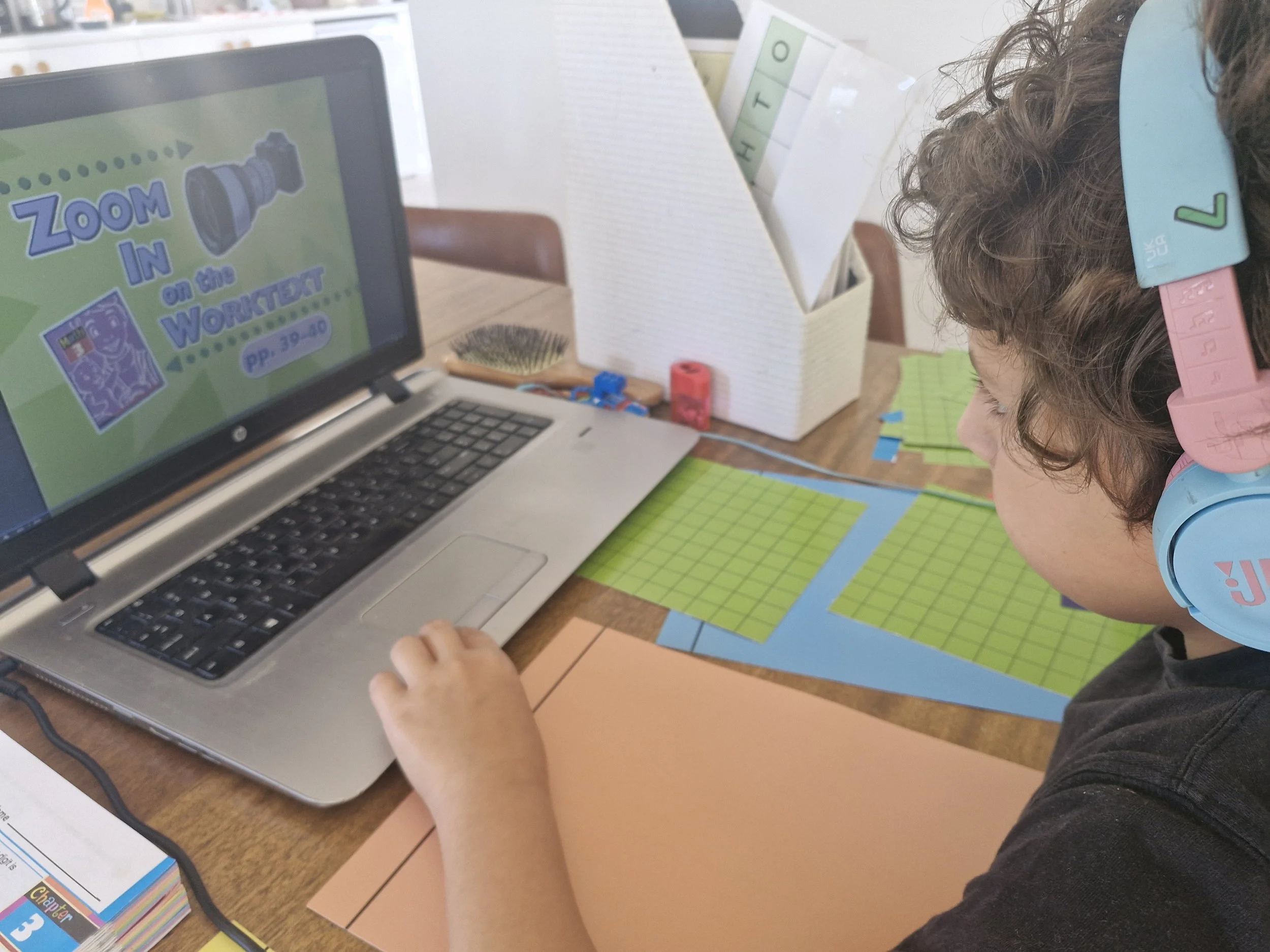
Luke doing Grade 3 BJU Press Math Online with Books.
Quick note — there’s an affiliate link below if you decide to check it out. It doesn’t cost you anything extra, and it helps support our channel, so thank you.
Why we chose BJU Press Math
We originally started with BJU Press Homeschool because I liked the look of the colourful workbooks.
At the time, I tried to save money by using the teacher manuals instead of the video lessons—but that made the program very parent-heavy. I found myself needing to be there constantly, and it just didn’t suit our day.
Switching to the video lessons completely changed things.
It felt like we were using a different program.
Suddenly, I wasn’t carrying the teaching load, and the whole day flowed better. That’s when I started to really love it.
Now, working from home around four hours a day, five days a week, that independence isn’t just helpful—it’s necessary. And BJU Math is one of the main reasons I can make that work.
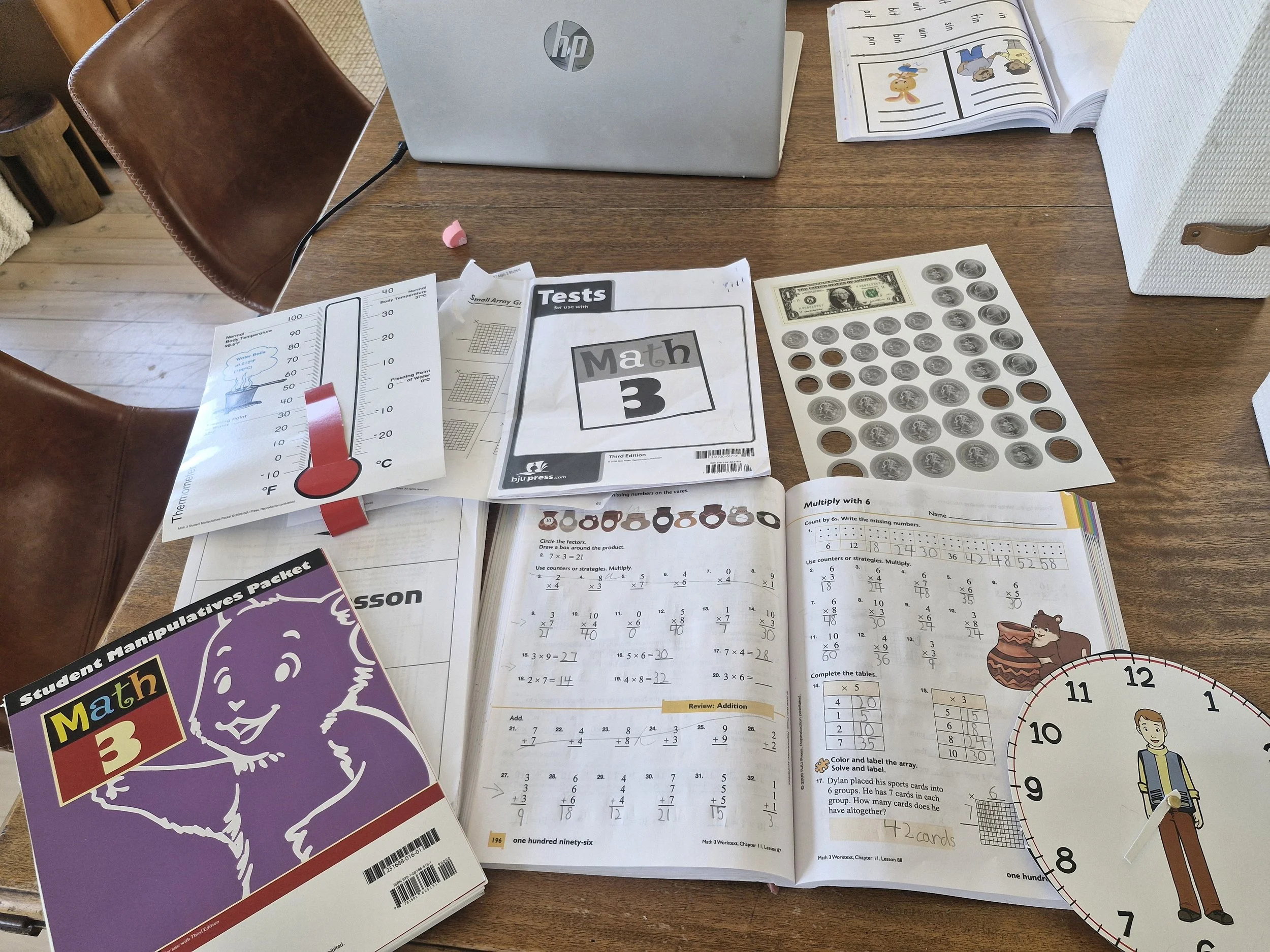
Contents of BJU Press Math 3 Online with Books.
What a typical day looks like
A typical morning for us is very simple.
I’ll say, “Alright, Luke, start your math.”
And he just gets on with it.
(If you’re wanting to see exactly what we’re using, you can check out BJU Press Math 3 here.
He gets the laptop, plugs it in, opens the BJU Homeschool Hub (which we have bookmarked), clicks into Math 3, and starts his lesson.
At the beginning of each lesson, the teacher tells him exactly what he needs—workbook pages, manipulatives, ruler, pencils—and we keep everything in white folders nearby so he can grab it quickly.
From there, he works completely independently.
The lesson usually starts with some review or speed drills, then moves into the new concept. The teaching is clear, often includes a story or scenario, and always brings in a biblical perspective, which is something we really value.
When he’s finished, everything gets packed away—laptop, books, supplies—and that’s part of the routine too.
Meanwhile, I’m free to be with my toddler, have a coffee, or help my younger daughter get started with her phonics.
That’s a huge win for our home.
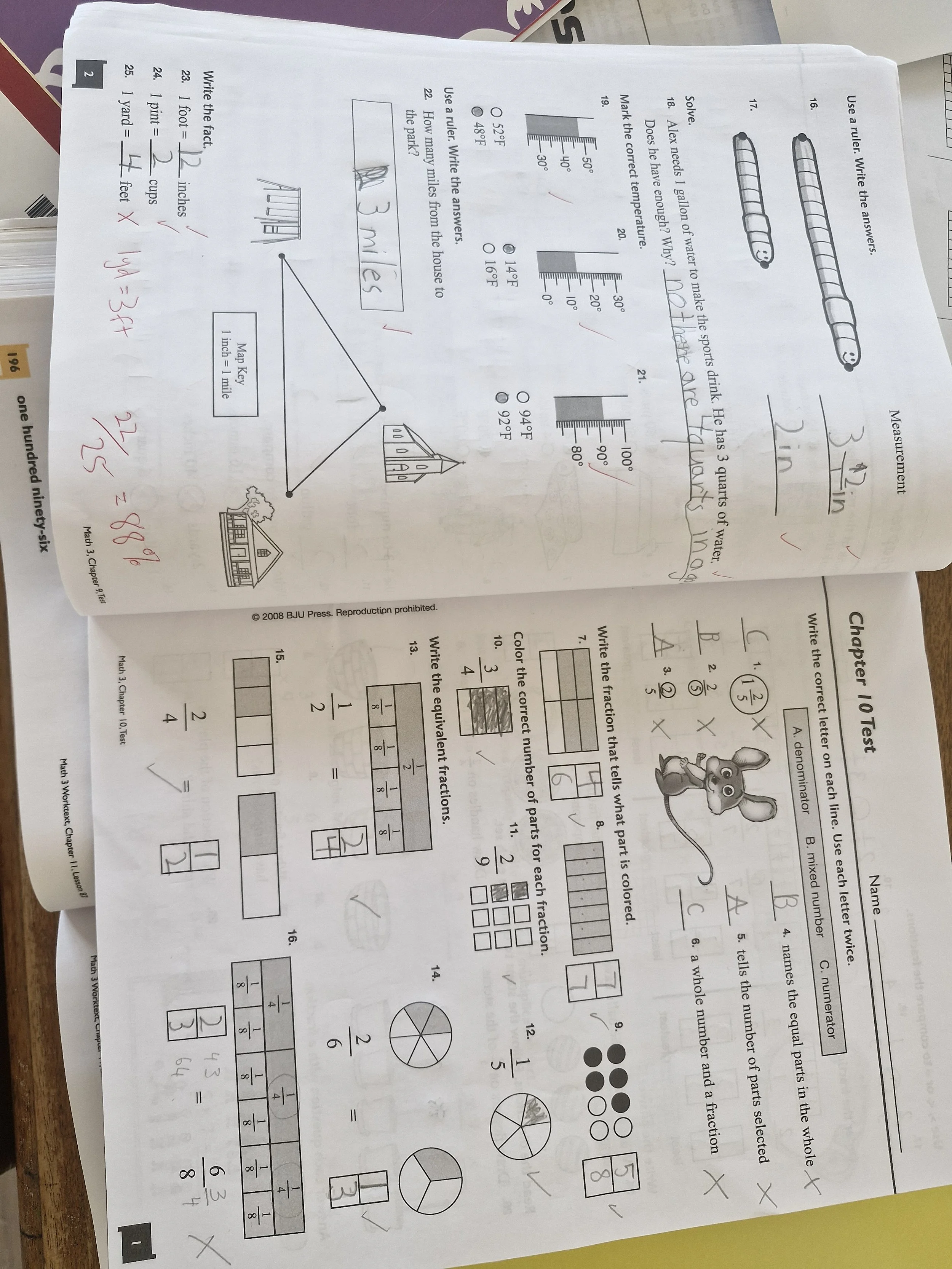
Luke’s test booklet for Grade 3
How long lessons actually take
A typical lesson takes Luke about 30 minutes.
Reviews take around 15 minutes
Tests take about 10 minutes
He usually has a short break after each lesson—about 5–10 minutes.
Because he’s confident, he often moves quickly.
Some days, he’ll do two lessons… sometimes even up to five if he’s motivated.
We do math five days a week, but we consistently finish the program early.
Last year, we finished about four months ahead of schedule.
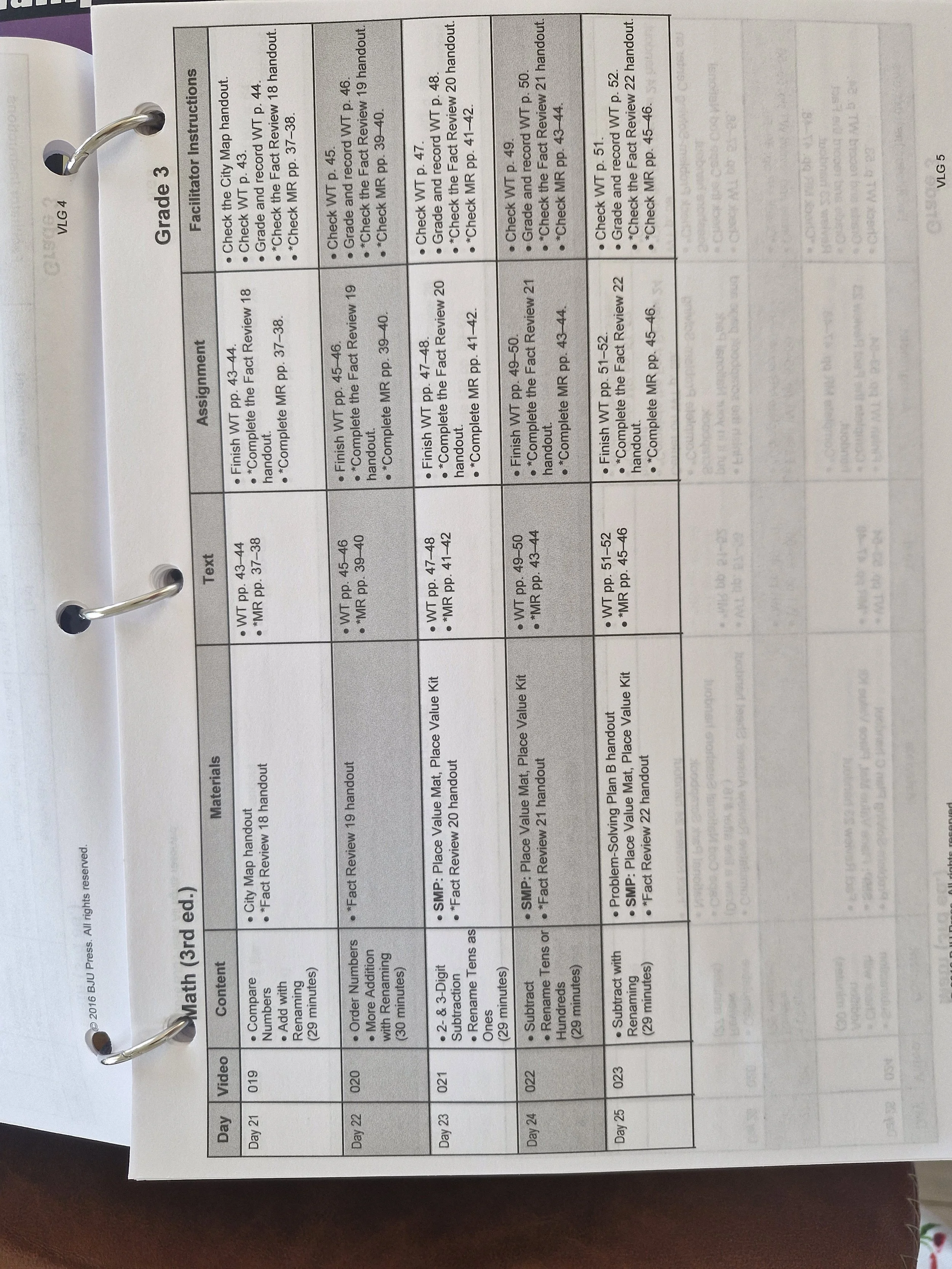
If you’re not sure what to do, the Video Lesson guide helps you see what you need for the day.
Independence (this is the biggest strength)
This is where BJU Math really stands out.
By around Grade 2, Luke was doing about 95% of it independently. Now in Grade 3, he really doesn’t need me at all.
I might sit with him for a few minutes just to encourage him, but not because he needs help.
The video teacher replaces my teaching almost entirely.
And if I’m real…she does a MUCH better job than I would in some areas.
There are games, scenarios, and teaching moments that I simply wouldn’t include if I were doing it myself—mostly because I’d be trying to save time.
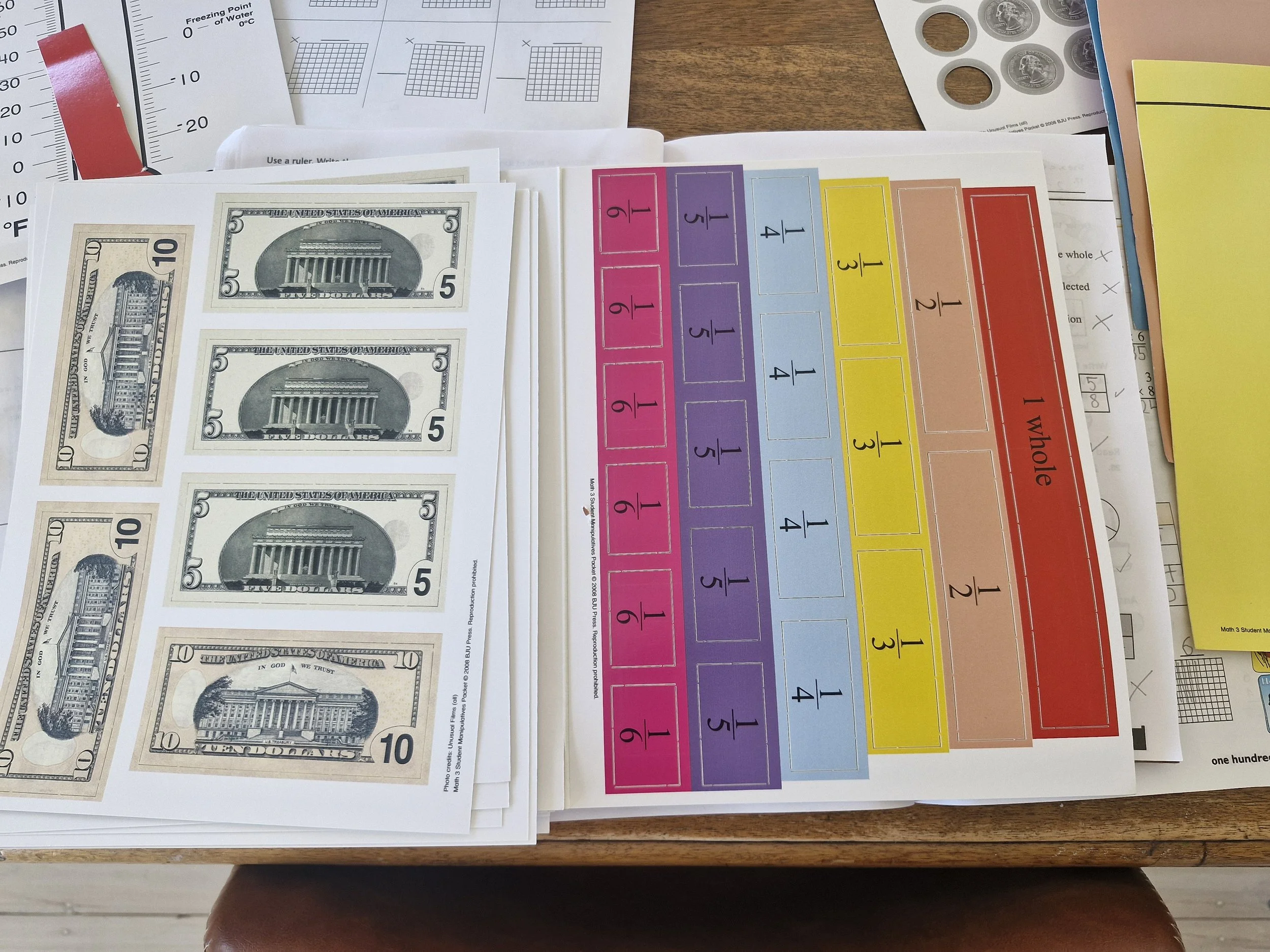
These colorful manipulatives help keep Luke engaged and interested in math!
The video lessons
Luke really enjoys the video lessons.
They’re not just a teacher talking at the screen—they include interaction, visuals, games, and different teaching approaches. It’s not just visual and auditory learning either—there are plenty of manipulatives involved, so it’s quite hands-on.
The teacher introduces new concepts clearly before asking the student to apply them, which builds confidence.
That said, they can feel repetitive.
If your child already understands the concept, doing every single part exactly as written could feel like overkill.
That’s why we skip.
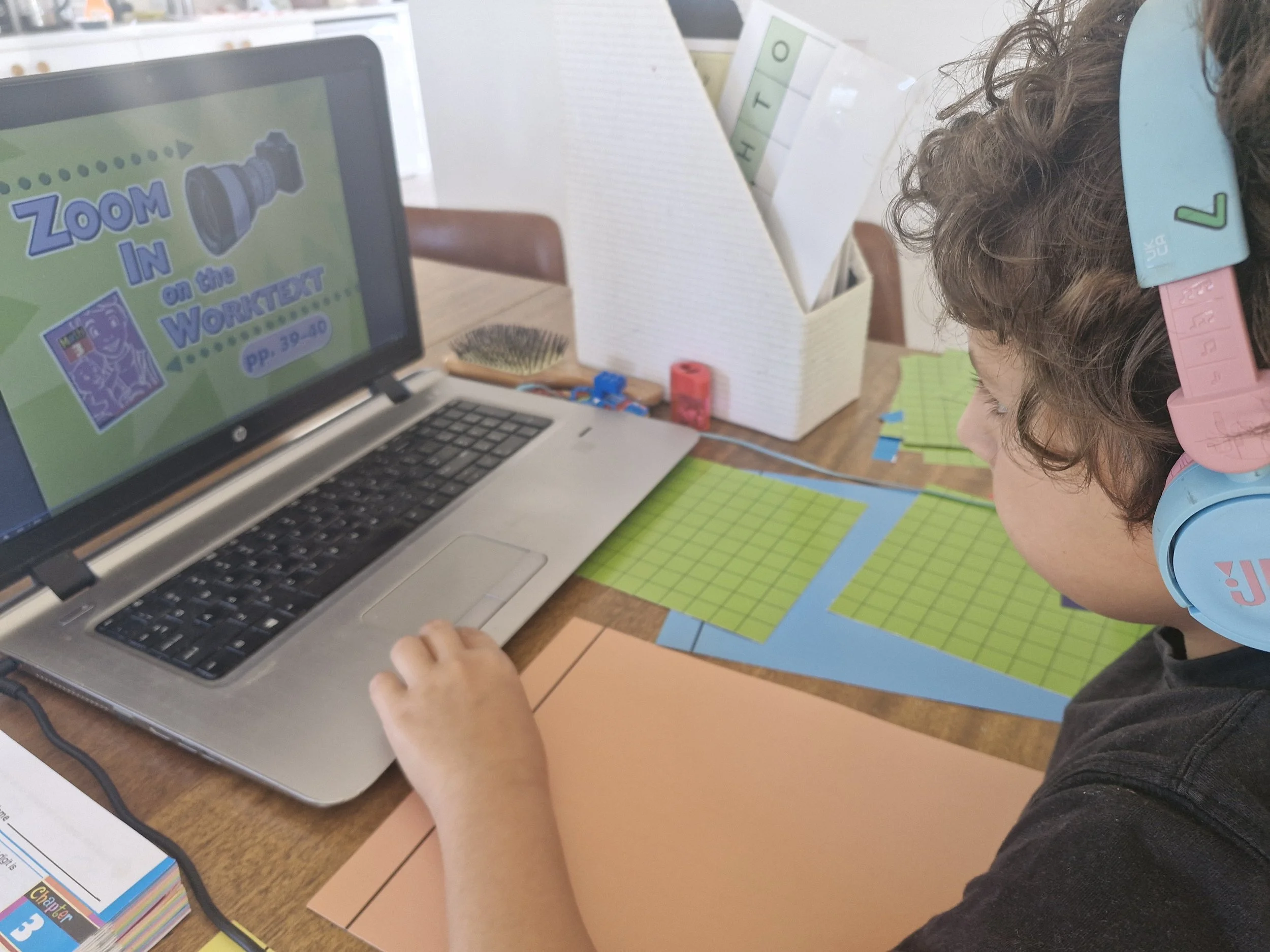
Pre-recorded teacher led video lessons with BJU Math.
How we actually use it (important)
We don’t follow the program exactly as written.
If Luke gets something 90% right, we move on. If I can see he’s already mastered a concept, I’ll cross out sections or skip them entirely—sometimes even whole lessons like reviews or cumulative reviews.
This is one of the big advantages of homeschooling—you can adjust as you go.
Because of that flexibility, the repetition doesn’t bother us.
But if a parent followed everything strictly with a child who finds math easy, I think they would get frustrated. It would feel like unnecessary busywork.
On the other hand, for a child who struggles with math, that repetition could be exactly what they need.
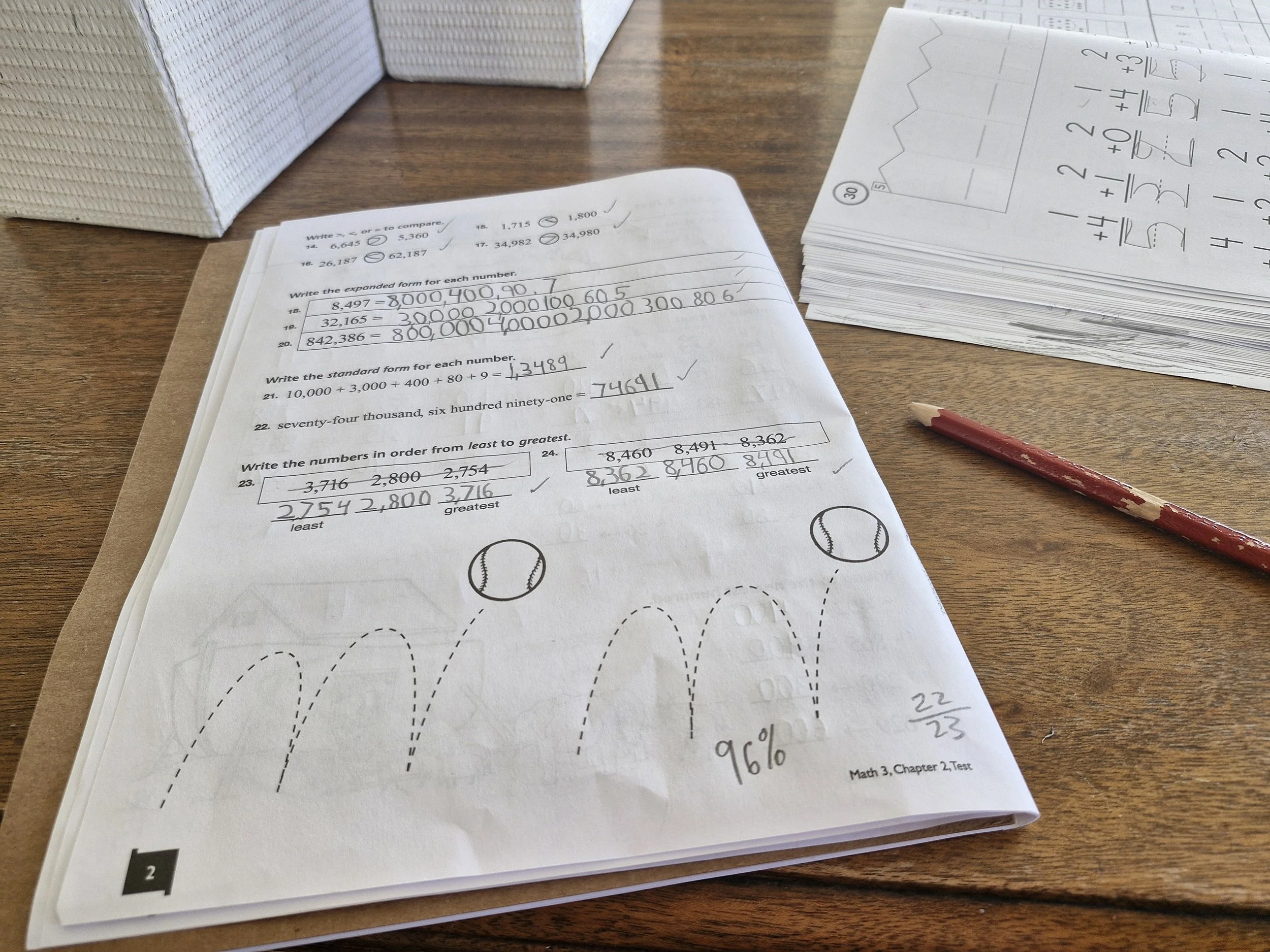
Maybe Luke’s favorite part of the lessons are the tests. He can show off his progress to Dad when he gets home from work!
Academic level
I’d say BJU Press Math is above grade level overall.
Compared to something like Abeka, it’s less focused on pure memorization and more on understanding and critical thinking. It’s still strong academically, but it doesn’t feel rushed.
It’s technically a spiral program, but we treat it more like mastery. Once Luke understands something, we move on.
New concepts still challenge him when they’re introduced, but overall he finds the program manageable and confidence-building.
Worksheets and materials
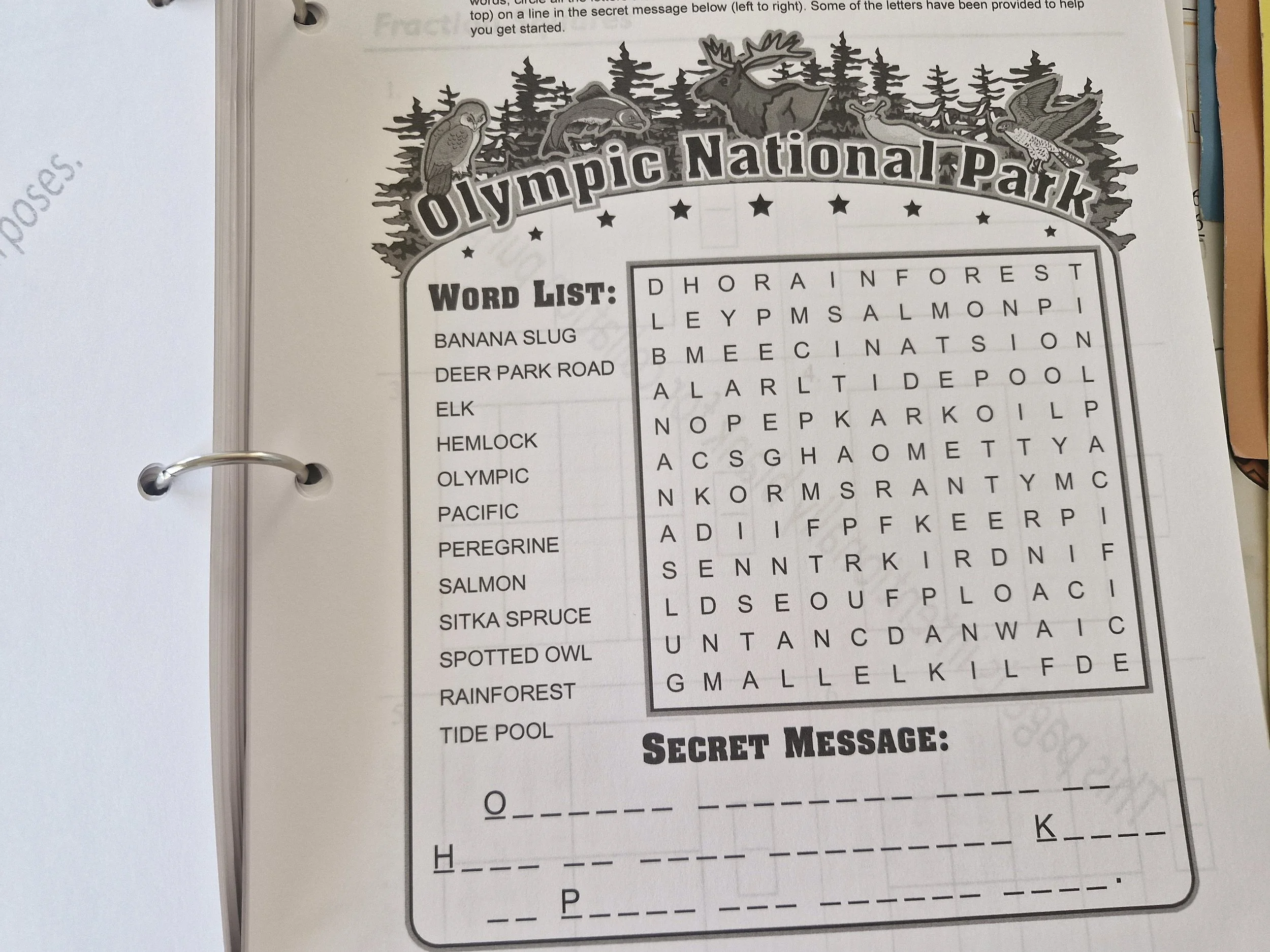
The worksheets are bright, engaging, and well laid out.
Each lesson usually includes:
A front and back workbook page
Weekly review lessons
Larger cumulative reviews at the end of chapters
There’s not a lot of writing (which makes sense for math), but there’s plenty of problem-solving.
The manipulatives are excellent.
They cover:
Place value (hundreds, tens, ones)
Money (American coins and notes)
Fractions
Measurement
and MUCH more
This adds a hands-on element that keeps it from being purely worksheet-based.
cHRISTIAN TEACHING (the most important part for us)
This is, without question, the most important aspect for our family.
BJU Press is very clearly Christian, and that comes through in the lessons.
There are biblical references, gentle encouragement of faith, and a consistent worldview throughout.
I also really appreciate the tone of the teachers. They’re calm, kind, and encouraging, which matters more than people sometimes realise.
For us, seeing Luke’s young faith being supported alongside his learning is a huge priority—and this curriculum does that well.
Pros
Strong independence, especially from Grade 2 onwards
Clear, structured teaching through video lessons
Saves a significant amount of parent time
Engaging lessons with a mix of learning styles
Flexible—you can skip or adapt easily
Solid academic level with good progression
Strong biblical worldview integrated throughout
Cons
Can feel repetitive if followed exactly as written
More expensive than some alternatives
Not ideal for families who prefer fully parent-led teaching
Not suitable for secular families due to strong biblical content
There is also an update happening to Math 3, with a more modern look to the lessons, which will likely improve the visual side further.
Cost
$369 for the full program, which includes video lessons and books and everything you’ll need for the math year.
If you think this might suit your family, you can have a look at BJU Press Math 3 here.
Who this is for (and who it’s not)
This works well for families who:
Want independence in their homeschool day
Need to balance homeschooling with work or other children
Value a strong Christian worldview
Like structured, guided teaching
It’s probably not the best fit if:
You want to teach everything yourself
You strongly prefer no screen-based learning
You’re on a very tight budget
You’re looking for a secular program
Final thoughts
For us, BJU Press Math has been a very easy decision to keep using.
It makes our days smoother, gives Luke confidence, and allows me to manage the rest of our home without feeling stretched in every direction.
If I had to choose one subject from BJU Press to recommend, it would be math.
It’s not perfect, and it won’t suit every family—but if you’re looking for a program that trades a bit of cost for a lot of time and independence, it’s well worth considering.