Abeka vs All About Reading: Which One Won’t Make Your Kid Cry?
If you’ve been Googling All About Reading vs Abeka, congratulations—you’re officially a homeschool parent. Because few decisions cause more second-guessing, late-night Facebook scrolling, or whispered “are we doing this wrong?” moments than choosing a homeschool reading curriculum. And Abeka and All About Reading are two of the biggest, most talked-about options out there.
They’re both popular.
They both work for many families.
And yet… they couldn’t feel more different if they tried.
One feels like a traditional Christian school showed up at your kitchen table with a stack of workbooks.
The other feels like phonics met board games and decided to make reading fun again.
So let’s break down Abeka vs All About Reading, using real homeschool parent experiences, actual pros and cons, and a healthy dose of honesty—because no one needs another sugar-coated curriculum review.
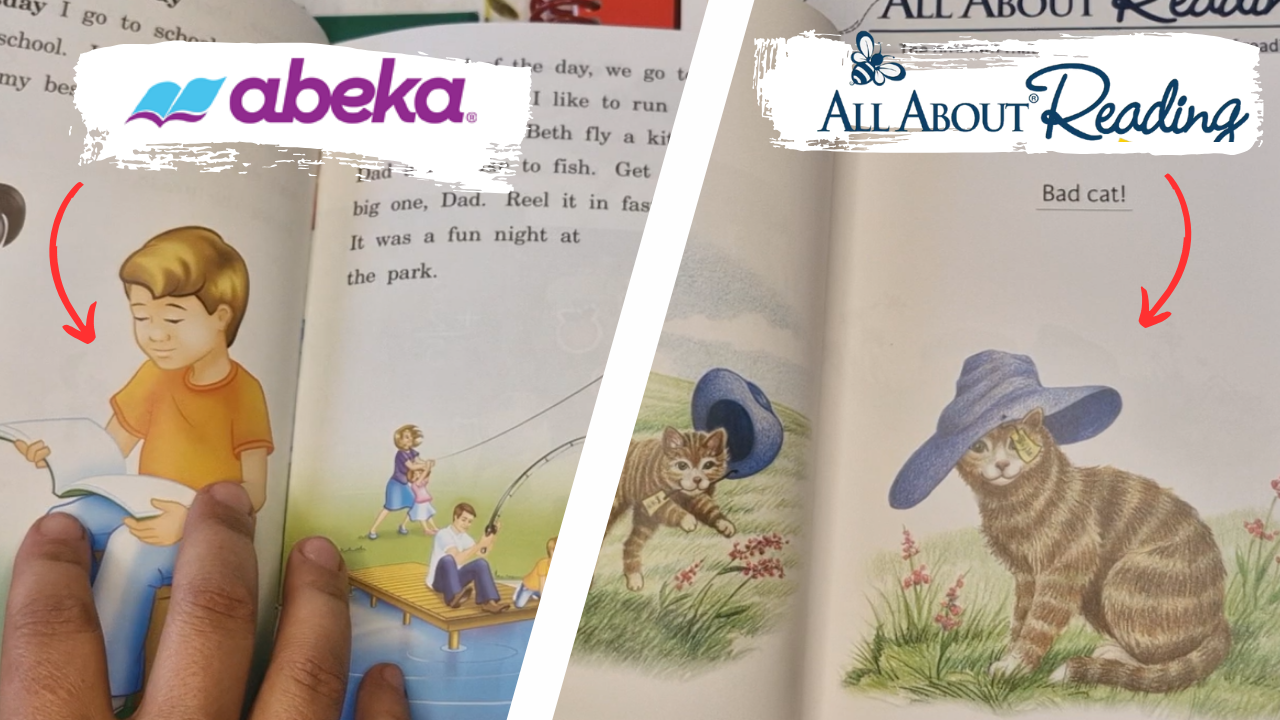
Comparison of AAR vs Abeka readers. I like the look of the AAR readers more personally.
Some links are affiliate links and help support this blog at no extra cost to you. Thank you!
Why Abeka and All About Reading Get Compared So Often
Abeka and All About Reading sit in the same homeschool lane:
✔ phonics-based reading
✔ widely used by Christian homeschoolers
✔ strong reputations
✔ passionate fans
But they come from completely different philosophies about how kids learn to read.
That’s why you’ll see moms saying things like:
“Abeka worked great for my first child, but my second hated it.”
“All About Reading saved our homeschool.”
“We use pieces of both.”
“Why did no one warn me about the worksheets?”
Let’s talk about why.
The Big Abeka Difference: Video Lessons (Abeka Academy)
One major difference that often tips the scale for families is that Abeka also offers video-based instruction through Abeka Academy.
This means your child can be taught reading by a classroom teacher on video—very similar to a traditional Christian school experience at home.
For some parents, this is a huge relief.
It takes pressure off mom, adds consistency, and works especially well for kids who learn best from direct instruction rather than parent-led lessons.
Of course, the flip side is more screen time and less flexibility—but for families who want structure, accountability, and a “teacher in the room,” Abeka Academy can be a big win and sets Abeka apart from programs like All About Reading, which are fully parent-taught.

Abeka Reading: Traditional, Structured, and Worksheet-Heavy
Abeka is best described as traditional, structured, and school-style. It’s very much a “this is how reading has always been taught” approach.
How Abeka Teaches Reading
Abeka uses what they call “special sounds” and pattern recognition. It’s not considered a pure phonics or phonemic awareness program, but for many kids—it absolutely works.
Parents who loved Abeka often point to:
Clear progression from sounds → blends → words
Lots of repetition and practice
Strong routine and predictability
A solid foundation for kids who thrive on structure
If your child likes workbooks, clear expectations, and daily written practice, Abeka can feel reassuringly solid.
Where Abeka Can Be a Struggle
Now… let’s talk about the other side.
Many parents say Abeka requires a LOT of writing very early on. And for some kids—especially young learners or reluctant writers—that becomes a major barrier.
Common complaints include:
Too many worksheets
Frustration before fine motor skills are ready
Tears (yes, actual tears)
Readers that feel… painfully boring
Several parents shared that while Abeka worked academically, it drained the joy out of reading. And once reading becomes something a child dreads, everything gets harder.
All About Reading: True Phonics, Hands-On, and Surprisingly Fun
If Abeka feels like school, All About Reading (AAR) feels like a reset button.
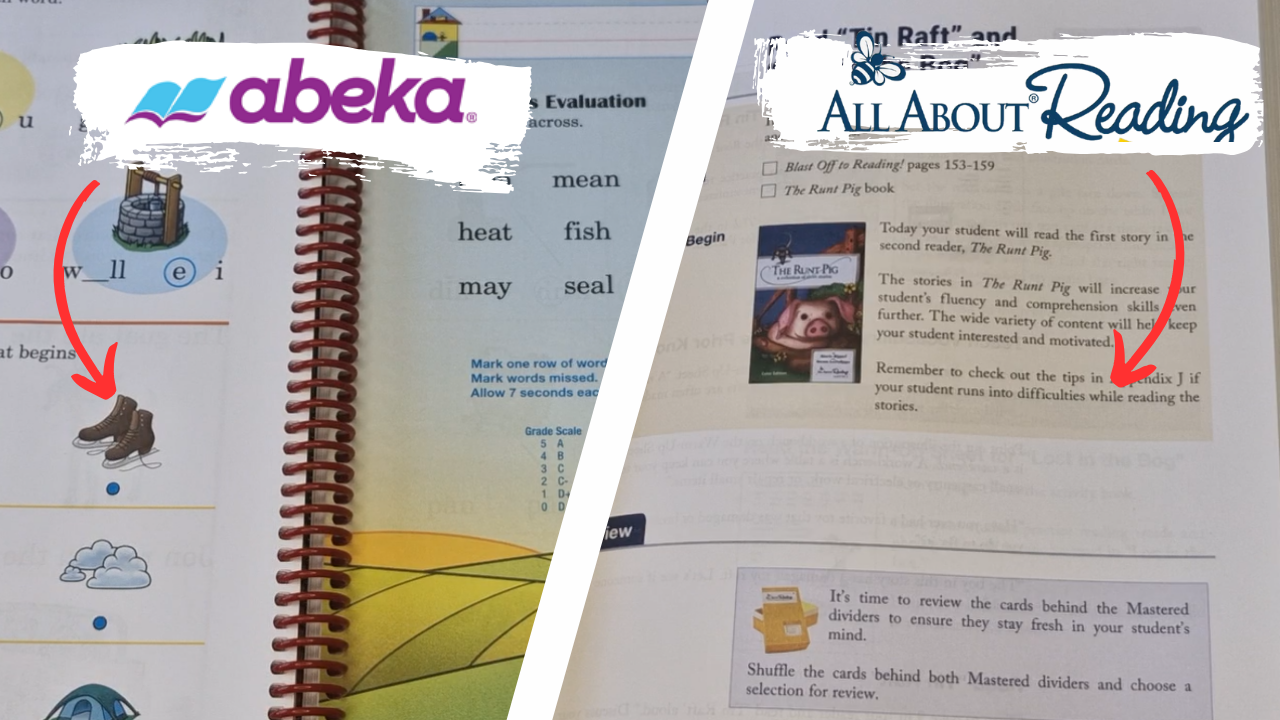
All About Reading is a true phonics program based on phonemic awareness and Orton-Gillingham principles, which makes it especially popular for:
Struggling readers
Kids with dyslexia
Logical, rule-oriented learners
Children who hate worksheets
Why Parents Love All About Reading
Parents consistently rave about:
Strong decoding skills
Clear phonics rules and explanations for exceptions
No writing required to learn to read
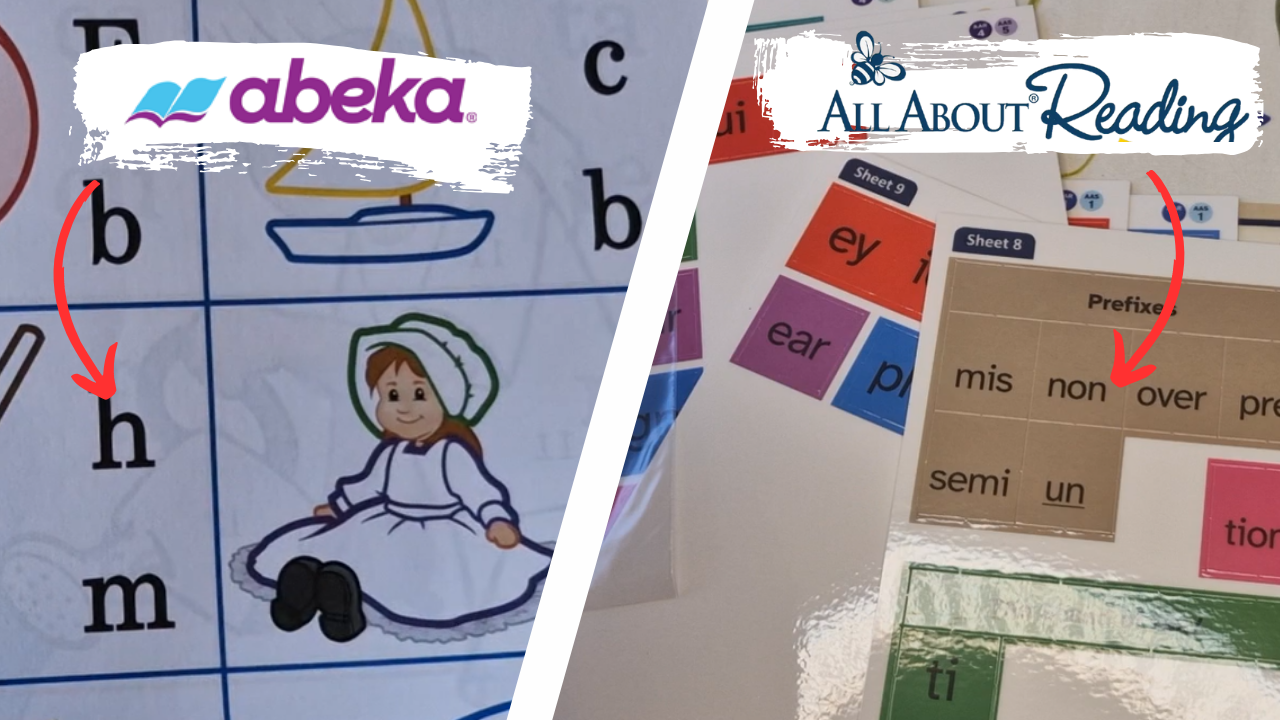
Games, tiles, and manipulatives (you can take a look at them here).
Readers that kids actually want to read
Many moms said their child started decoding unfamiliar words surprisingly fast—even kids who had struggled with multiple other programs.
A big win?
All About Reading separates reading from writing. Kids don’t need to write well to learn to read well, which is a game-changer for many families.
All About Reading and Spelling
Another big plus: AAR sets kids up beautifully for spelling. Many families pair it with All About Spelling (check the spelling out here), starting in early elementary once reading is solid.
In fact, Sonlight uses All About Learning Press for spelling, which tells you just how respected the program is—even though Sonlight itself is a Christian curriculum.
The Biggest Difference: Worldview
Here’s where the comparison really matters for Christian homeschoolers.
All About Reading does NOT teach from a biblical worldview.
It’s secular, and focused purely on reading skills.
Which is a significant distinction.
Abeka, on the other hand, openly teaches a Christian worldview, including:
Scripture references
Christian values
Teaching that Jesus is our Savior who died for our sins
For families who want a biblical worldview integrated into every subject, Abeka is a much better choice.
For others, reading is a skill first, and worldview is handled elsewhere.
What Real Homeschool Families Are Actually Doing
Interestingly, when I looked at the homeschool forums, I discovered many families don’t choose just one of these.
Some:
Use Abeka for structure, but pull in AAR readers
Use AAR for reading, Abeka for language arts later
Mix and match based on the child—not the brand
That alone should tell you something important:
👉 The “best” reading curriculum depends more on your child than the curriculum itself.
Where BJU Press Fits In (And What We Used)
For our family, we actually used BJU Press to teach both of our children to read—and we’ve been really happy with it.
BJU Press sits somewhere between Abeka and All About Reading:
Structured, but not overwhelming
Strong phonics foundation
Clear instruction
Christian worldview
Less intense than Abeka, more traditional than AAR
It worked well for our kids, especially because they responded well to the balance of structure and clarity without drowning in worksheets.
(If you’re curious, you can explore BJU Press reading here or explore it more in the video below.
The Real Problem Isn’t Abeka or All About Reading
Here’s the part no one talks about enough:
Most homeschool parents don’t actually need another recommendation.
They need a way to evaluate curriculum so they can confidently choose what fits their child, learning style, and season of life—without wasting money or quitting mid-year.
This is exactly why I created the Curriculum Confidence course.
If you’ve ever thought:
“Every reading curriculum sounds amazing—how do I know which one actually fits?”
“I don’t want to waste hundreds of dollars again.”
“Why does choosing curriculum feel harder than teaching it?”
Curriculum Confidence walks you through how to evaluate homeschool curriculum step by step—so decisions like All About Reading vs Abeka stop feeling overwhelming and start feeling clear.
No hype.
No pressure.
Just a framework that finally makes curriculum decisions make sense.
You can check it out here if you want clarity instead of second-guessing.
So… Abeka or All About Reading?
Here’s the honest wrap-up:
Abeka may be a great fit if:
You want strong structure
You prefer workbook-based learning
You want Christian content woven directly into reading
Your child thrives on repetition and routine
All About Reading may be a great fit if:
Your child struggles with reading or spelling
You want a true phonics program
Writing causes frustration
You want reading to feel fun again
You’re teaching a child with dyslexia or learning differences
Both programs can work.
Both programs have helped thousands of kids learn to read.
But—and this matters—they are not interchangeable.
Final Thought (With a Little Humor)
At the end of the day, there are many fantastic homeschool reading programs out there. And one of them might actually be a better fit for your family than Abeka or All About Reading.
There’s no “one size fits all” in homeschooling…unless we’re talking sweatpants. 👖😄