🎥 BJU Press: How Long Does It Take? (+ What We Skip)
When you first saw that BJU Press has 180 lessons, did you have that moment where you just stared at the books and thought:
“Okay… how is this supposed to work in real life?”
Because that was me.
At first, it doesn’t sound too bad — until you realise it’s not just 180 lessons. It’s multiple subjects a day, with video lessons, seatwork, reviews, and tests — every single week.
And suddenly it feels like you’ve signed up to run a private school out of your kitchen, except you’re also the principal, the teacher, and the lunch lady. 😅
So here’s the deal.
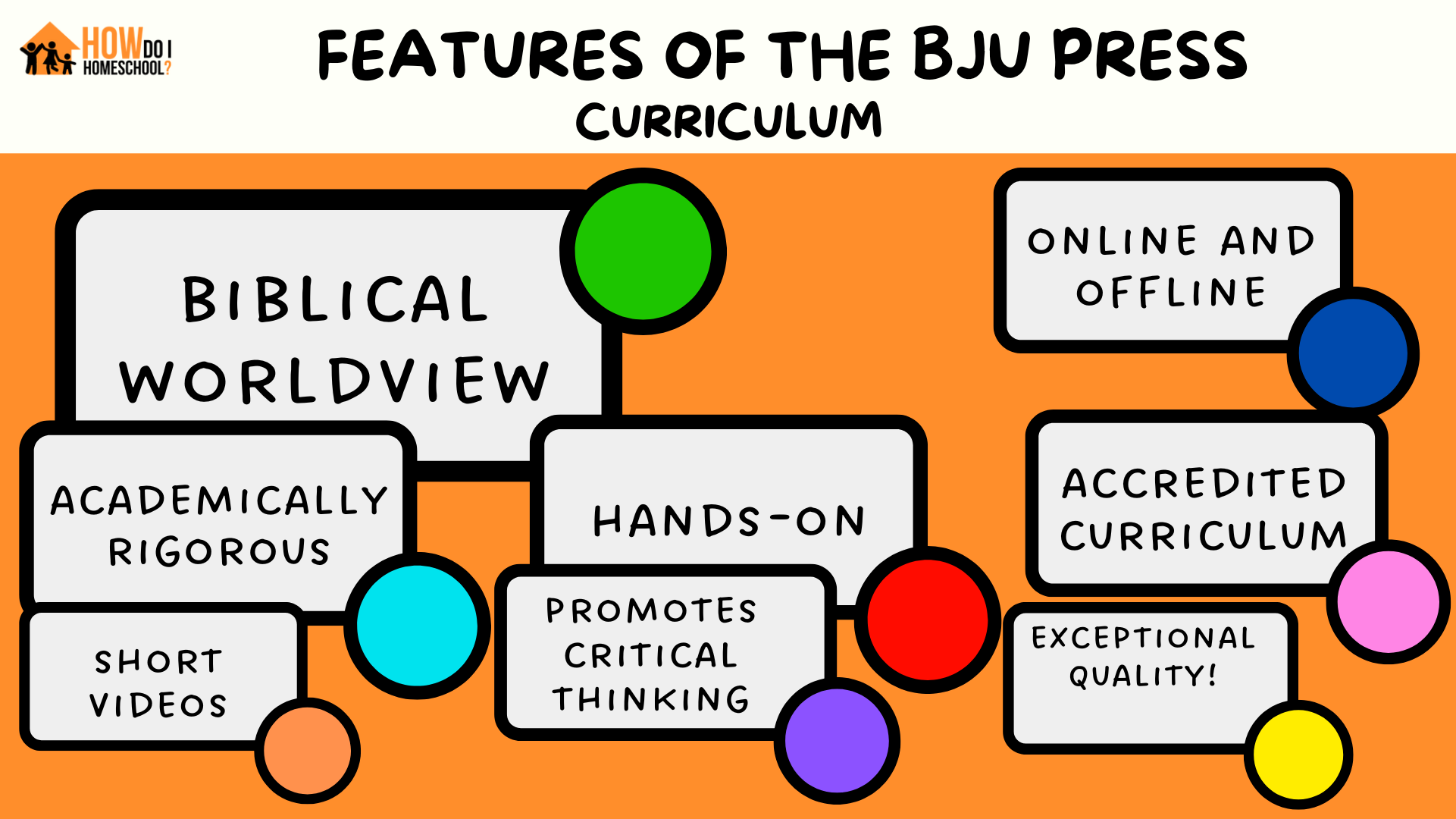
In this post, I’m going to give you real, practical ways to make BJU Press actually work in real life. I’m going to show you how long it really takes, exactly what we skip, and how you can cut your homeschool day nearly in half — not by lowering standards, but by cutting the stuff that doesn’t actually move the needle.
Because yes, BJU Press is rigorous.
And no, I’m not interested in watering that down.
A lot of families use it because it’s so thorough — their kids can walk into just about any test confidently and ace it. 💪
And just so you know who you’re listening to — I’m Rebecca Devitt, a second‑generation homeschooler, creator of the Curriculum Confidence course, and we’ve loved using BJU Press for the past four years in our own home.
Some links in this post are affiliate links and help support this blog at no extra cost to you. Thank you! 💛
When We First Started BJU Press (And Why It Felt Overwhelming)
Now, let me take you back to when we first started BJU Press — because our experience in the early years explains everything that came after.
When we first started BJU Press in kindergarten, I remember opening it up and thinking:
“An hour of video instruction? Oh yeah. We’ve got this.”
And really — we did. Kindergarten felt manageable. And dare I say… pleasant.
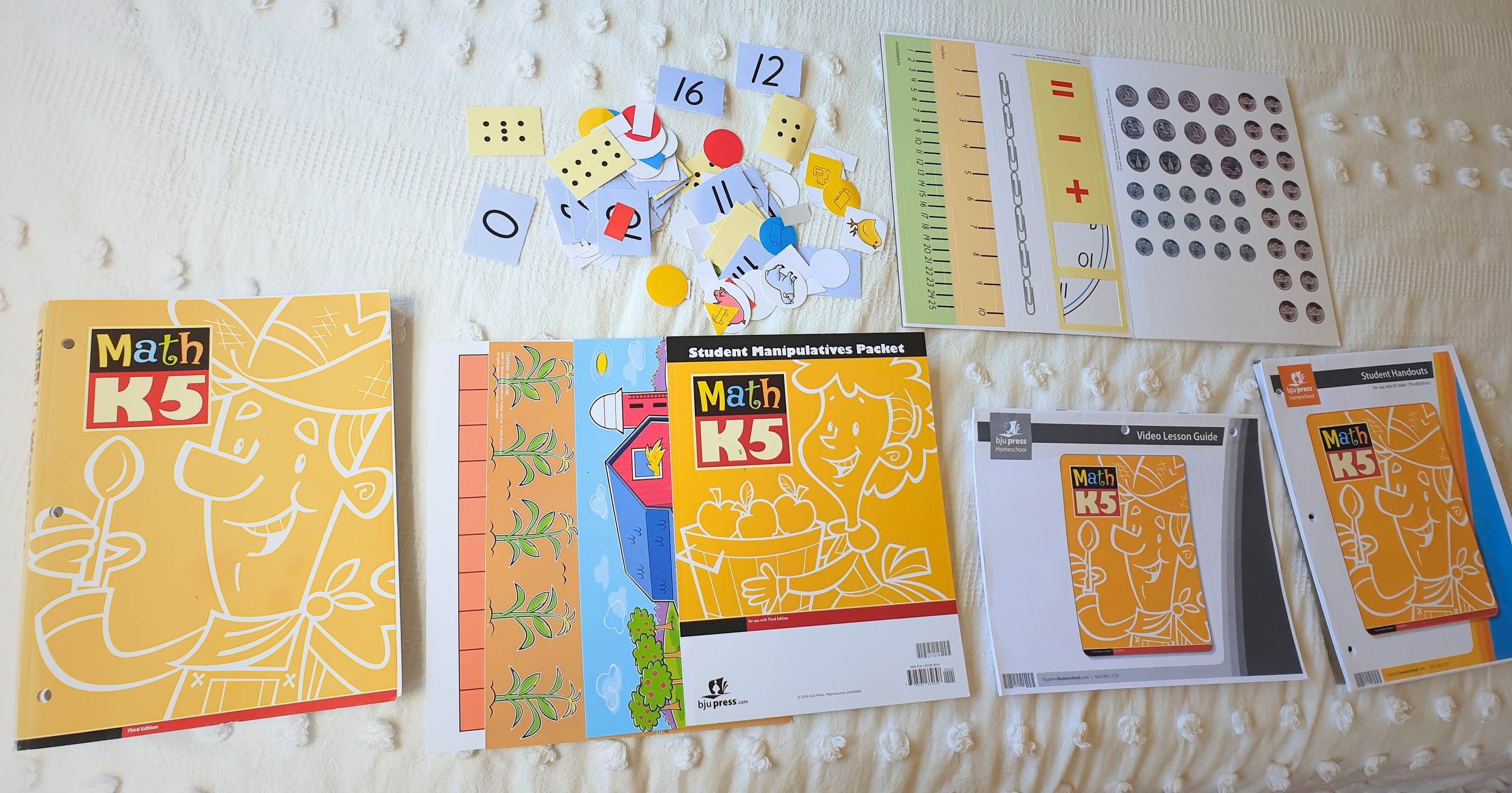
BJU Press math didn’t take long, and was so much fun with all the manipulatives!
Then we hit Grade 2.
Suddenly, BJU wasn’t one cozy little lesson anymore. It was five or six subjects a day, each with 20–60 minutes of video, plus seatwork, plus tests, plus transitions.
One minute we’re doing maths, the next we’re hunting for a workbook, plugging in a laptop, and wondering how it’s somehow already lunchtime.
At some point, I realized we’d accidentally recreated a private school schedule in our house — minus the classroom, the staff room, and the paid teacher.
Which actually makes sense… because that’s exactly what BJU Press was designed for.
The upshot?
My son was cranky. I was cranky. And homeschooling — which we both loved — was starting to feel heavy.
That’s when it clicked.
The problem wasn’t so much the curriculum.
The problem was me trying to use it like I was running a private school classroom, instead of a real‑life homeschool.
As a homeschool mum, I don’t have the time, support, or structure a classroom teacher has. And here’s the funny part — most private school teachers don’t even get through everything either.
They skip.
They streamline.
They prioritise.
So what actually needed to change was how I was using it at home.
Where the Time Really Goes With BJU Press ⏳
Before we even talk about what to skip, we need to zoom out for a second — because if you don’t understand where the time is going by design, it’s really easy to feel like you’re failing.
Here’s where the time quietly sneaks off when you try to run BJU Press exactly as written:
Video lessons — anywhere from 10 minutes to a full hour, depending on subject and grade
Seatwork — usually another 20–30+ minutes per subject
Tests & quizzes — roughly 20 minutes each, often stacked onto lesson days
Transitions — devices, logins, books, manipulatives, packing up, starting again
Breaks — completely non‑negotiable if you want happy kids and decent attitudes 😊
If you try to do everything in your neat little boxed curriculum, BJU Press will absolutely fill your entire day — and then politely ask for your evenings too.
But here’s the good news — and this is where the pressure lifts a bit…
Once you understand the lesson structure, you can skip a LOT — especially in math.
The Math Pattern That Changed Everything ➗
After four years of BJU Press math, I noticed a very clear pattern:
The new concept — the part your child actually needs to learn that day
Review ramps up — the same skill practiced again and again
Chapter review — even if mastery was already shown
Cumulative review — designed for classrooms, not one‑on‑one
That level of review is great for covering every child in a classroom of 25 or 30 kids.
But the good news is — you can streamline things massively when you’re teaching one child.
They just need the new concept.
Our rule is simple:
Once mastery is demonstrated a couple of times, we skip.
Sometimes I do a quick oral check. Sometimes I flip back a few pages. If he’s acing it — we move on.
That single decision alone cut our math time nearly in half.
Why the Same Lesson Can Take 30 Minutes… or All Morning 🤯
The exact same BJU Press lesson can take wildly different amounts of time depending on the child.
Luke, my oldest, is motivated and eager to please — but even though he’s smart, he’s also working through dyslexia, so learning doesn’t always come easily.
Penny, my second, is very smart… and also strategically low‑effort. Same family, very different motivation level. 😄
She’s a kinesthetic learner, often upside down on her chair, and needs lots of movement breaks.
So when BJU Press takes longer in your home, it’s not necessarily because you’re doing something wrong — it’s often about learning style, energy, and motivation.

How Long Does BJU Press Take Per Day? (Real Numbers)
With my skipping‑and‑streamlining approach, this is what you can realistically expect:
Preschool: ~30 minutes
Kindergarten: ~1 hour
Grade 1: 1.5–2 hours
Grade 2: 2–2.5 hours
Grades 3–5: ~3–3.5 hours
Middle school usually lands around 4 hours a day.
High school can stretch to 5–6 hours, depending on how rigorous you want to be.
That’s not a bad thing.
As a homeschooler myself, I did 8+ hours a day in high school — and I liked that diligence. I finished my year with six months to spare.
More hours doesn’t mean something is wrong — it usually just means expectations are higher.
Choosing What Matters Most in Each Season 🌱
Homeschooling gives you flexibility that traditional school doesn’t.
Especially in older grades, you get to decide what actually matters most right now.
If Math and English are your priorities, go hard there. If that means easing back on History or Science to add a foreign language or extra reading, that’s okay.
The goal isn’t to do everything at full intensity all the time — it’s to be intentional.
What We Skip (And What We Don’t)
Okay, this is what you’re here for.
Math
BJU Press Math is where we skip the most — very intentionally.
Practically, this is how I keep math streamlined:
Often, before Luke even starts, I’ll pre-underline the workbook sections I actually want him to complete.
Anything we’re skipping gets a light strike-through with my initials — partly so I remember it was me who skipped it (because yes… he has absolutely tried to skip things himself before 😅). I’ll also draw a little arrow next to the problems I want him to focus on.
Sometimes we’ll swap long written practice for a mini whiteboard, especially if the goal is just to check understanding.
Other times I’ll ask for oral answers or quick narrations instead of writing everything out. It saves time, keeps him engaged, and still tells me exactly what he knows.
Once a new concept is taught and I can see it’s sticking, we skip most review lessons and cumulative reviews.
If he’s struggling, we slow down and use them.
If he’s not, we move on.
No guilt.
Math is already thorough enough.
How We Structure the Day (This Matters More Than You Think)
One more thing that makes a big difference for us is how we structure the day.
We always start with a heavy-brain subject — usually math or reading — while Luke is fresh. Then we follow that with something lighter, like science or history, or even a fun video lesson.
That way we’re not fighting tired brain cells all morning.
We also do what I call super batching.
Instead of doing one math lesson a day and constantly getting manipulatives out and packing them away again, Luke will often do three or four math lessons in a row.
That means less time wasted setting up, less packing away, and way more momentum.
Once the manipulatives are out, we just keep going. It’s one of the easiest ways we’ve cut down wasted time without cutting learning — I honestly reckon it saves us about 5% of our total time just by batching.
Science
Science is very flexible for us.
Most of the time, we’ll read straight from the textbook together.
Sometimes we’ll do the workbook, sometimes we’ll just talk through the questions verbally to make sure the ideas actually landed.
Experiments are optional in our house — and I’ll be honest, I’ve got a toddler, so life is busy. A lot of the time we’ll just watch a short YouTube experiment instead and call it a win.
Occasionally, when I’m feeling brave and don’t mind getting the spray and wipe out afterwards, we’ll do the real thing — but there is absolutely no guilt either way.
History
History is very similar — and honestly, my kids don’t even see history as a subject.
To them, it’s just stories — and they love it.
We usually read it aloud (and yes, that’s often me reading aloud, because I genuinely love learning about things like the Bubonic Plague and medieval surgical techniques!).
And if you get involved, you’ll probably find yourself learning right alongside them.
For the history workbook, we often answer questions verbally to cut down on writing time. Between that, history audiobooks, and podcasts, my kids get plenty of exposure without it feeling heavy.
Reading & English
In terms of Reading and English (two separate subjects), this is where we don’t skip — very intentionally.
Reading and English are weaker areas for my son, so we slow down and actually lean into the work.
We do the lessons, we do the practice, and yes — we do the repetition.
This is where a lot of our time goes, and I’m completely okay with that, because this is the area that needs the most support.
If your child is strong in reading but struggles more in math, you might flip this and spend more time there instead. This isn’t about treating every subject equally — it’s about putting time where it actually matters for your child.
Spelling
Spelling stays intact for us — and yes, it’s because Luke is atrocious at spelling.
This is not his strong suit, so it’s one area we don’t rush or trim down.
With BJU Press, spelling runs in a very clear three-lesson cycle: first you introduce the spelling words, then you practice them, and finally you test them.
If Luke can clearly demonstrate he’s nailed all the words early, we’ll happily move on. But most of the time, he genuinely needs all three lessons — and that’s okay. Spelling doesn’t come easily for him, so we give it the time it deserves. This is one of those subjects where steady, consistent work really pays off long-term, even if it feels slower in the moment.
Handwriting
Handwriting is almost entirely skipped in our house — and there’s a reason for that.
When Luke was in kindergarten, I was very intentional about teaching neat letter formation and proper copywork, so he learned to write well early on. Because of that strong foundation, we haven’t needed ongoing handwriting practice since.
On top of that, my husband doesn’t really value running writing, so we’ve chosen not to prioritise cursive either.
That doesn’t mean handwriting isn’t important — it just means it’s already been addressed for us, and it’s not where we need to spend our limited time right now.
Homeschooling gives you the freedom to make those calls based on what your child actually needs, not just what’s included in the box.
Bible
I love reading and discussing the Bible with my kids in the morning.
I haven’t started the Bible curriculum as yet, but I suspect this is one we won’t skip too much of!
What’s not to love about the Bible!
We have Bible for Grade 3, and after Luke finishes his math, we plan to start it. So excited!
Curriculum in the Afternoons
In the afternoons right now, Luke is often listening to audiobooks — things like 180 Days Around the World or David Copperfield.
That kind of informal learning absolutely counts, and it’s been one of the biggest gifts in our homeschool.
If you'd like the audiobook list we use, I’ve compiled it as a free resource.
Just pop in your email, and I’ll send it straight to you.
👉 Get the free homeschool audiobook list here.
The Principle That Makes This Sustainable ❤️
If you remember nothing else, remember this:
Busywork gets skipped. Weaknesses get time.
Trust your instincts. You know your child.
The goal isn’t to watch every video or finish every page.
The goal is learning.
Frequently Asked Questions About BJU Press
Is BJU Press too much?
It can be — if you try to do everything exactly as written. Used intentionally, it’s very manageable.
Can you really skip without harming learning?
Yes — when you skip busywork, not instruction.
Does BJU Press work for kids with learning differences?
In our experience, yes — especially when used flexibly.
Final Encouragement 🤍
BJU Press is thorough — sometimes overkill — and that’s exactly why many families trust it.
Used wisely, it gives kids a rock‑solid foundation and room to enjoy life.
If you’re thinking, “I love it,” you can grab BJU Press through this link. It doesn’t cost you extra, but it helps out the blog and my homeschool channel.
Also, if you’d like to take a look at what homeschooling with BJU Press looks like practically, watch the video below for a Day in the Life of BJU Press peak at our house!