BJU Press Bible 3 Review (worth it for homeschool?)
If you’re anything like me, Bible is the one subject that matters most, and yet it can also be the hardest to stay consistent with, especially at a higher grade level.
Because we want our kids to be in the Word, not just learning facts but actually becoming familiar with it and, over time, developing a love for it. At the same time, we don’t want it to feel forced or overwhelming—for them or for ourselves.
We’ve been using BJU Press Bible 3 (online with video lessons) with my son Luke this year, and I wanted to share what it’s really been like in our home—both what’s working well and a few things to be aware of.
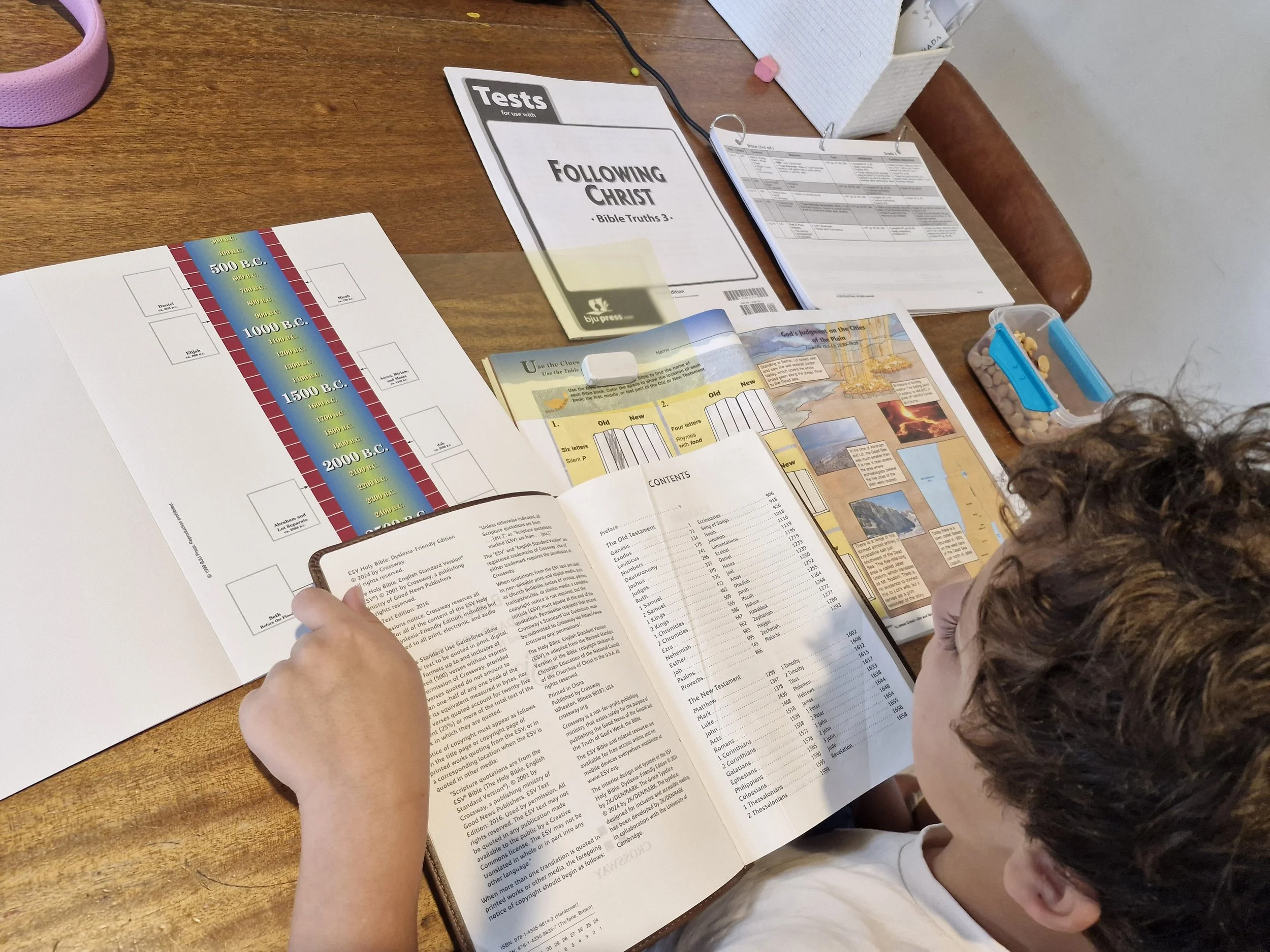
Luke doing BJU Press Homeschool Bible 3 with the workbook, tests, and his dyslexia Bible!
Affiliate links are used in this post—thank you if you use them! No extra cost to you.
Why We Chose BJU Press Bible 3
We originally came to BJU Press because I loved how naturally a biblical worldview was woven through all their subjects. It didn’t feel like Bible was separate—it was part of everything.
By the time Luke reached Grade 3, he was reading confidently enough that I wanted him to begin navigating the Bible for himself, rather than just listening to me read it.
I had also heard consistently good things about BJU Bible from other Christian homeschool mums, which gave me a level of trust going in.
What I was really hoping for wasn’t just more knowledge. I wanted him to feel:
comfortable opening the Bible
confident finding passages
less overwhelmed by it
and gradually more drawn to it
We also read the Bible together as a family each morning, so this curriculum isn’t our only input—it’s part of a bigger rhythm in our home.
What It Looks Like to use
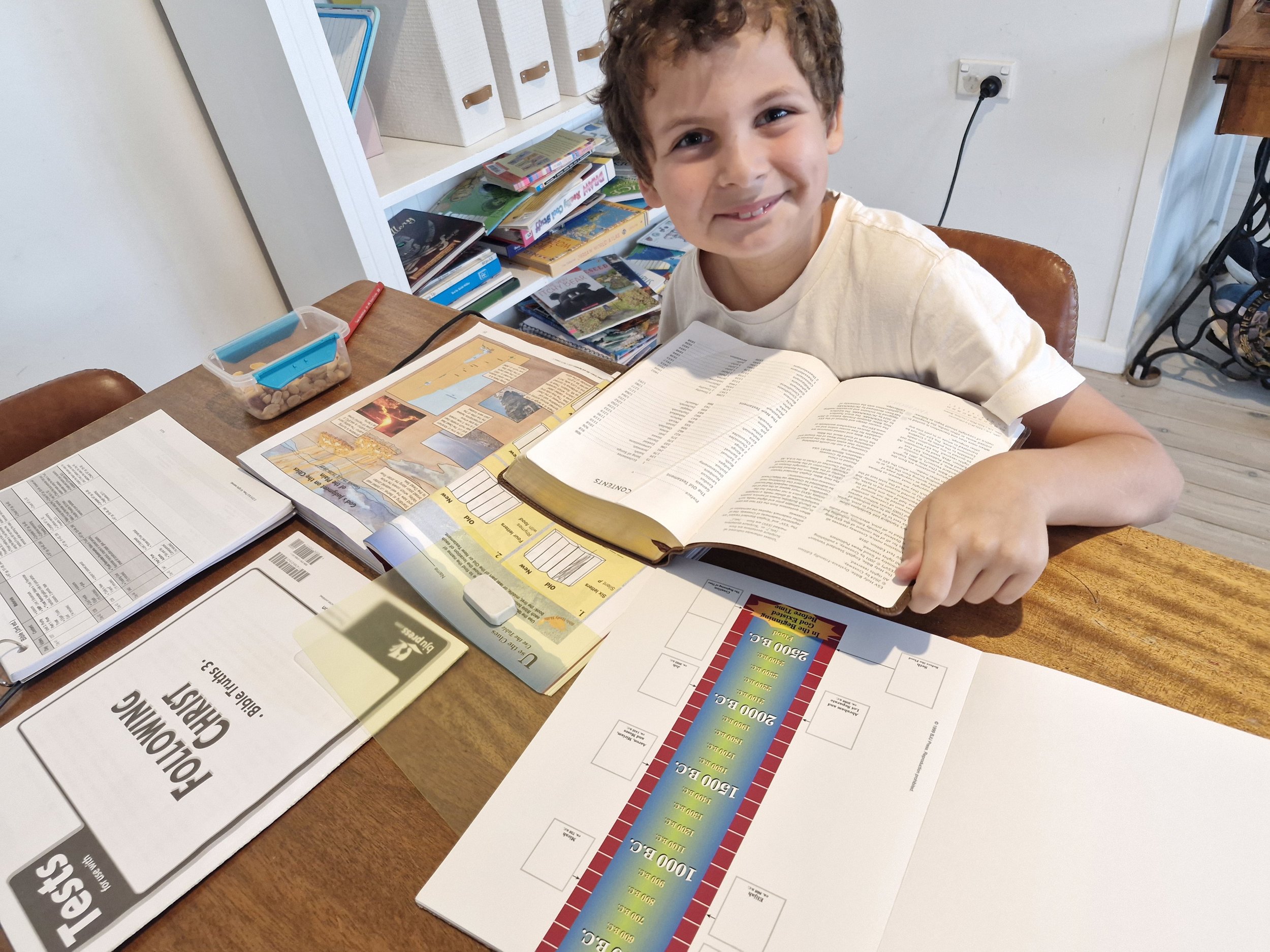
Luke working independently with Bible materials.
This is the part I always want to know when I read reviews—what does it actually look like in a normal day?
For us, it’s very simple.
Luke grabs the laptop, logs into the Homeschool Hub, and clicks into his Bible lesson. He already knows where everything is because we’ve been using BJU for a while.
At the start of the lesson, the teacher tells him what he needs:
which pages to open
whether to grab anything from the materials packet
and sometimes to have his Bible ready
So he pulls out his folder, gets a pencil and rubber, and sets himself up.
The teacher then leads the lesson. They might:
read through a passage together
explain what’s happening
ask questions
or include a song or short activity
Once that’s finished, she explains what to do in the workbook, and Luke completes it on his own.
When he’s done, I make a point that the lesson isn’t finished until everything is packed away properly—books back in the folder, laptop away, pencils put back.
👉 That’s it.
No prep from me. No teaching required unless I want to step in.
Some days we watch the full video, and other days we skip it and just do the workbook, depending on how quickly we want to move.
That flexibility has been key in keeping things from feeling too slow or repetitive.
What You Actually Get (What’s in the Box)
If you’re wondering what turns up when you buy this, here’s what we’re using:
Student Worktext – this is the main workbook. It’s colourful, well laid out, and where most of the written work happens.
Student Materials Packet – this includes extra activities, games, and worksheets the teacher refers to during lessons.
Tests Booklet – used periodically to check understanding.
Video Course (Online Access) – this is the main teaching component and what makes the program so independent.
Student Handouts / Lesson Guide – helpful if you want to follow along as a parent, but we don’t rely on it much.
Missionary Book (Peanut Butter Friends in a Chop Suey World) – Luke is really enjoying this so far, and it adds a real-life faith element.
👉 Everything works together, but the video lessons + worktext are really the core of the program.
If you want to see exactly what’s included, you can check it here:
👉 https://www.bjupresshomeschooling.com/site/include.php?id=63&url=903
Independence (A Huge Strength)
This is a very independent program.
Luke is able to:
log in and start the lesson
follow along with the teacher
complete his work
and pack everything away
That level of independence has made a noticeable difference to our days. It allows me to focus on my younger children or get some work done without feeling like I’m constantly being pulled back.
It’s not that I never help—I do, especially with writing—but overall, this is about as close as we’ve come to a subject that largely runs itself.
The Video Lessons

Mrs. Nason in BJU Press Homeschool Bible 3. Online Pre-Recorded Teacher-Led video lessons.
The video lessons are what make this possible.
The teacher has a very gentle, calm, and warm tone, which I personally appreciate. She walks through Scripture, explains it clearly, and often connects it to everyday life in a way that children can understand.
One aspect I particularly like is how they sometimes include songs that are commonly sung in church and take the time to explain them. It helps children not just sing words, but understand what they’re saying.
That said, it’s worth knowing that:
the videos do feel a little dated
and the tone may feel quite gentle depending on your child
Another important point is that you don’t have to use every video lesson.
We don’t always.
If Luke already understands the concept or we want to move a bit faster, we’ll sometimes go straight to the workbook. Other days, we’ll slow down and watch the lesson together.
That flexibility has been really helpful in keeping it from feeling repetitive.
Faith Impact (What I’ve Noticed)
At the end of the day, this is the part that matters most to me.
Since starting, I’ve seen Luke become much more confident with the Bible itself. He can find books, chapters, and verses without hesitation, and he’s more willing to engage with it independently.

The video teacher shows Luke what to do on the worktext with her pencil on camera.
He’s also started making connections on his own. Recently he was talking about Methuselah’s age and comparing it to 1000 years, which showed me he wasn’t just hearing information—he was thinking about it.
The teaching includes both clear gospel elements and age-appropriate application.
It doesn’t go overly deep into heavy reflection (which is appropriate for Grade 3), but it does consistently point children back to Christ and encourage them to think about what they’re learning.
Content and Depth
One thing that surprised me was the level of depth.
I had expected something fairly simple, but instead they work directly with Scripture and expect children to engage with it in a meaningful way.
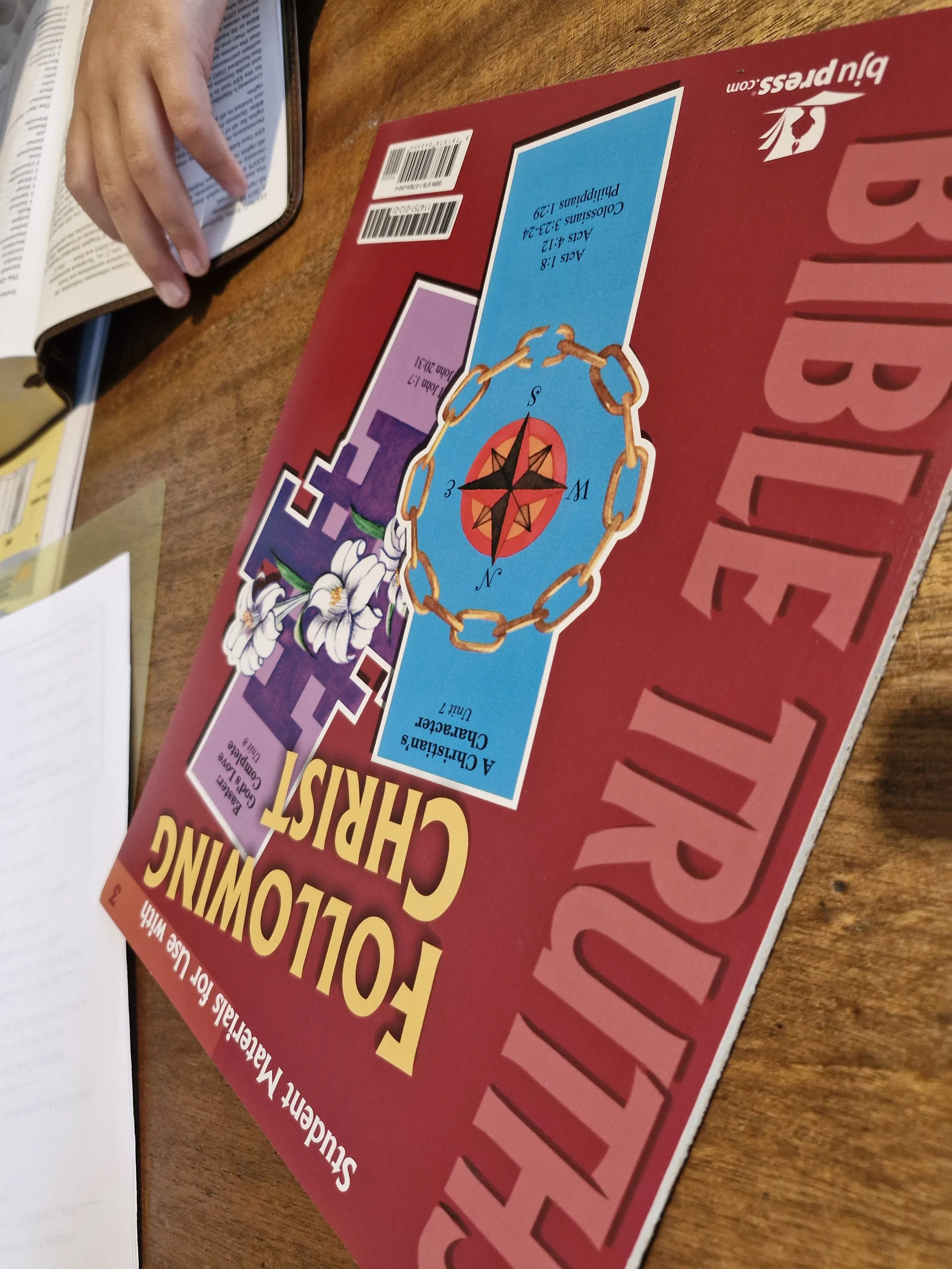
Timeline book and extra color handouts.
There is a good balance of:
Bible knowledge
understanding meaning
memory work
and practical application
It feels academically solid without being overwhelming.
Worksheets and Activities
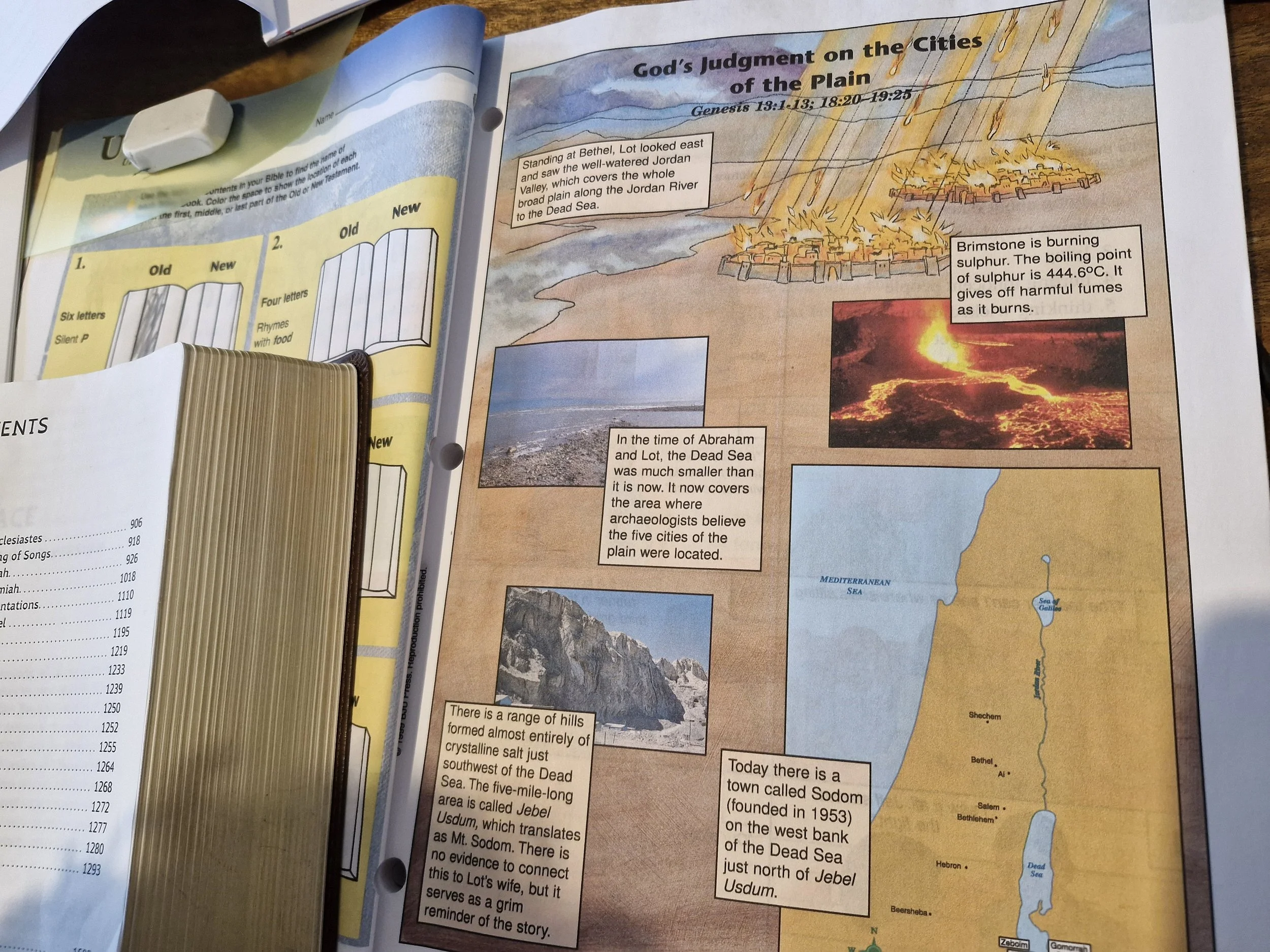
BJU Press Bible 3 Workbook Page.
The worksheets are thoughtfully designed and, importantly, they don’t feel like busywork.
One activity had Luke searching through the Bible using clues to find specific books, which felt more like a game than a worksheet. At the same time, it was teaching him a very real skill.
There is some writing involved, but not an excessive amount. For a child with dyslexia, it’s still a challenge at times, but overall it’s manageable.
How It Fits Into Our Homeschool
What I keep coming back to is how well this fits into real life.
There are mornings where I simply say, “Luke, go and start your Bible,” and he gets on with it.
Meanwhile, I might be helping my toddler, setting up another child’s work, or even just having a quiet moment with a coffee.
That kind of simplicity makes a difference over a full homeschool week.
Pros
Strong biblical and gospel focus
Encourages both understanding and personal reflection
Highly independent for students
Saves a significant amount of time for parents
Flexible—you can move faster or slower as needed
Helps children become confident using the Bible
Cons
The video lessons feel a little dated
The teaching style may be quite gentle for some children
It isn’t a “light” program—there is still some challenge involved
Children who struggle with writing may need support (my son has dyslexia and we use a Dyslexia Bible which has been EXCELLENT!)
It’s also worth noting that if you follow every part of the program strictly, it could feel slow. Using it with a bit of flexibility makes a big difference.
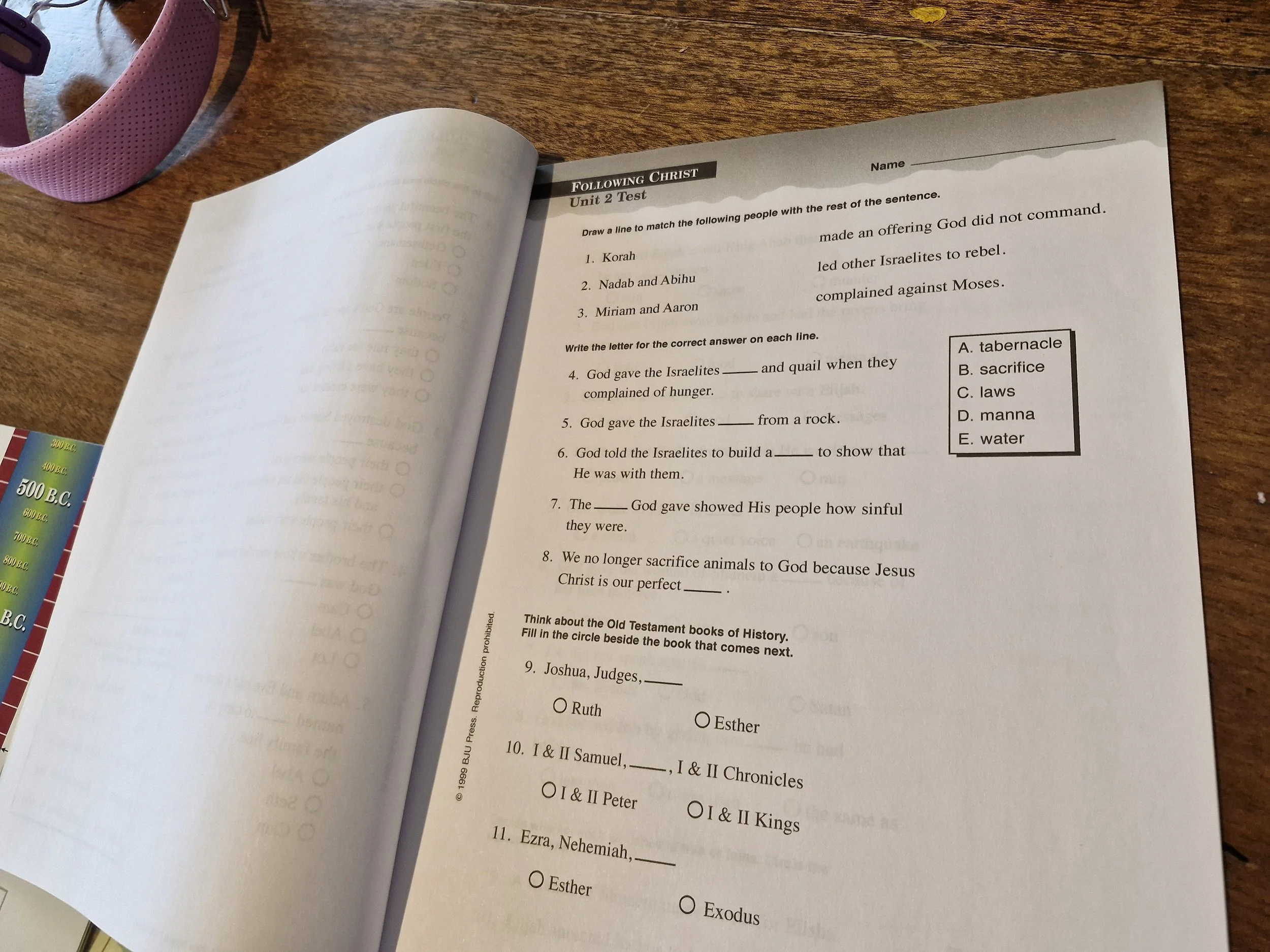
Test booklet
Cost and Value
Compared to other BJU subjects, this one is relatively affordable.
Considering you’re getting:
structured lessons
guided teaching
and a high level of independence
I do think it offers good value.
If you want to see the full details, you can find BJU Bible online with books here.
Who It’s a Good Fit For
This would suit families who:
want a Bible-based program with clear teaching
need something their child can do independently
are balancing multiple children or work at home
value consistency over complexity
Who It Might Not Suit
It may not be the best fit if you:
prefer to teach Bible entirely yourself
are looking for very modern, high-energy videos
want something extremely light or minimal
A Quick Note on BJU Subjects
If you’re deciding where else to invest with BJU Press, I would still say that math is my favourite subject from them by a long way.
You can read my full thoughts here:
👉 https://www.homeschoolcurriculum101.com/blog/bju-press-math-3-online-with-books-review
That said, Bible has been one of the easiest subjects to implement consistently, which counts for a lot.