CLE vs ABEKA — Which Christian Homeschool Curriculum Actually Fits Your Family?
Choosing Christian homeschool curriculum—especially when you’re stuck in the CLE vs ABEKA debate—can feel like standing in the cereal aisle while your wallet quietly panics 😅. Everything looks good. Everything promises great results. And somehow, you’re expected to know whether Christian Light Education vs Abeka is the choice that will actually work for your family… instead of sitting half‑used in the pantry by October.
Two of the most talked‑about options—Christian Light Education (CLE) and Abeka homeschool curriculum—almost always show up in that moment. They’re both rigorous Christian homeschool programs.
They’re both unapologetically faith‑based. And yet… they could not feel more different once you start using them day after day.
This post is built from real use, real parent feedback, and the same framework I shared in the video.
No hype.
No pretending one curriculum works for everyone.
Just an honest, parent‑to‑parent breakdown so you can figure out what actually fits your kids, your time, and your sanity 🙃.
ABEKA Homeschool Curriculum: Private Christian School at Your Kitchen Table
Let’s start with the difference parents notice immediately.
Abeka feels like a private Christian school moved straight into your dining room.
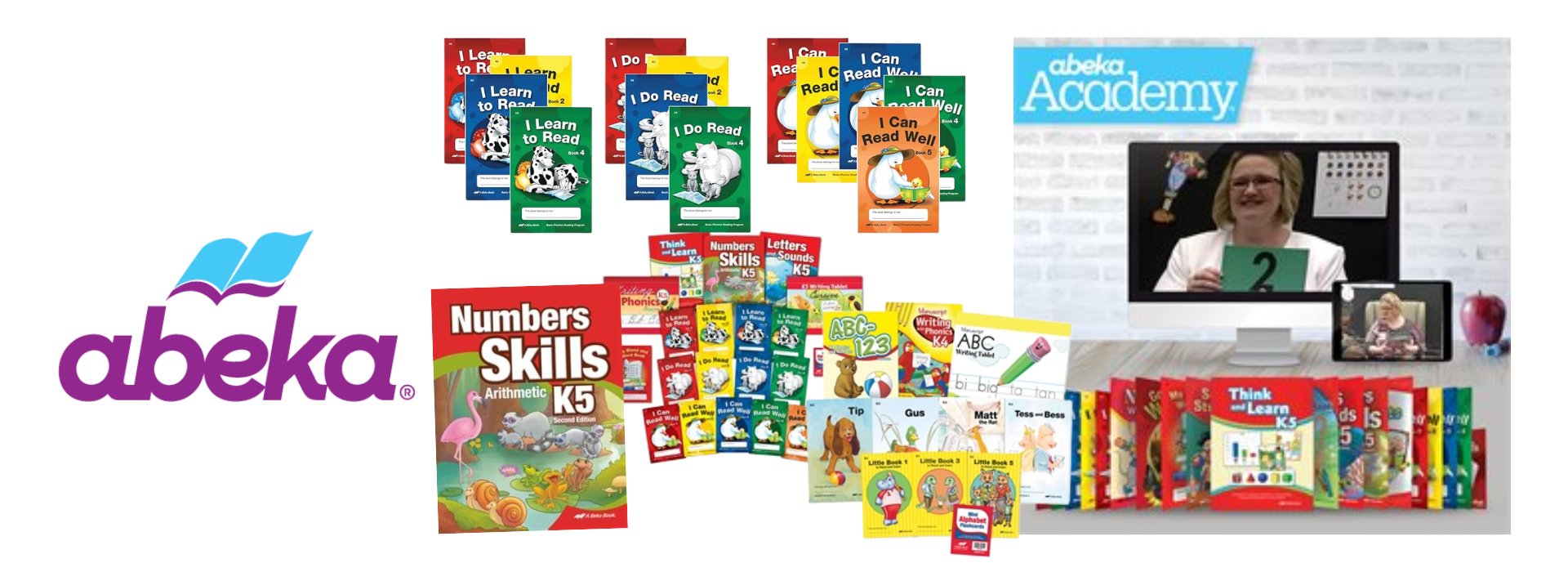
It’s colorful 📚. It’s polished. It’s extremely thorough. Every subject has a textbook, a workbook, and often a teacher‑led video lesson taught by a very enthusiastic instructor standing at a whiteboard somewhere in Florida.
For some families, that structure feels incredibly reassuring. You know exactly what’s being taught, what comes next, and what your child should be accomplishing.
The downside?
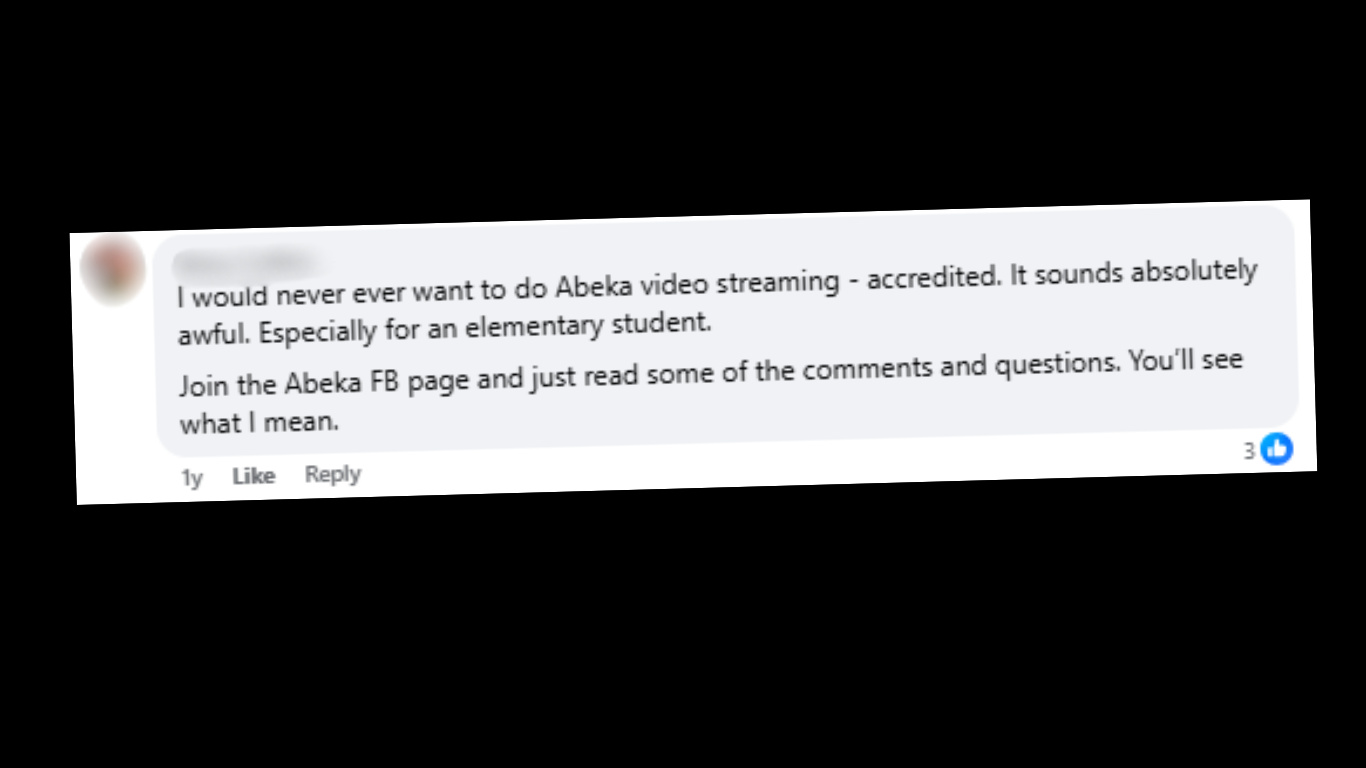
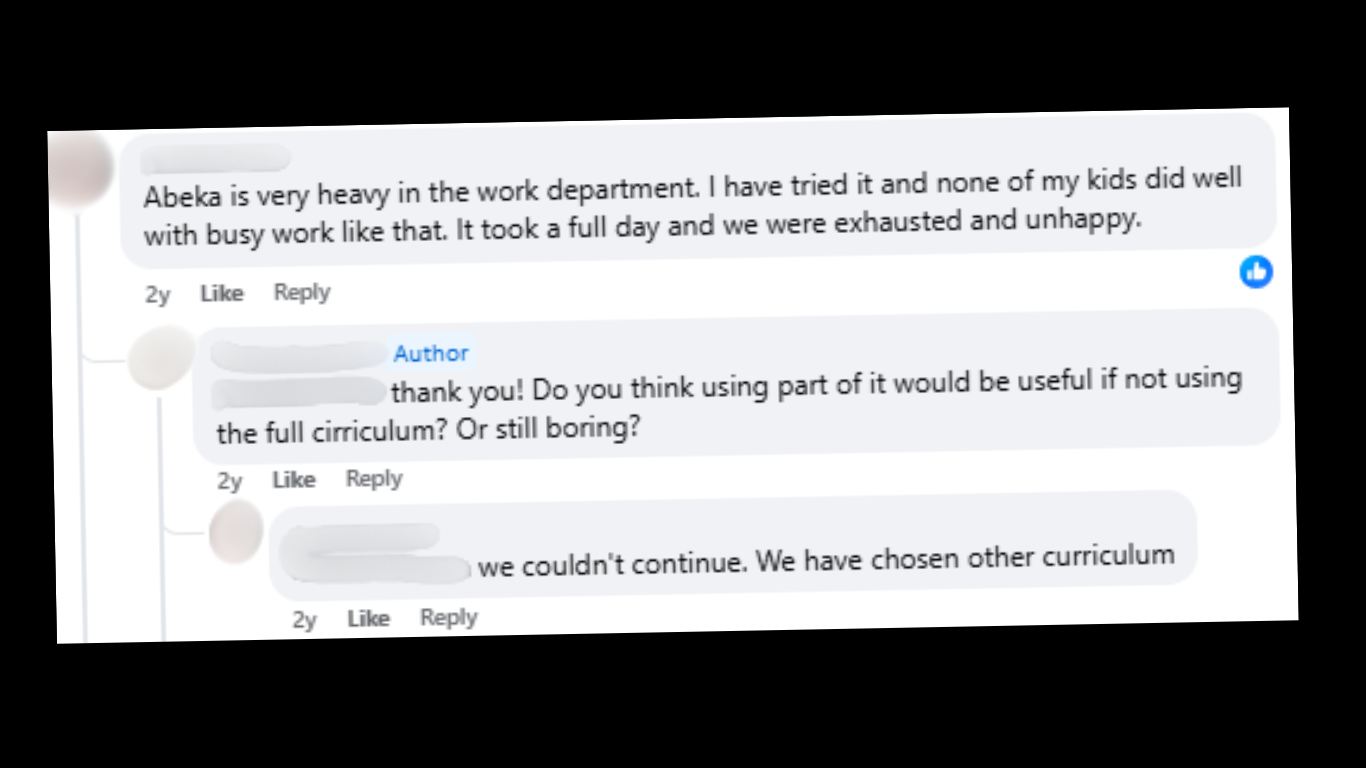
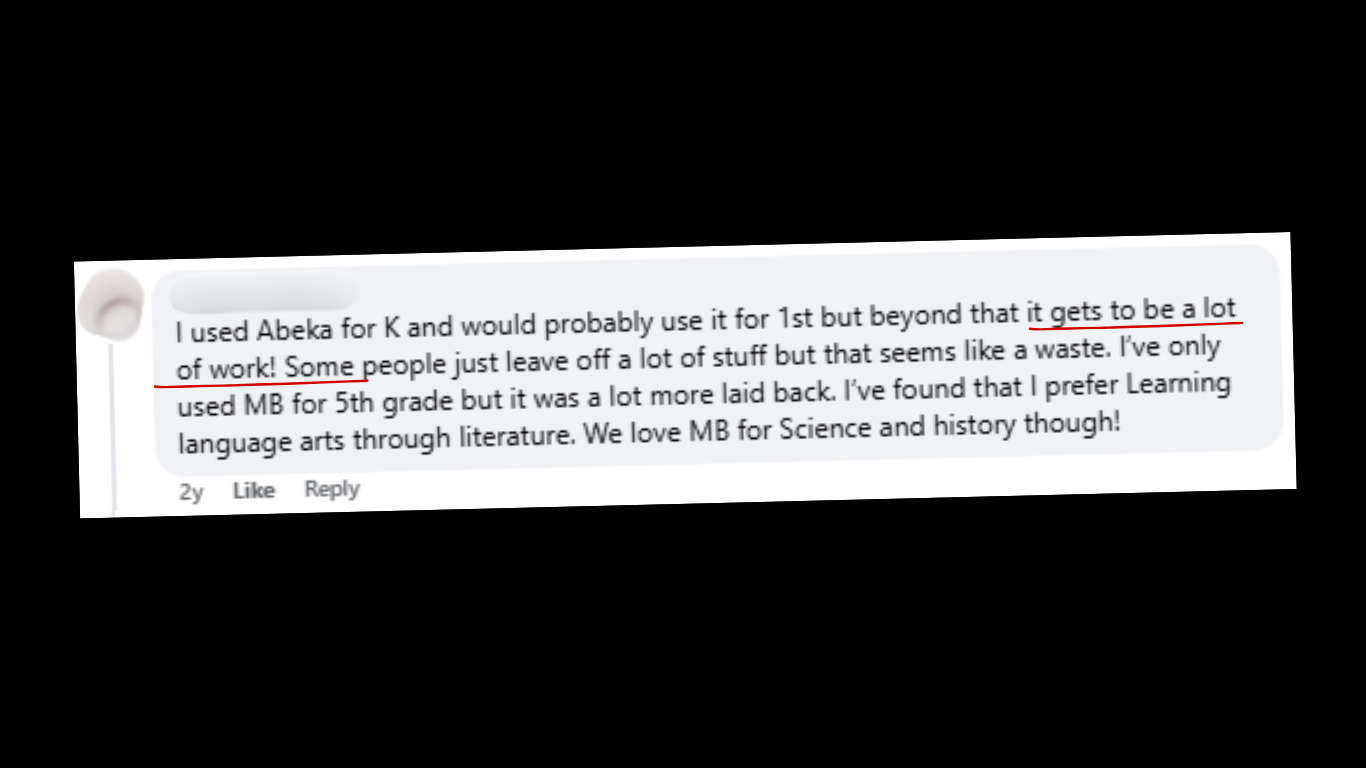
Abeka gives you a LOT. And by “a lot,” I mean a truly impressive mountain of worksheets 🏔️. Enough that many parents quickly realize they cannot—and probably should not—do every single page.

In real homeschool life, most experienced Abeka families treat the curriculum like a buffet, not a checklist. They skip redundant pages, shorten lessons, and focus on mastery rather than completion.
However, if you enroll in Abeka Academy for accreditation, that flexibility largely disappears. You’ve officially signed up to climb Mount Worksheet—oxygen optional 😬. That’s not automatically bad, but it is something you need to understand before committing.
Abeka works best for families who want:
Strong structure
Traditional academics
Teacher‑led instruction
Clear expectations and repetition
Christian Light Education (CLE): Simple, Independent, and Surprisingly Effective
Now let’s talk about Christian Light Education (CLE)—which is basically the opposite vibe.

CLE is quiet. It’s simple. It’s black‑and‑white. When parents first open the workbooks, many have a brief moment of panic because it looks… plain 😳.
No glossy photos. ‘
No flashy graphics.
No teacher on a screen waving a pointer.

But here’s the thing.
What CLE lacks in visual excitement, it makes up for in usability.
CLE is intentionally designed for independent learning. Lessons are short, focused, and incremental. Kids are shown exactly what to do—then allowed to do it.
By upper elementary (and sometimes earlier), many students can complete most of their work on their own, with minimal parental involvement. And that is not an accident.
CLE assumes parents are juggling multiple kids, real life, and maybe even a cup of coffee that’s gone cold ☕.
There’s very little filler.
No busywork for the sake of busywork.
The result is a manageable homeschool workload that actually ends at a reasonable hour.

Is CLE “Too Easy?”
Short answer: No.
CLE is academically solid—especially in language arts and math.
It simply teaches efficiently, without unnecessary extras.
Kids often enjoy it because expectations are clear and achievable. Parents love it because… the school day actually ends 🎉.
Workload Reality Check: Gentle vs Intense
Abeka is often described as “too much.” That doesn’t mean it’s bad—it means it’s intense.
Families who thrive with Abeka usually appreciate:
Repetition
Strong drill
A traditional academic feel
Families who struggle with it often feel buried under the workload.
CLE, by contrast, is gentle but not shallow. It’s rigorous without being exhausting. Fewer tears from kids. Fewer tears from mom. The tissues stay in the box 😌.
Parent Involvement: Who’s Doing the Teaching?
This is often the deciding factor.
With Abeka, the video lessons change everything. When families use them, Abeka can feel fairly open‑and‑go (unaccredited, that is). The teacher explains the material, models the lesson, and keeps things moving.
Without the videos?
Abeka becomes far more parent‑heavy. The teacher manuals are detailed, but they require time, energy, and confidence.
CLE, on the other hand, requires far less direct teaching in the later years after kids can read confidently. Instructions are written to the student. Concepts are introduced gradually. Parents step in when needed—but they’re not expected to be the main instructor for every subject.
If your child needs visual instruction and teacher‑led explanations, Abeka may feel like a relief.
If your child thrives with independence and you need homeschool to run without constant hovering, CLE can feel like freedom 🙌.
Theology: Let’s Talk About It
For many Christian families, theology matters—and it should.
CLE is written from a Mennonite/Anabaptist perspective. It leans Arminian and emphasizes simplicity, modesty, pacifism, and strong community values. These ideas are woven gently into the curriculum—not shouted, but present.
Abeka is broadly evangelical and conservative Protestant. They also have light Arminian leanings.
What matters most is this: both curricula are unapologetically Christian. Scripture is included. Faith is integrated. Jesus is central ✝️.
Neither program hides its worldview or treats faith as an add‑on.
Cost Comparison: Let’s Be Honest 💸
Abeka is expensive. A full year can easily run well over $1,350 per child, especially with video lessons.
CLE is significantly more affordable, often landing at a third to half the cost.
Both programs can be reused in part with younger siblings (a big win), but the upfront price difference is still very real—especially for large families.
Where BJU Press Fits In (And What We Use)
When you put cost, workload, and parent involvement side by side like this, a lot of families start looking for a middle option.
That’s exactly where BJU Press Homeschool came in for us — and we chose it very intentionally.
Here’s why BJU Press works so well, and why families like mine often land here.
BJU Press sits in a very practical middle ground. It keeps the academic strength and structure many families are drawn to in Abeka, without the overwhelming worksheet load, and it offers far more visual teaching support than CLE.
The video lessons are the game‑changer for us. They allow my kids to work 95% largely independently, while I still have full confidence they’re receiving a robust, academically strong, Christ‑centered education. I’m not reteaching every subject from scratch, and I’m not constantly hovering — the teaching is handled well.
That balance matters.
This isn’t about BJU being “better” than Abeka or CLE across the board. It’s about BJU being a strong, sustainable fit for families who want structure and independence — without burnout.
For our home, that balance has been the difference between just getting through homeschool… and actually enjoying it.
Choosing Curriculum Without Losing Your Mind 🤯
So what should you choose?
This is usually the moment parents realize something important: They don’t actually need another option; they need a way to decide.
They need a way to evaluate homeschool curriculum beyond sales pages and Facebook opinions.
That’s exactly why I created the Curriculum Confidence course—a step‑by‑step framework that teaches you how to choose curriculum before you buy it.
It’s not about the “best” program. It’s about making decisions with clarity and peace—and having something you can return to year after year as your kids grow and your homeschool changes.
Final Thoughts: There Is No Perfect Curriculum
CLE is excellent for families who value simplicity, independence, and a manageable daily workload.
Abeka is excellent for families who want traditional structure, repetition, and teacher‑led instruction.
BJU Press often appeals to families who want something in between.
The best homeschool curriculum isn’t the one everyone else loves.
It’s the one you can actually stick with ❤️.
The one that doesn’t make you dread the school day.
The one that fits your kids—not an idealized version of them.
Choosing homeschool curriculum isn’t about finding the “best” option. It’s about finding the right fit for this season, with the confidence to adjust when that season changes.
That’s how homeschool stays sustainable. And that’s how parents stop feeling like they’re failing—when really, they’re just learning what works.