Sonlight Math Review: Pros, Cons, and Who It’s Best For
If you’re considering Sonlight, you need to hear this before you spend a single dollar — because I’ve used Sonlight and I’ve realized this curriculum is either going to create some of the most beautiful homeschool memories your family ever has… or completely wear you out as the homeschool mom.
But you can really see why families fall in love with it.
There’s something special about a homeschool day built around whole books, missionary stories, historical adventures, and children curled up on the couch actually wanting to read. It feels very different from the “open workbook, complete page 17, move on with your life” style of homeschooling.
But there are also some things about Sonlight that people don’t always tell you upfront — especially around independence, worldview, reading level, and how much this curriculum quietly depends on the parent in the younger years.
So in this review, I want to walk you through:
what Sonlight is actually like in real life,
who it works brilliantly for,
who may struggle with it,
whether it’s Christian or secular (it’s nuanced!),
and why we personally use it only for reading instead of as our full core curriculum.
And yes… we’re also going to talk about the whole “evolution alongside creationism” issue that frustrates a lot of Christian homeschool parents.
Also, before we start, something really important to save you time: I made a free comparison spreadsheet of the best Christian homeschool curriculum options, comparing programs like Sonlight, Abeka, BJU Press, MasterBooks, and more side by side. Grab the free spreadsheet here 👇
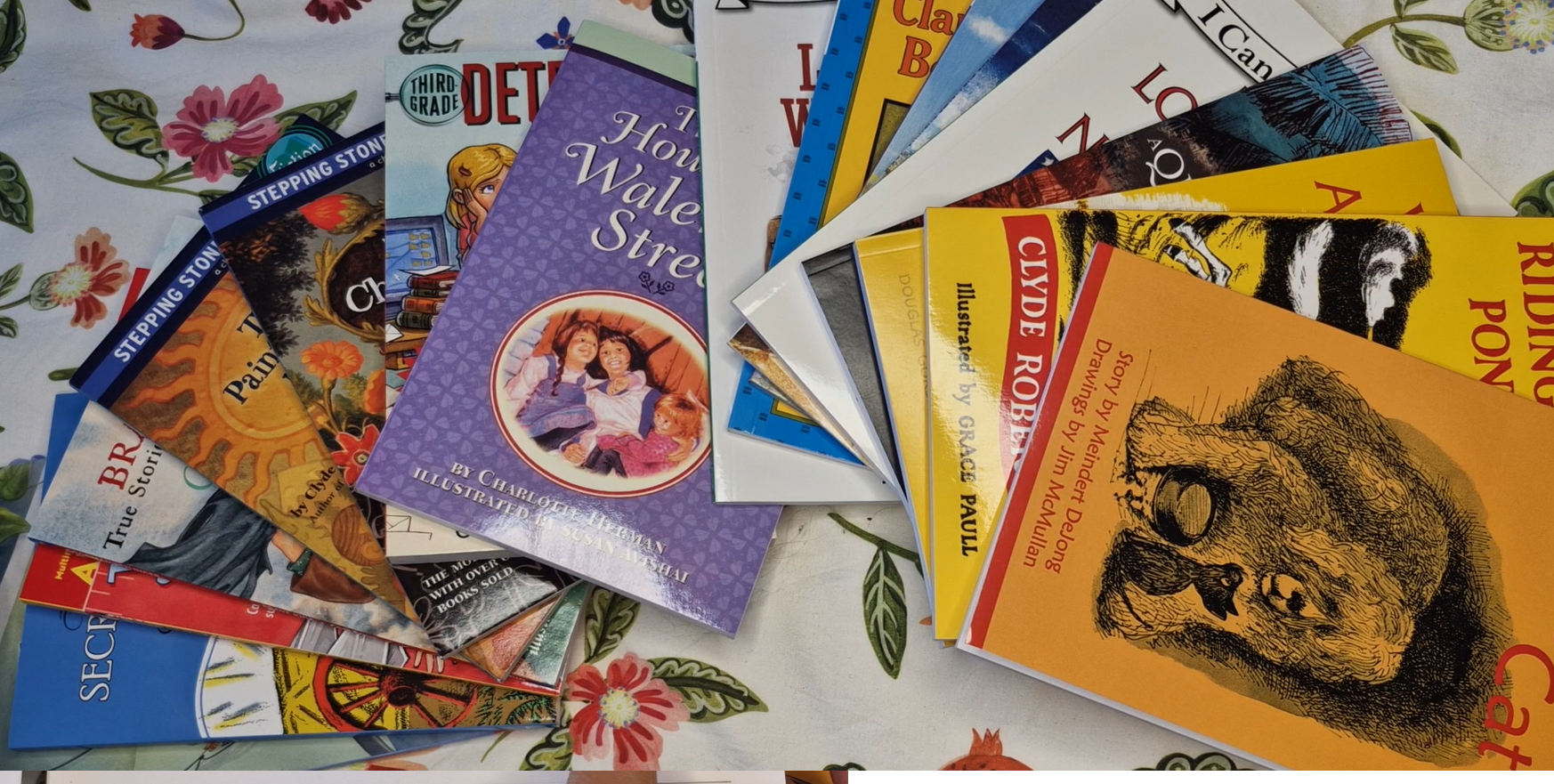
These are all the books we got with our Grade 3 Reading curriculum. We loved it!
Affiliate links used. Thanks for supporting our homeschool at no extra cost to you.
What Is Sonlight?
Sonlight is a Christian literature-based homeschool curriculum built around living books, read-alouds, missionary biographies, history stories, and lots of discussion-based learning.
Instead of children reading tiny snippets from textbooks, Sonlight often has students read entire real books from beginning to end.
And personally, I think this is one of the BEST things Sonlight does.
A lot of traditional curriculums chop books into little pieces for comprehension exercises. Sonlight does the opposite. Children actually get immersed in stories. They care about the characters. They remember what they read - and I think that’s really important in a homeschool curriculum.
The package we personally used was the Grade 3 Readers package.
And Luke, my son, absolutely loved it.
Not “liked it.” Loved it.
It genuinely became his favorite part of the homeschool day.
But let’s have a look at why by going into a discussion on living books…
Why Homeschoolers Love the “Living Books” Approach
Sonlight heavily leans into the living books philosophy that’s very popular in Charlotte Mason homeschooling circles.
Now technically, Sonlight is not a Charlotte Mason curriculum - it’s a literature-based curriculum. But it definitely steers in that direction with its reading choices.
Charlotte Mason believed children should learn through books written by authors who deeply loved and understood their topic. The idea is that these kinds of books feel alive and memorable instead of dry and textbook-ish.
And Sonlight does this really well. The books feel alive.
Some of Luke’s favorites were:
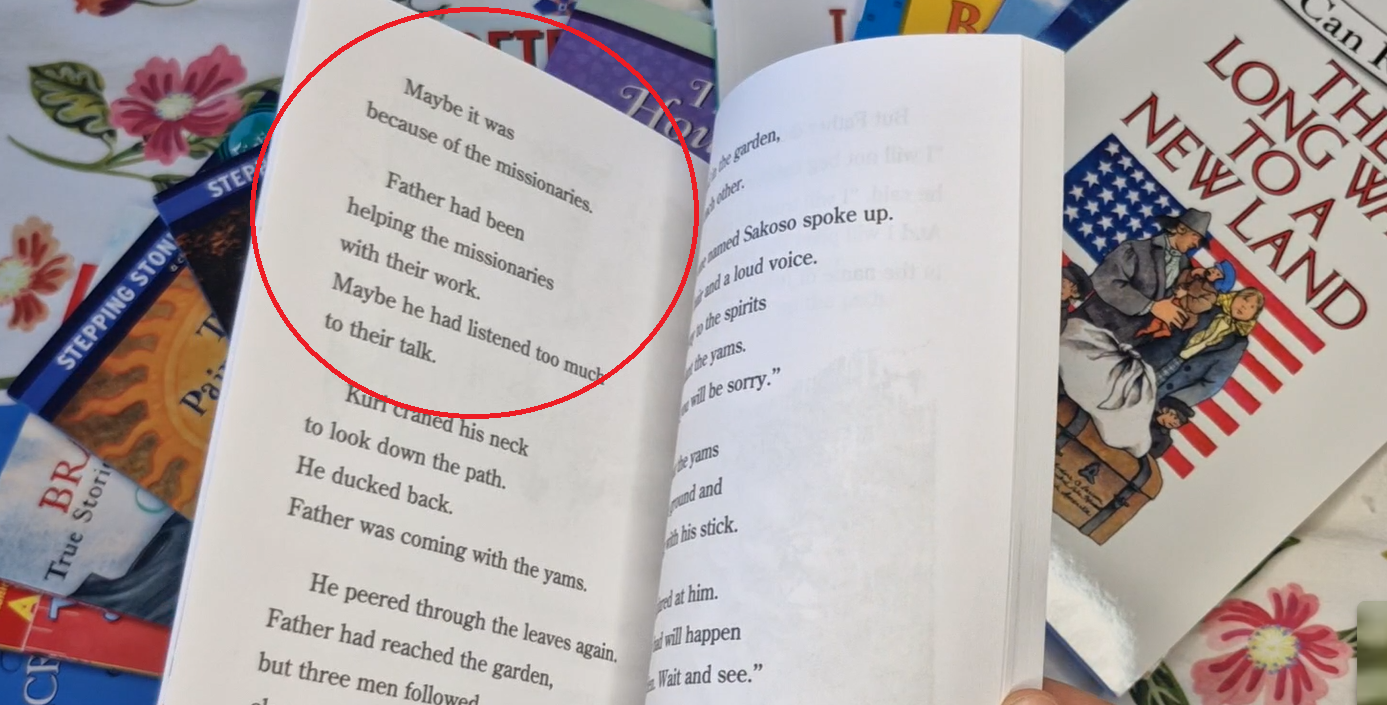
A Question of Yams — a missionary story about choosing Christ over spirit worship.
Riding the Pony Express — which he absolutely adored.
The Chalk Box Kid — a sweet story about a boy adjusting to a new school and neighborhood.
These weren’t books he dragged himself through because Mum told him to. Instead, he genuinely looked forward to reading them.
And I think that’s one reason Sonlight develops such loyal fans. Kids often remember these stories years later because they feel meaningful, emotional, and immersive instead of just educational.
But Sonlight Is NOT Pure Charlotte Mason
This is important to understand because people often lump Sonlight into the “Charlotte Mason” category without realizing it’s actually a blend of approaches.
The literature side feels very Charlotte Mason-inspired.
But other parts of the curriculum are much more traditional.
For example, Sonlight often uses:
So Sonlight itself doesn’t actually publish most of the educational content directly. Instead, they curate resources from lots of other publishers and package them together into one homeschool program.
And some homeschool families really like that because it gives you a blend of different strengths instead of locking you into one rigid homeschool philosophy.
The Biggest Strength of Sonlight
Here’s what Sonlight gets REALLY right: It makes learning feel meaningful.
So many homeschool curricula feel like:
“Complete the worksheet. Tick the box. Move on.”
Sonlight feels different.
The stories stick. The conversations stick. The characters stick.
And unlike curriculums that only use tiny excerpts from books, Sonlight lets children experience full stories from beginning to end. Personally, I think this helps children become actual readers instead of simply “students completing reading assignments.”
That’s a huge difference.
Is Sonlight Parent Intensive?
This depends MASSIVELY on the age of your child.
And I think this is one of the most important things parents need to understand before buying Sonlight.
Younger Years = VERY Parent Intensive
If your child cannot independently read yet, Sonlight becomes heavily dependent on the parent.
Because YOU are:
reading aloud,
guiding discussions,
helping with comprehension,
and keeping everything moving.
If you’ve got toddlers, babies, multiple young children, or a child constantly bouncing off the furniture pretending to be Spider-Man…Sonlight can absolutely become exhausting in the younger years.
Especially the 5-day schedule.
And unless you have a serious little bookworm, I’d personally lean toward the 4-day schedule.
We intentionally chose the 4-day option because I’d already heard many homeschool moms say the 5-day version became overwhelming.
Older Years = MUCH More Independent
But once children become strong readers? Everything changes.
This is where I think Sonlight starts working MUCH better.
Luke is now Grade 3, age 8, and because he can independently read now, Sonlight became surprisingly easy to implement. (Before this age, I can only imagine how frustrating it would have been for both of us to use!!!)
The teacher guide (pictured below so you can get a good look at it) was short and straightforward. I’d simply tell Luke what to read for the day and off he went.
No drama. No constant supervision. No emotional exhaustion.
One of my biggest takeaways after using Sonlight is this: Sonlight works far better once children can independently read.
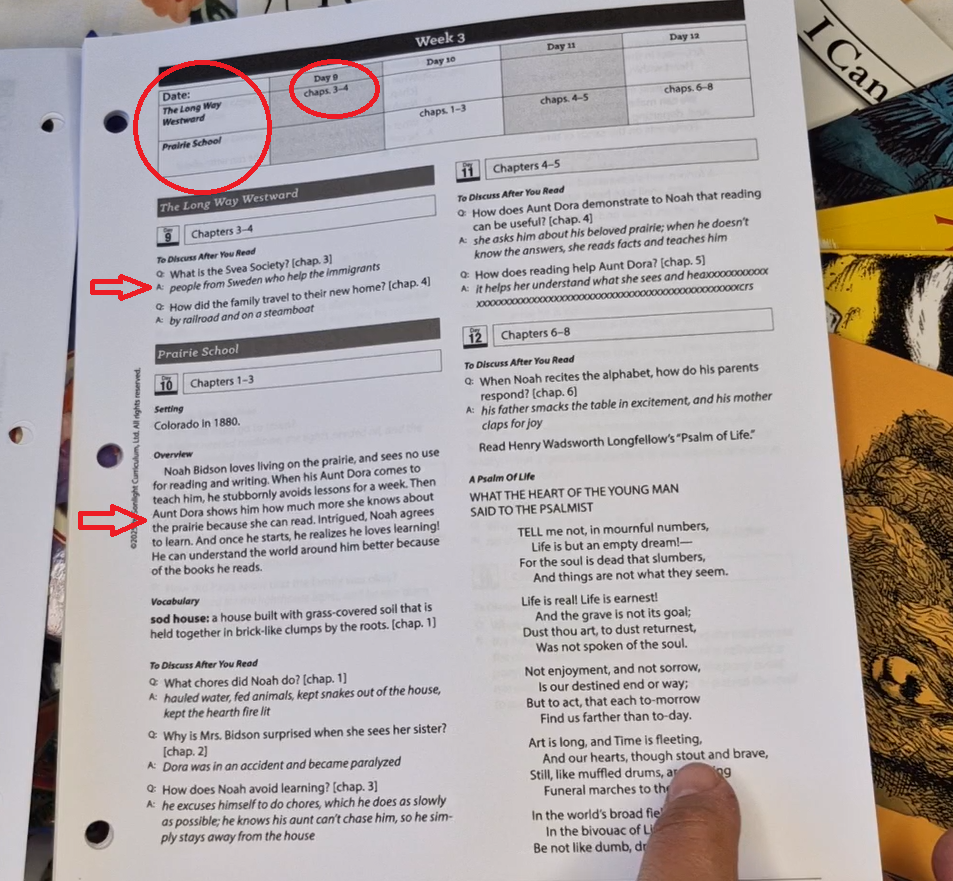
You just need to find the book labeled and the chapter, ask the questions and read the overview paragraph to your child, and you can teach Sonlight!
Who Thrives With Sonlight?
I think Sonlight works best for:
book lovers,
strong readers,
kids who hate endless worksheets,
and families who love a cozy homeschool atmosphere.
If your child learns best through:
stories,
immersion,
relationships,
and discussion,
Sonlight may feel great. Especially once they’re old enough to sit still and read independently for a while.
Who May STRUGGLE With Sonlight?
I can’t imagine Sonlight working especially well for:
children who strongly dislike reading,
dyslexic children struggling to decode text,
very active “busy boys” who can’t sit still,
or overwhelmed mums already drowning in little children.
That doesn’t mean it’s impossible.
But I do think families need to be realistic about whether this style of learning actually suits their child.
And if your child struggles significantly with reading, I’d either:
wait until they’re older,
choose a lower level,
strongly consider the 4-day schedule instead
or pick a different Christian homeschool curriculum that helps with the teaching load. We use BJU Press and it’s great for this.
Is Sonlight Christian or Secular?
This is where things get complicated.
And this is one of the biggest reasons we personally ONLY use Sonlight for reading instead of as our full curriculum.
The teacher guides themselves are definitely Christian.
But many of the actual books and resources inside the curriculum are secular.
For example:
Sonlight science often uses Usborne books, which are completely secular.
Some resources discuss evolution alongside creationism.
Vocabulary programs like Wordly Wise are secular.
Some history discussions include opposing worldviews.
Now to be fair to Sonlight, they do warn parents in the teacher guides when worldview conflicts arise so families can discuss them with their children.
Some Christian homeschool parents really appreciate that because they feel it prepares children to defend their faith in the real world.
Other parents find it confusing and frustrating.
Personally, I find the worldview mixture annoying.
And that’s why we chose not to use Sonlight science or history.
At the same time though, I will say this: even the secular books inside Sonlight generally feel wholesome. The families, stories, and overall atmosphere usually still feel morally clean (a Christian feel - phrases like, ‘God willing,’ or ‘We’ll leave it to God,’ are common) and gentle compared to mainstream modern children’s media.
So while I personally wouldn’t call Sonlight deeply biblical in every subject, I also wouldn’t compare it to mainstream secular school curriculum either.
It sits somewhere in the middle.
Is Sonlight Worth the Money?
Yes — IF your family genuinely loves books.
Sonlight is expensive. A full package can easily approach $1000+ per level.
But there are several things that make the price easier to justify:
the books are reusable,
the resale value is strong,
younger siblings can use them later,
and the literature itself is very high quality.
Luke is still interested in rereading most of his Sonlight books even after finishing them.
That says something.
This doesn’t feel like disposable curriculum - like half the rubbish i find in my local kids s.
Sonlight vs My Father’s World
My Father's World and Sonlight actually feel surprisingly similar in some ways.
Both:
are literature-rich,
use teacher guides,
pull from outside homeschool publishers,
and create a cozy homeschool atmosphere.
But personally, I trust My Father’s World’s worldview more consistently.
MFW sticks with one view of origins (creationism), is much more overtly biblical, and less worldview-mixed overall.
MFW also incorporates the Unit Studies approach alongside the Charlotte Mason and Classical methods.
Sonlight vs Beautiful Feet Books
Beautiful Feet Books also shares similarities with Sonlight because both use:
lots of books, and
teacher guides.
Beautiful Feet is all about literature-rich learning with parents. But BFB shines more (I think) for family-style learning and younger-years.
The curriculum is really made for mom to be involved.
It also teaches across several grade levels so if you have kids within a few years of each other, this curriculum shines.
By contrast, Sonlight is much more grade-level specific.
I’d also say Sonlight probably contains more Christian content overall than Beautiful Feet, even though neither curriculum is deeply Bible-saturated.
Sonlight vs Ambleside Online
Ambleside Online is the free alternative many homeschoolers compare to Sonlight.
Both heavily use:
living books,
literature, and
narration.
But Ambleside requires MUCH more parent planning and book sourcing. It’s also as clost to a pure Charlotte Mason approach as you can get.
There will be full on notebooking and mom involvement from an Ambleside Online curriculum done right!
And once you start buying all the books for Ambleside anyway, it may not feel quite as “free” as people initially expect.
Sonlight vs Heart of Dakota
After Ambleside, Heart of Dakota probably feels the most Charlotte Mason-ish out of all these comparisons.
Both Sonlight and HOD:
use rich literature,
teacher guides,
reusable books,
and strong read-aloud experiences.
But Heart of Dakota feels:
gentler,
more intentionally paced,
and more distinctly Charlotte Mason in feel.
I’d also say there is way more Christian content and a focus on Christlike discipleship in Heart of Dakota. Again, you’re getting more notebooking, nature study and so on from this curriculum than Sonlight, which only has hints of Charlotte Mason.
Sonlight vs Abeka
Abeka and Sonlight are almost opposites in homeschool style, which is why families are usually drawn strongly toward one or the other.
Abeka is much more:
traditional,
workbook-heavy,
structured,
fast-paced,
and academically rigorous.
Sonlight, on the other hand, is far more:
literature-rich,
discussion-based,
relationship-driven,
and story-centered.
With Abeka, children are usually learning through textbooks, repetition, drills, and structured lessons. With Sonlight, children are learning through living books, read-alouds, missionary stories, and immersion in literature.
I’d also say Abeka is much more overtly Christian throughout the curriculum itself, whereas Sonlight often mixes secular resources and opposing worldviews alongside Christian teaching.
And practically speaking, Sonlight usually requires far more reading time from either the parent or the child, while Abeka tends to feel much more like traditional school at home.
Neither approach is automatically “better.” They simply fit very different kinds of families and learners.
If you want a much deeper breakdown of Abeka itself, I’ve embedded my full Abeka review video below for a better look at it.
Sonlight vs BookShark
BookShark and Sonlight are extremely similar because they actually came from the same original company background. BookShark is basically the secular version of Sonlight.
Both curriculums are:
literature-rich,
built around living books,
discussion-based,
and focused on learning through stories instead of textbooks.
And sometimes the actual content is nearly identical apart from the worldview framing.
The biggest difference is worldview.
Sonlight still includes:
missionary stories,
Christian teacher guides,
and biblical discussion points,
while BookShark removes most of the Christian content and presents itself as secular instead.
But in terms of the actual homeschool feel, they’re incredibly similar. If you like one, you’d probably like the structure of the other too.
And if you want a much deeper breakdown of the differences between Sonlight and BookShark, I’ve embedded the video below for a better look at it.
What I Would Personally Buy Again From Sonlight
Without hesitation: the reading.
That’s the part I genuinely loved.
The literature side of Sonlight is where I think the curriculum really shines.
And that’s exactly why we used it.
I specifically wanted Luke reading whole books instead of little chopped-up excerpts like many traditional reading programs use.
That mattered to me.
If you want to take a look at sonlight for yourself, you can see all their curriculum here.
Why We Still Use BJU Press for Our Main Curriculum
Even though we loved Sonlight reading, we still use BJU Press as our main core curriculum for everything else.
And the biggest reason is independence.
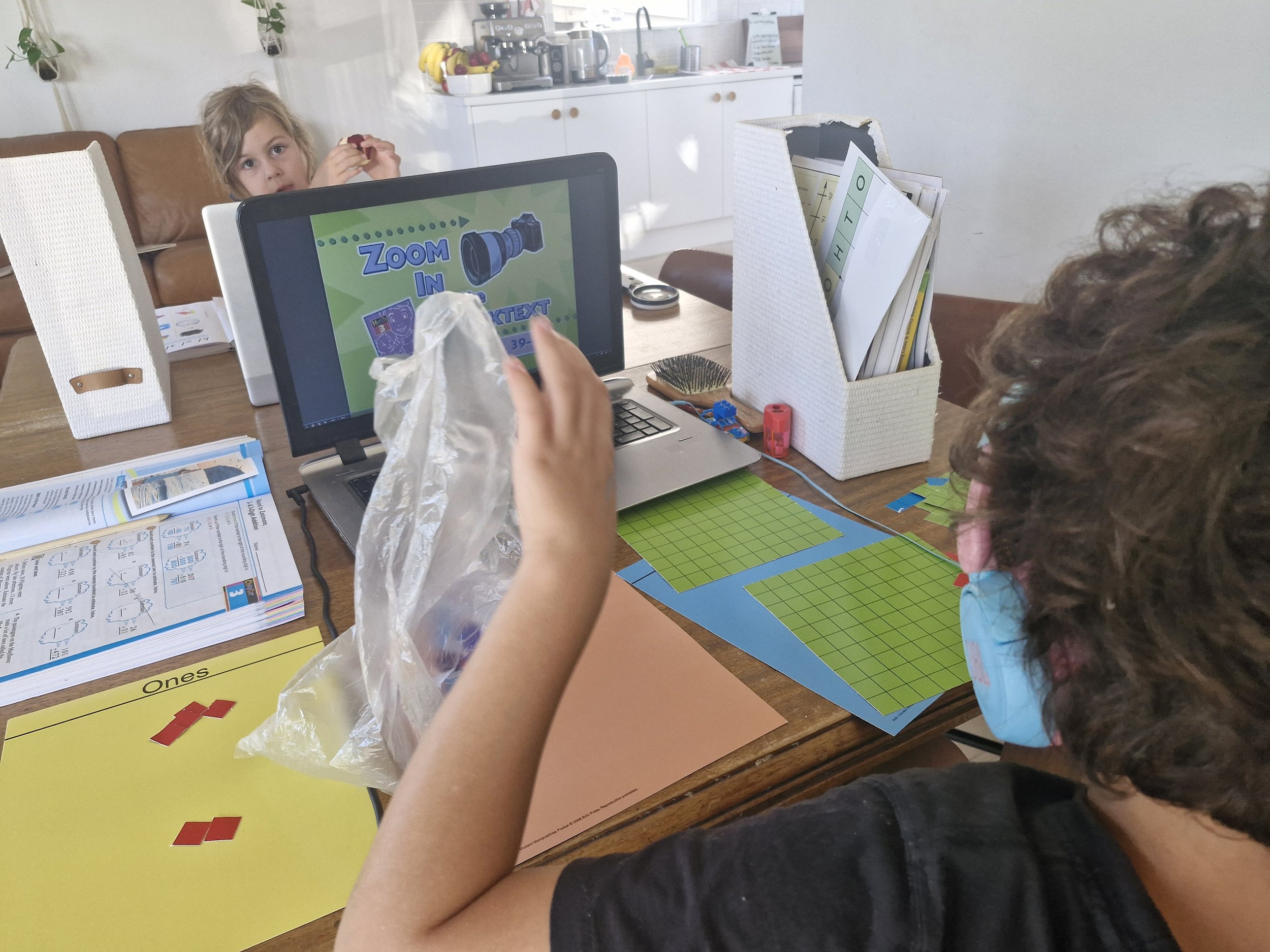
Luke learning Math with BJU Press 95% independent from my help! Because I have a dodgy back and a toddler, this is amazing!
In the younger years especially, BJU was amazing because:
the video teachers did the reading,
the teaching happened for me,
and I didn’t have to personally sit beside multiple children reading aloud all day long.
That was a huge blessing during the preschool to Grade 2 years.
Now that Luke is older and more independent, Sonlight works much better for reading. But for the rest of our homeschool, BJU still fits our season of life better.
If you want to see what that actually looks like in real life, take a look at my BJU Press day-in-the-life video below — or go checkout Luke’s curriculum he’s using this year here. .