Abeka Review: Pros, Cons and Who it’s best for?
If you’re considering Abeka, you need to hear this before you spend a single dollar — because Abeka can either build incredibly strong academic foundations… or completely burn out your homeschool.
And I say that as someone who actually grew up using it.
I still remember driving with my mum and dad to the homeschool curriculum warehouse over 30 years ago. We’d walk through rows and rows of homeschool curriculum, and there would always be giant stacks of Abeka books everywhere — colorful workbooks, spiral-bound teacher manuals, giant curriculum kits. Then we’d pile into the car for the two-hour drive home, flipping through all the books, excited to start the new year.
And in many ways, Abeka really did give me a strong educational foundation.
But it also made me cry.
So this review is not going to be:
“Abeka is bad.”
Because that’s not true.
Abeka works.
The real question is:
Is the academic rigor worth the emotional and time cost for YOUR child and family?
Also, before we start, something really important to save you time: I made a free comparison spreadsheet of Christian video-based homeschool curriculum options that compares programs like Abeka, BJU Press, Sonlight, MasterBooks, and more side-by-side. Grab the free spreadsheet here 👇
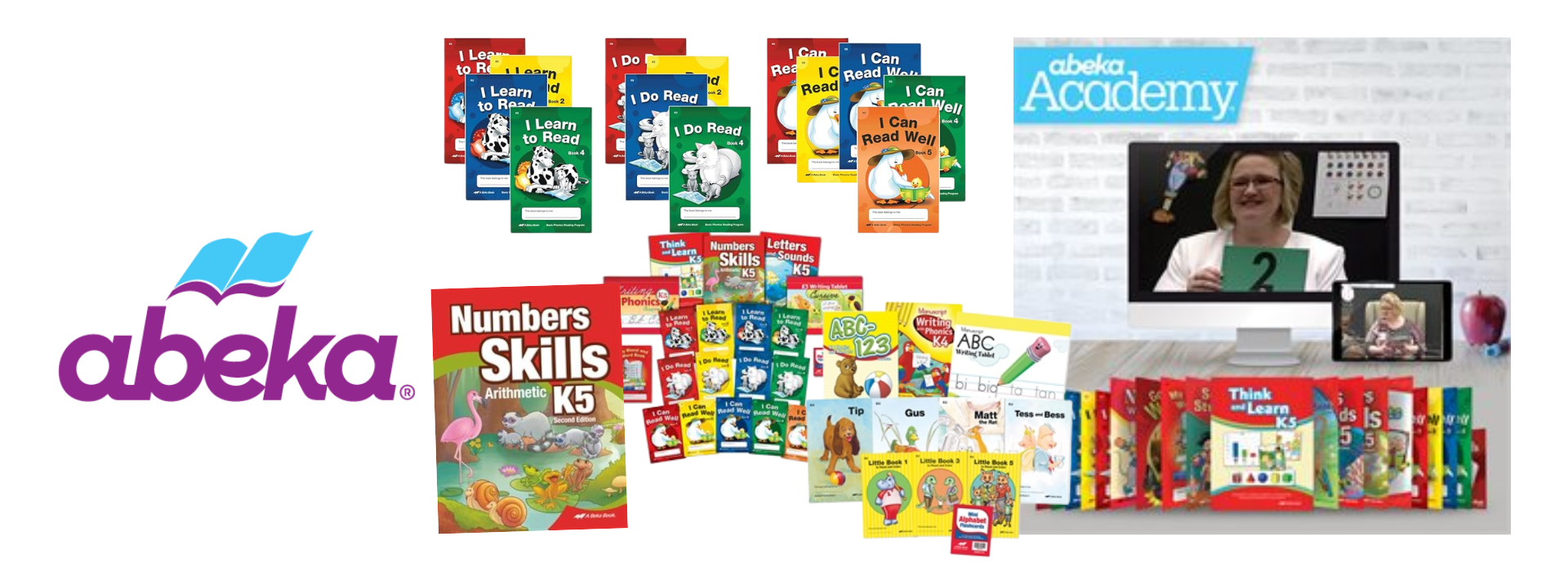
This is what the Abeka Phonics curriculum looks like. Very bright and it comes with engaging looking video lessons.
Affiliate links used. Thanks for supporting our homeschool at no extra cost to you.
What Is Abeka?
Abeka is probably one of the most popular Christian homeschool curriculum programs available today.
It’s:
traditional,
academically rigorous,
workbook-heavy,
highly structured,
strongly Protestant Christian,
and very much “school at home.”
Abeka uses textbooks, workbooks, drills, tests, repetition, and lots of review.
This is not a gentle “unschooling under a tree while sketching mushrooms in nature journals” curriculum.
This is:
“Sit down. Open your books. Let’s do school.”
And some families LOVE that.
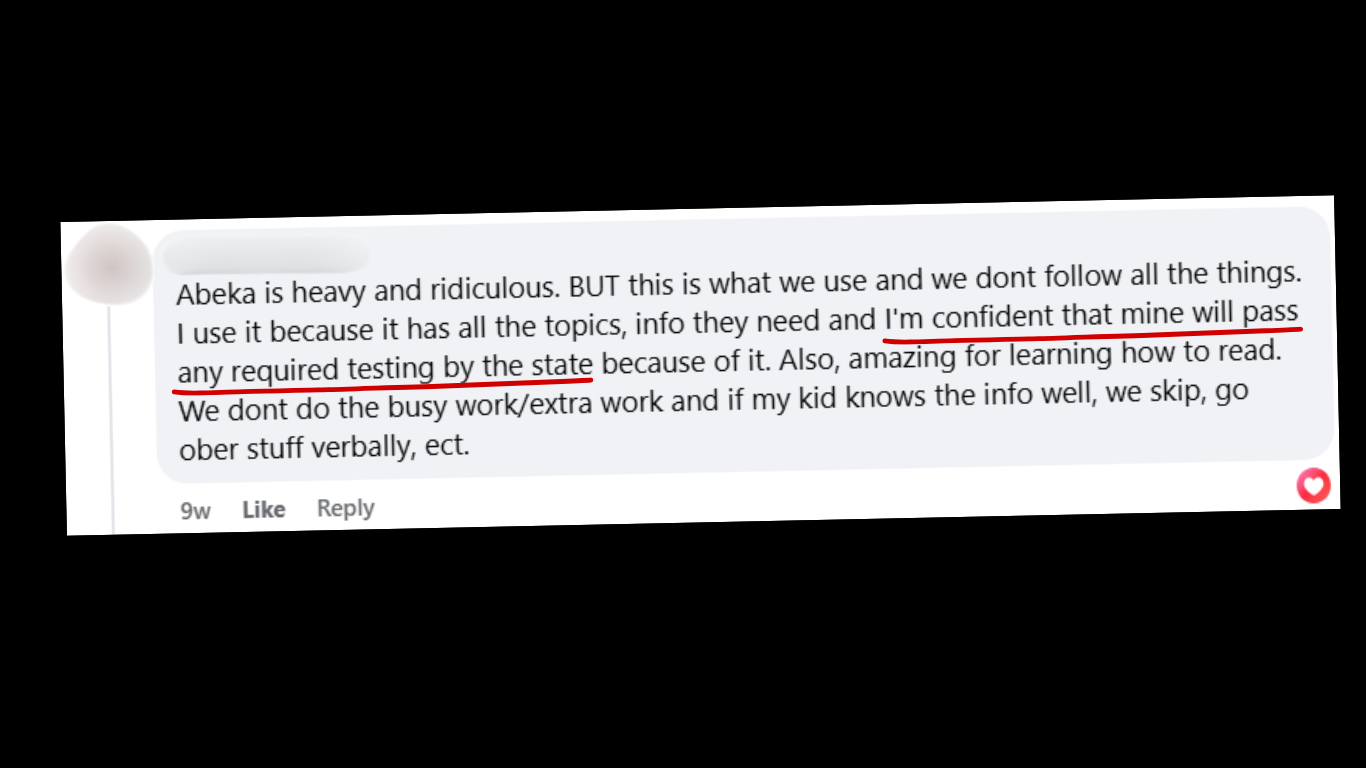
Comment about this curriculum. It's heavy and ridiculous, but this mom is confident her kids will pass any required testing by the state. And that brings her peace!
The Biggest Strength of Abeka
Let’s give credit where credit is due: Abeka creates strong academic foundations.
Particularly in the younger years, Abeka does an excellent job building strong foundations in phonics, reading, spelling, grammar, math basics, and even Bible knowledge. The curriculum is incredibly thorough, and that’s one reason so many families stay loyal to it for decades.
In fact, I fully agree with the common homeschool opinion that:
Abeka phonics is one of the strongest phonics programs available.
It’s very explicit.
Very systematic.
Very thorough.
And it works beautifully.
A lot of homeschool moms compare Abeka phonics with All About Reading.
The difference is:
Abeka is much more traditional and workbook-based,
while All About Reading uses manipulatives and a gentler hands-on approach.
Personally, if I had to pick one part of Abeka I still strongly respect today?
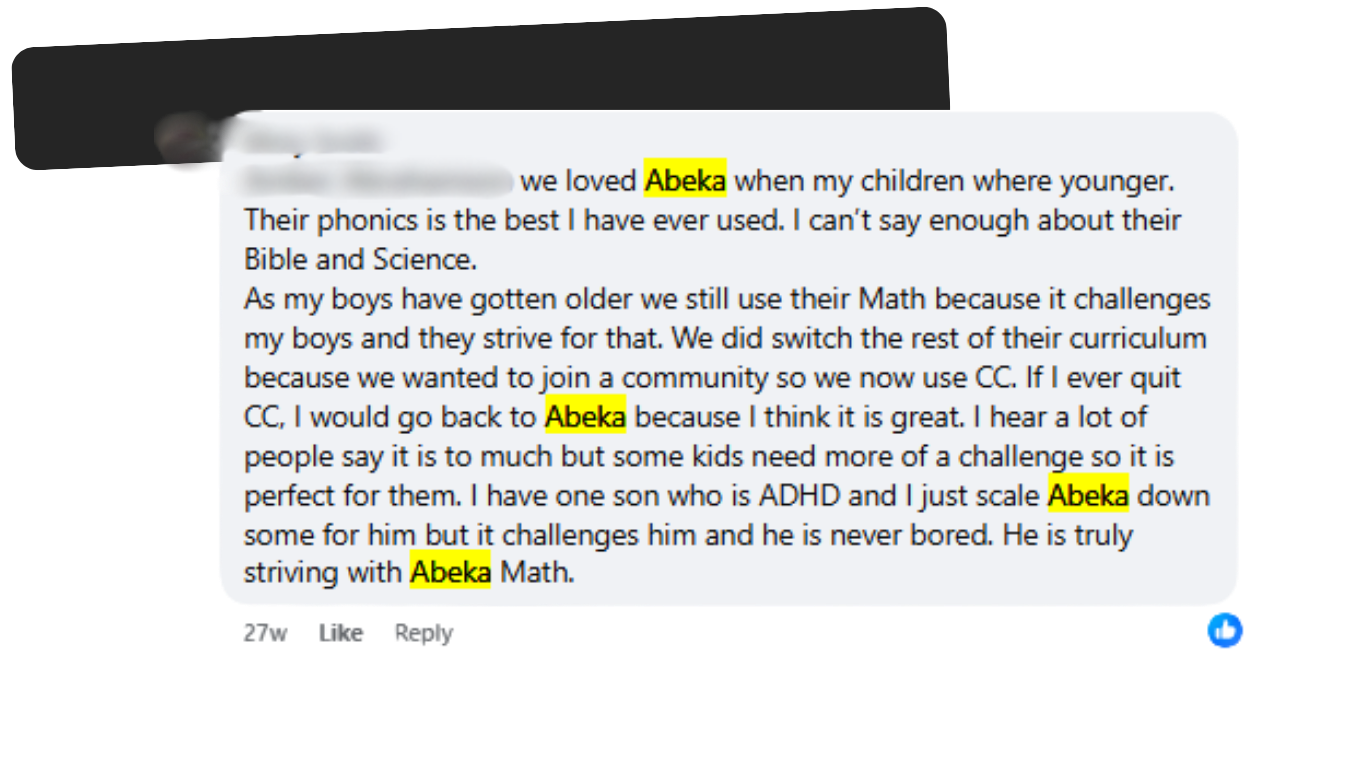
It would absolutely be the phonics. Checkout this lady’s comment from a Christian homeschooling forum:
What Abeka FEELS Like
This is something most reviews completely skip over.
The FEEL of a curriculum matters.
Especially when your child is sitting in front of it every single day.
Abeka Academy
The video-teacher version is called Abeka Academy. And the setup is very school-like. You can see that in the screenshot below.
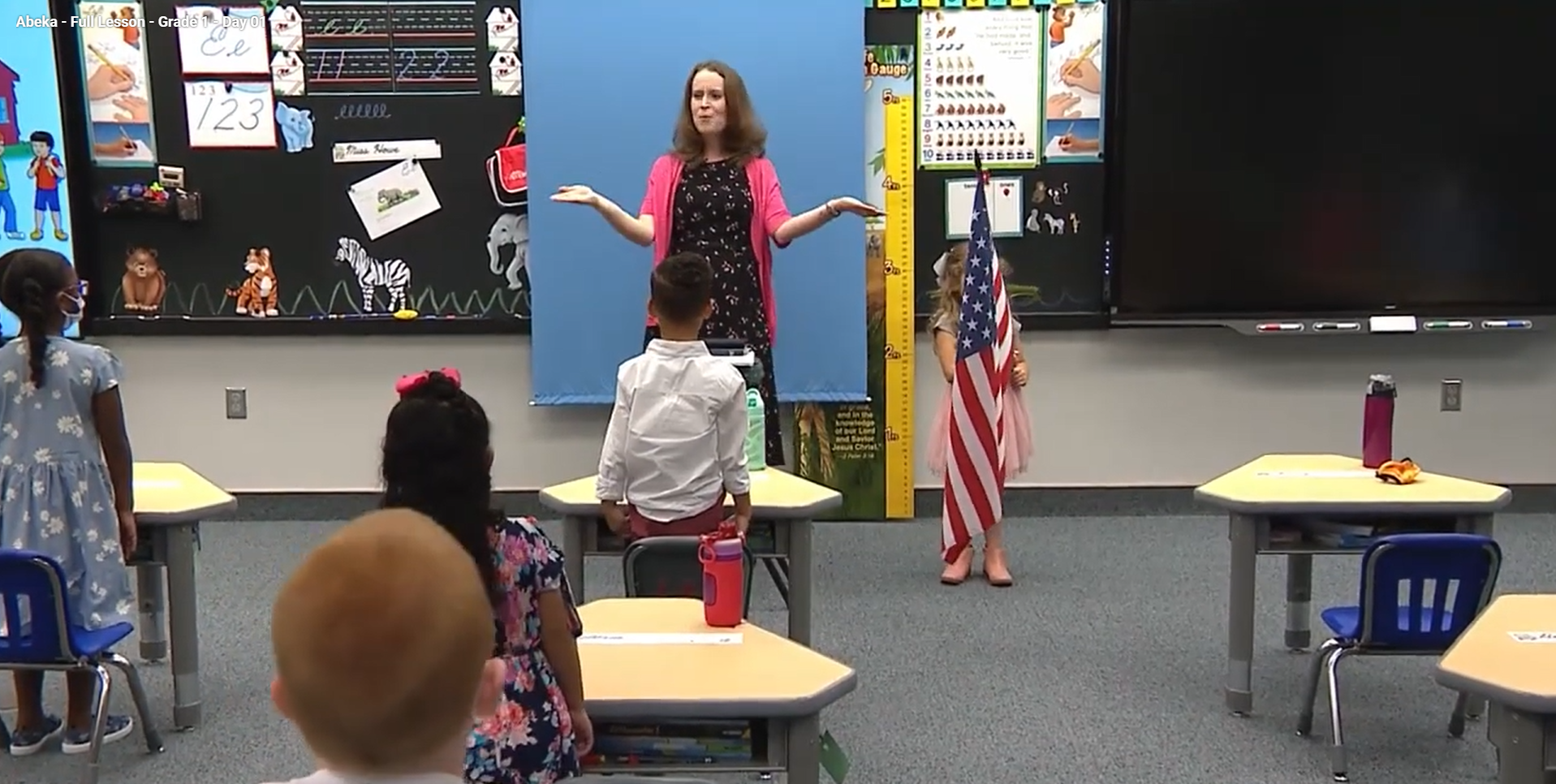
The videos show:
a real classroom,
a real teacher,
neatly groomed students,
classroom interaction,
and the teacher speaking both to the class AND to “students watching at home.”
Some children LOVE this.
It makes them feel part of a classroom.
But other homeschool families really dislike that atmosphere because they intentionally left school and don’t want to recreate it at home.
That’s a very personal decision.
The Hidden Cost of Abeka
This is the part they don’t put in the brochure.
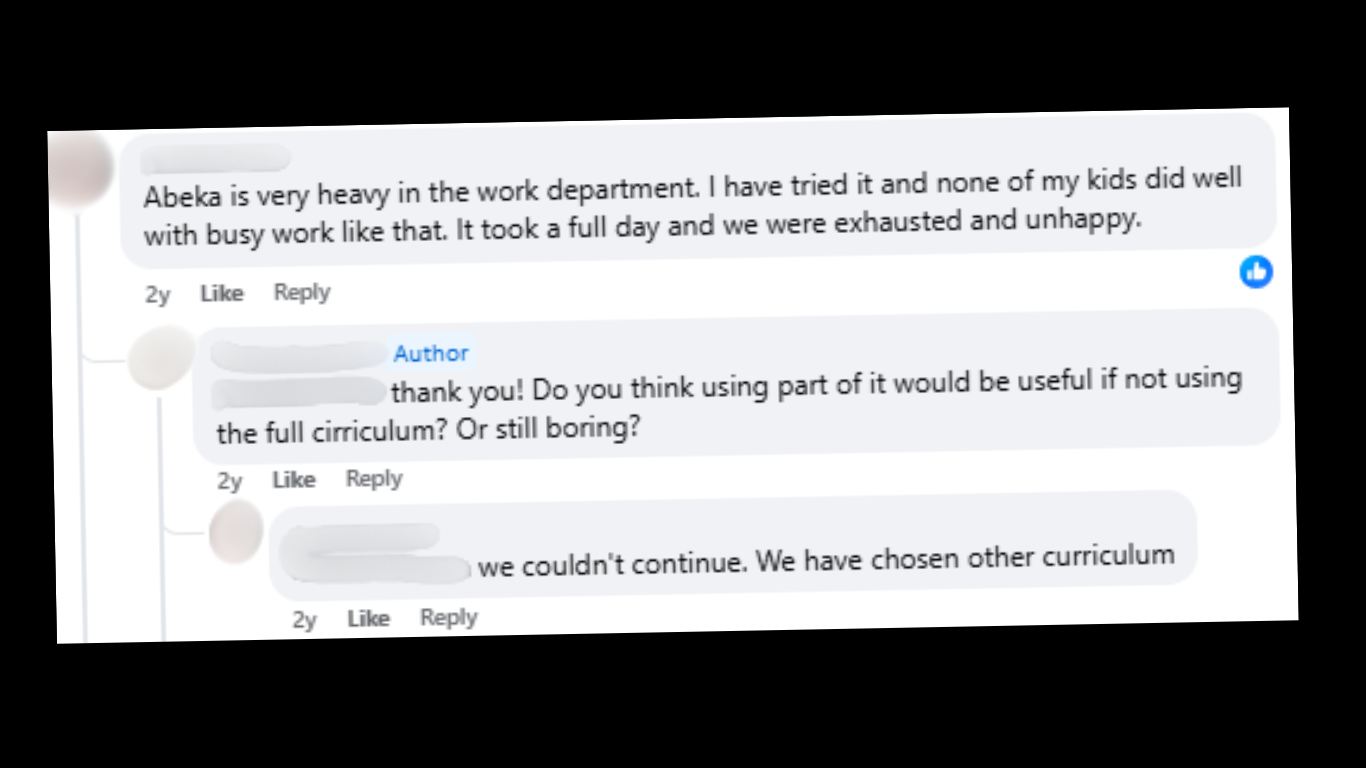
If you fully complete every worksheet, every review page, every assignment, every video lesson, every test, and every subject exactly as written… you can easily end up homeschooling from 9am to 5pm, especially in the older grades.
And that’s why “Abeka and tears” is a very real homeschool stereotype.
The burnout usually comes from the sheer amount of review, the constant seatwork, the length of the video lessons, and the pressure homeschool parents feel to complete absolutely everything in the curriculum.
And really, this is the BIGGEST mistake new homeschoolers make with Abeka:
They think they must finish every single page.
Experienced homeschoolers usually adapt it far more than that. They skip review lessons their child has already mastered, shorten assignments, speed through sections, or simply don’t complete every workbook page.
And personally, I think you almost HAVE to do that with Abeka if you want to preserve peace in your homeschool.
Why Does Abeka Have SO MUCH Material?
Part of the reason there’s so much material is because Abeka was originally designed for Christian private schools working to 170 school days, where children are expected to work through material for a full school day in a classroom setting. So naturally, the curriculum contains far more review, seatwork, and practice than most homeschool families actually need.
But homeschooling is different.
At home, you’ve got one-on-one teaching, far fewer classroom distractions, and children often move through material much faster. That means many homeschool families simply don’t need to complete every single worksheet and review page in order for their child to learn the material well.
Abeka Pricing
Abeka isn’t the cheapest of the Christian homeschool curricula on the block.
And the pricing changes depending on:
whether you buy workbooks only,
parent materials,
or Abeka Academy video lessons.
Workbook-Only Child Kits
The basic child kits are actually MUCH cheaper and more reusable.
For example:
a Grade 1 child kit can be around $470 USD,
while adding full parent materials pushes it above $1200 USD.
The reason?
Those giant teacher manuals cost a LOT.
Personally, I don’t really recommend the teacher-manual-heavy version anymore because it puts too much pressure on Mum and Dad to become the teacher.
But there is a better version…Abeka Academy.
Abeka Academy Pricing
The video-lesson version is usually around:
$1350 USD for unaccredited,
and roughly $1400 USD for accredited.
The good news is: when you use Abeka Academy, you don’t need to buy all those giant teacher manuals because the teachers do the instruction for you.
And really, that’s one of the biggest advantages of the video version.
Abeka vs BJU Press
BJU Press Homeschool is by far the most popular alternative to Abeka as it is so similar! And BJU Press is the curriculum we personally use now instead of Abeka.
And while both curricula are rigorous, strongly Christian, video-based, and academically solid, they FEEL different once you actually sit your child down in front of them.
Abeka feels much more like a traditional classroom. The videos show a real teacher standing in front of neatly groomed students in a classroom setting, teaching the lesson and interacting with the class. Then the teacher will pause and talk to the “students watching at home” for answers.
Some kids absolutely love that atmosphere because it makes them feel like part of a classroom. Other homeschool families really dislike it because they intentionally left school and don’t want to recreate that environment at home.
BJU, on the other hand, feels much gentler and more conversational. Usually the teacher is sitting in a cozy room speaking directly to your child rather than teaching a classroom full of students. The lessons also use lots of visuals, flashcards, weather clips, videos, experiments, and engaging pictures on screen.
The whole thing just feels warmer and more like a homeschool.
And the biggest practical difference?
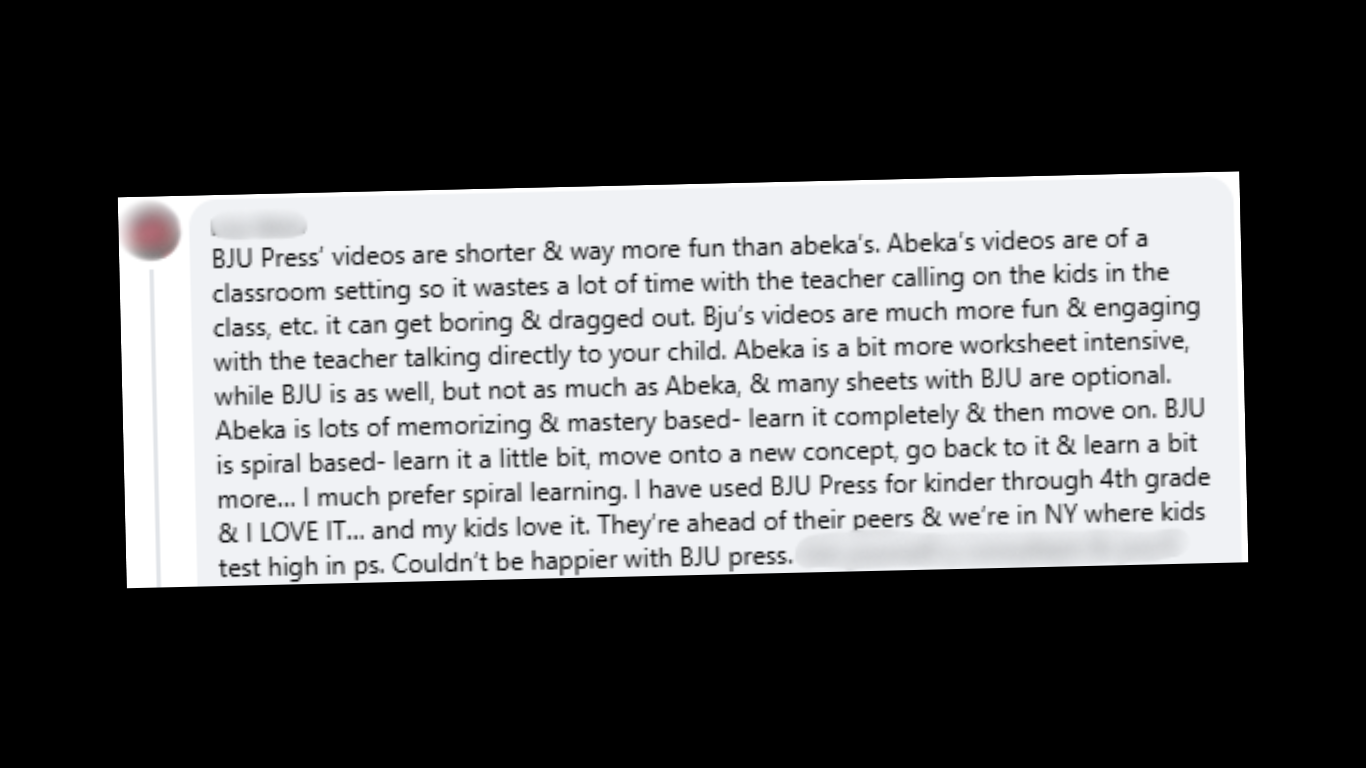
BJU video lessons are significantly shorter. Look at this comment from a Christian homeschool moms forum:
That matters more than people realize because one of the biggest hidden costs of Abeka is simply the amount of time it takes to complete everything.
BJU Press also about 25% cheaper than Abeka, which really starts to matter once you’re homeschooling multiple children. When you’re already buying books, supplies, printers, ink, and everything else homeschool life seems to require, saving a few hundred dollars per child each year adds up very quickly.
And personally, I think BJU gives a really strong balance between rigor and sustainability. It still feels academically solid and thoroughly Christian, but without quite the same level of overwhelm and workload pressure that many families experience with Abeka.
If you'd like to look at BJU Press curriculum, check it out here.
Accredited vs Unaccredited Abeka
This is REALLY important.
Unaccredited Abeka Academy
This is the version I’d personally recommend if you’re going to use Abeka Academy.
The reason is simple: you still have flexibility.
You can shorten lessons, skip review your child has already mastered, speed through sections, or adapt things when life gets busy. And with a curriculum as rigorous as Abeka, that flexibility matters enormously.
I really think Abeka works best when homeschool parents feel free to adjust it instead of feeling chained to every page and every video.
Accredited Abeka Academy
Personally, I do NOT recommend the accredited version for most homeschool families.
Once you go accredited, you lose a lot of that flexibility. You can’t really skip things, the workload becomes extremely heavy, and the pressure to keep up can become exhausting very quickly.
And for many homeschool families, I genuinely think it becomes a fast road to burnout. See the comment below…
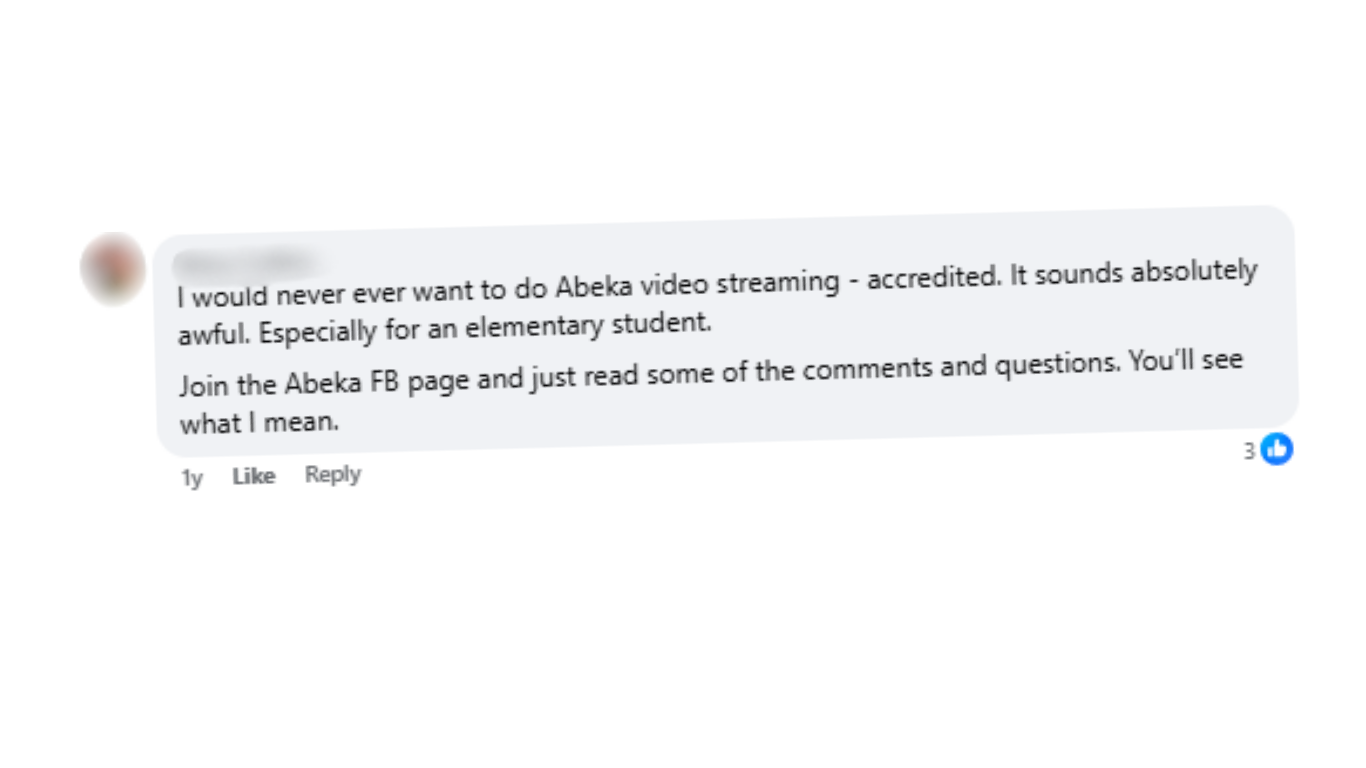
Abeka accredited means you can't skip anything 😱
What Kind of Kids Thrive With Abeka?
I think Abeka works best for families who genuinely like structure, routine, and strong academics.
If you’ve got a child who enjoys reading, likes knowing exactly what’s expected each day, and doesn’t mind sitting down and getting through a solid amount of work, Abeka can work really well. It especially suits highly academic kids and fairly compliant, strong readers who thrive with clear expectations and measurable progress.
And really, a lot of high-achieving homeschool moms love it too. Especially parents who enjoy testing, like seeing obvious academic growth, and feel reassured knowing their child is covering material thoroughly.
Because Abeka is used so widely in Christian schools, many families also feel confident knowing:
“This curriculum has produced strong students for decades.”
And for some homeschool parents, that reassurance matters a lot.
Who May STRUGGLE With Abeka?
At the same time, I think Abeka can become really difficult for struggling learners.
If you’ve got a dyslexic child, a child with ADHD, a highly active child who needs movement, or a reluctant writer who already feels overwhelmed by schoolwork, Abeka can start feeling emotionally very heavy very quickly.
And personally, that’s one reason I chose not to use it with my own children.
I didn’t want homeschooling filled with math tears, school resistance, or the feeling that learning was just pressure every single day.
Because there’s another hidden danger with very rigorous curriculum that people don’t talk about enough:
children can start resisting learning altogether.
And to me, that’s not worth it.
I still wanted homeschooling to leave warm memories behind, not just memories of pressure and exhaustion.
My Own Experience Growing Up With Abeka
This is where my feelings about Abeka become really mixed.
On one hand?
I’m grateful for the academic foundation.
I can still do mental math quickly, write properly, spell well, and think through arguments clearly because of the strong academic foundation Abeka gave me. Those are valuable lifelong skills, and I’m genuinely thankful for them.
But when I think back on Abeka itself, I don’t really remember it being fun.
I remember it being rigorous, tiring, and rewarding mostly because I’d finally finished the work for the day.
I definitely wasn’t doing math for enjoyment.
And I still remember my poor dad — working prison night shifts — spending evenings trying to learn the math we were going to ask him about the next day because back then there were no video teachers helping parents.
Today, thankfully, homeschool families don’t have to carry that same burden because the video teachers now do most of the teaching.
That’s a massive improvement.
Is the Rigor Worth It?
This really depends on the child.
If you have a child who genuinely enjoys structure, feels proud of getting difficult work done, and thrives when they’re challenged academically, then yes — the rigor can absolutely be worth it. Rigorous education really does build discipline, work ethic, resilience, and strong academic foundations that children carry into adult life.
But there’s another side to that conversation too.
If your child spends years miserable, overwhelmed, or constantly feeling like they’re failing, then eventually the rigor stops feeling valuable. Because children shouldn’t look back on their homeschool years thinking:
“School was just pressure and stress.”
And I think that’s the balancing act homeschool parents need to think carefully about with Abeka. Strong academics matter, but so does preserving your child’s love of learning.
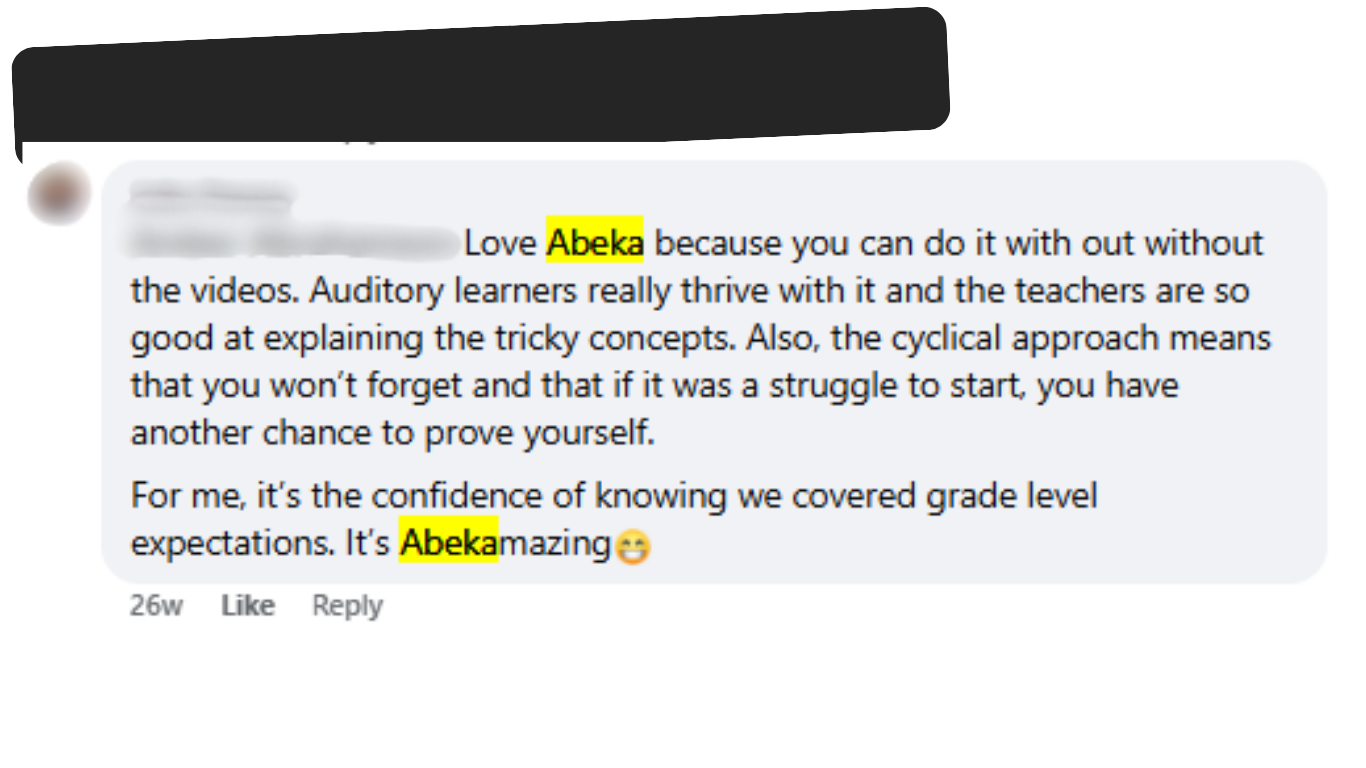
Abeka definitely has its fans - “Abekamazing” 🤣😂
Alternative Curriculum Programs
But if Abeka sounds like it might not be the right fit for your family, don’t panic — there are actually quite a few strong Christian alternatives out there depending on what you’re looking for.
There’s also BJU Press, which we mentioned above and personally use in our homeschool. I think it’s one of the strongest alternatives to Abeka because it still keeps solid academics and a strong Christian worldview, but with shorter video lessons, less busywork, and a gentler overall feel.
But there's also Sonlight and Masterbooks, which are common alternatives. Let's take a closer look at them below.
Abeka vs Sonlight
Sonlight and Abeka are almost complete opposites in homeschool philosophy.
Sonlight is built around living books, discussions, stories, and relationship-based learning. It feels immersive, literature-rich, and much more relaxed emotionally.
Abeka, on the other hand, is far more structured and textbook-driven. It’s very academic, very thorough, and very much “school at home.”
Personally, I think Sonlight creates warmer homeschool memories and a stronger family atmosphere.
But Abeka usually creates stronger academics.
And really, that tension probably sums up the difference between the two curriculums better than anything else.
Price wise, Sonlight is usually around the $1000 mark depending on the package you choose, but one big advantage is that so much of the curriculum is reusable. Since many of the books are real living books rather than consumable workbooks, families often reuse them for younger siblings or resell them afterward and recoup a good chunk of the cost.
If you'd like to check out Sonlight curriculum for yourself, you can take a look here or have a look at my review of Sonlight here…you might like it better.
Abeka vs MasterBooks
MasterBooks is often where burnt-out Abeka families end up.
And really, I completely understand why.
MasterBooks feels much gentler, softer, and shorter overall. It’s designed to feel manageable and peaceful rather than highly rigorous and demanding.
For some struggling homeschool families, that’s exactly what they need.
But the tradeoff is that MasterBooks is usually far less academically intense than Abeka. So if you’re moving from Abeka to MasterBooks, you’re usually trading rigor for peace.
Like Abeka, a lot of the MasterBooks curriculum is reusable because you can keep the main textbooks and just replace the consumable workbooks for younger siblings later on. They also offer optional video lessons, although they’re much simpler and shorter than programs like Abeka Academy or BJU Press.
And - that’s part of the appeal for many families. MasterBooks is designed to feel lighter, calmer, and easier to manage.
It’s also significantly cheaper than Abeka — often around half to even a third of the cost depending on the subjects you choose — which makes it really attractive for large families or homeschoolers trying to stay on a tighter budget.
If you'd like to check out MasterBooks curriculum for yourself, you can take a look here.
My Final Verdict on Abeka
So my verdict?
It depends.
Abeka absolutely builds strong students. I’m so grateful for the academic foundation it gave me.
But many homeschool families also pay for that rigor with time, tears, and burnout.
Personally, I knew I didn’t want my own children crying over math the way I did growing up.
So while I’d still happily recommend Abeka phonics or selective Abeka subjects, I personally would never run Abeka full-time exactly as written — especially not the accredited version.
These days we use BJU Press instead because, for our family, it feels like a much healthier middle ground. It’s still rigorous, still strongly Christian, and still academically solid, but the video lessons are shorter, there’s less busywork, and the overall homeschool atmosphere feels much gentler.
And for our family, that balance has worked really well.
If you want to see what our homeschool day actually looks like using BJU Press, check out this post here. See you over there! 🙋♀️