10 Best Homeschool Music Curriculum Programs (Piano, Theory & More)
Finding the best homeschool music curriculum can be surprisingly difficult. Some programs focus on piano lessons. Others teach music theory. Some introduce children to composers and music history, while others are designed to help students learn an instrument independently.
And if you're anything like me, you may not have much musical training yourself.
When we first started homeschooling, music wasn't a subject I felt particularly confident teaching. I couldn't read sheet music, I'd never had formal piano training, and I wasn't looking to add another complicated subject to our day.
Then I discovered the Simply Piano app.
What started as a fun experiment turned into a hobby I genuinely enjoyed. Over the next three years, I taught myself to play many of the worship songs I hear at church each week. Along the way, both of my children tried it too.
My son Luke gave it a go when he was seven, but music simply wasn't his thing. My daughter Penny, on the other hand, absolutely loves it. She'll happily sit at the piano for long stretches working through lessons and often takes over whenever I try to practice myself.
That experience taught me something important: the best homeschool music curriculum isn't necessarily the most expensive or academically rigorous option. It's the one that helps your child develop a genuine love of music.
In this guide, I'll walk you through the homeschool music curriculum programs that parents recommend most often, including options for piano, guitar, music theory, and independent music study.
Affiliate links insitu: If you use them, I might a small commission at no extra cost to you. Big thanks!
Don't Have Time to Read the Whole Article?
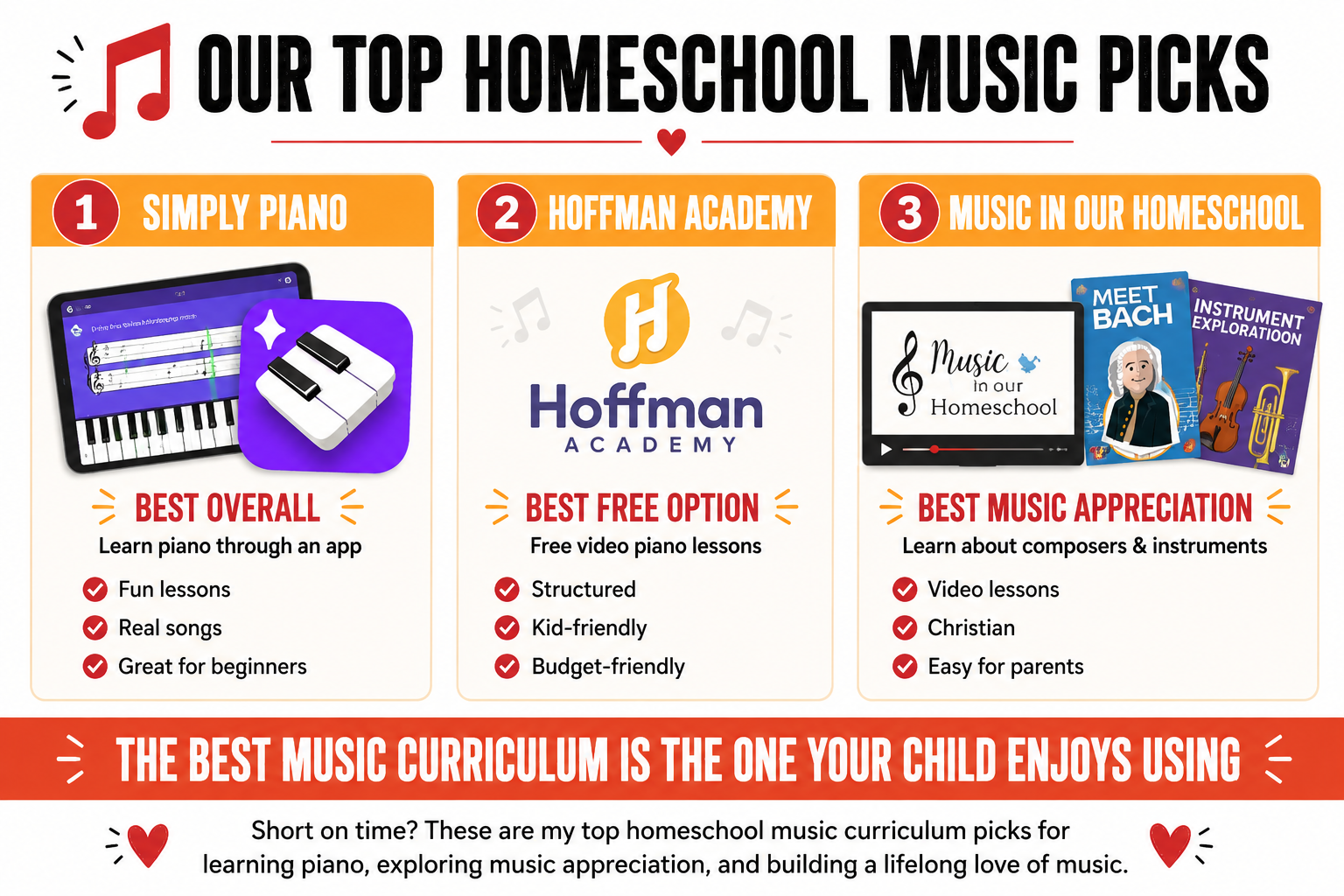
If you're looking for the best homeschool music curriculum and just want my recommendation:
🥇 Simply Piano — Best overall homeschool music curriculum. This is the program I used to teach myself piano, and it's the one my daughter Penny still loves today.
💰 Hoffman Academy — Best free homeschool music curriculum. Great for families wanting structured piano lessons without the subscription cost.
🎵 Music in Our Homeschool — Best music appreciation curriculum. Fun video lessons that introduce children to composers, instruments, and music history.
Keep reading for a full comparison of all 10 homeschool music curriculum programs.
What Type of Homeschool Music Curriculum Do You Need?
Before choosing a homeschool music curriculum, it's worth deciding what you actually want your child to learn.
Some music programs focus on learning an instrument such as piano or guitar. Others teach music theory, helping students understand notes, rhythm, scales, and how music is written. Some families are simply looking for music appreciation resources that introduce children to composers, instruments, and music history.
The good news is that there's no single "right" approach.
Many homeschool families combine several methods. For example, your child might learn piano through an app like Simply Piano while also studying composers through a music appreciation course.
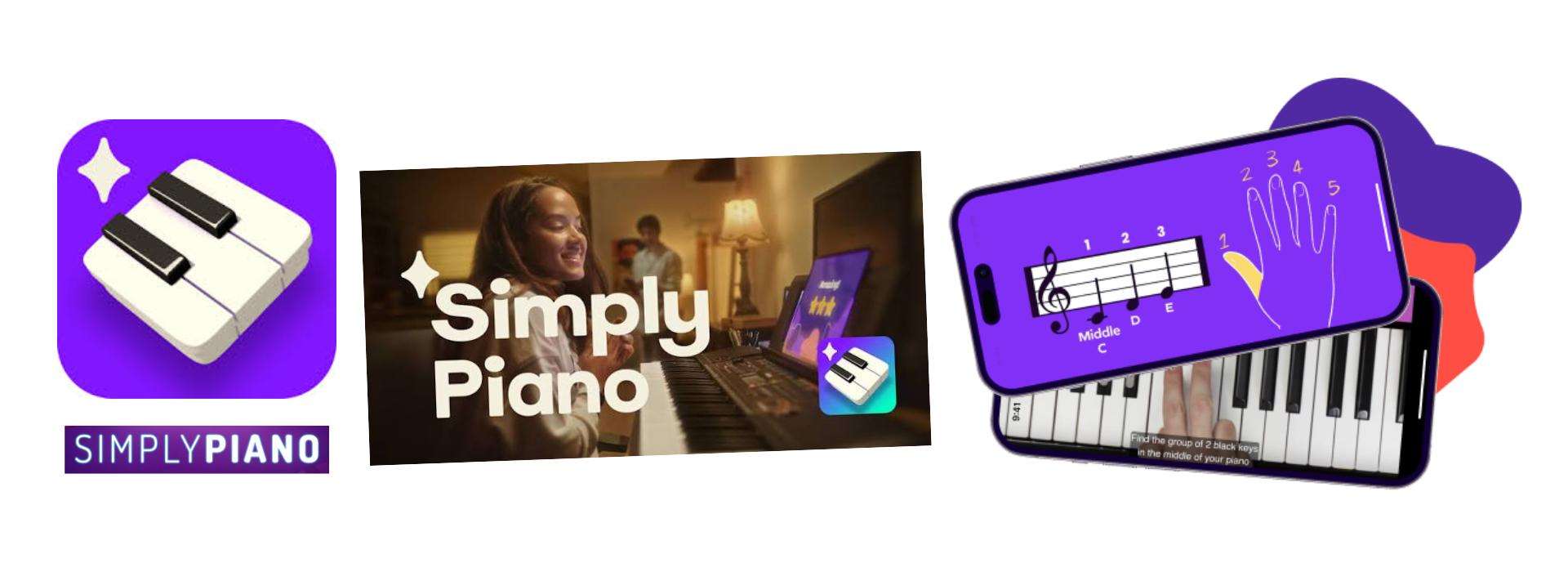
Simply Piano is a homeschool music curriculum designed to help children and adults learn piano using an app. It's fun and easy to use!
1. Simply Piano
Best Overall Homeschool Music Curriculum
Format: App
Price: Approximately $120–$180 per year depending on promotions
Parent Involvement: Low
Christian? No, but they’ve got lots of songs from church we’ve learned through it.
If I could recommend just one homeschool music curriculum for most families, it would be Simply Piano (pictured above).
Unlike many piano methods that begin with pages of theory and repetitive exercises, Simply Piano gets students playing music almost immediately. Lessons are interactive, and the app listens while you play, providing instant feedback.
What I appreciate most is that students begin learning to read music from the very first lessons. Rather than memorizing where to place their fingers, children gradually learn how written music works while playing actual songs.
Our family has used Simply Piano extensively.
I personally used the program for around three years and taught myself to play piano with it. One of my favourite features was the song library. Once I progressed through the beginner lessons, I could search for worship songs and learn many of the songs I hear at church each week.
Luke tried it when he was seven, but music simply wasn't one of his passions. Penny, on the other hand, absolutely loves it. She'll happily spend long stretches of time working through lessons and often takes over whenever I sit down to practice myself.
The program starts with simple melodies and short sections of songs, but gradually builds until students are playing complete pieces and tackling much more challenging music.
We also tried traditional piano lessons that cost around $30 per lesson, but Penny actually preferred the app-based approach.
Pros
Teaches note reading from the beginning
Huge library of songs
Interactive feedback
Suitable for complete beginners
Children can work independently
Works well for adults too
Cons
Ongoing subscription cost
Doesn't provide personalized feedback from a live teacher
2. Hoffman Academy
Best Free Homeschool Music Curriculum
Format: Video Lessons
Price: Free with optional premium upgrade (Use the coupon LEARN here for a discount)
Parent Involvement: Medium
Christian? No
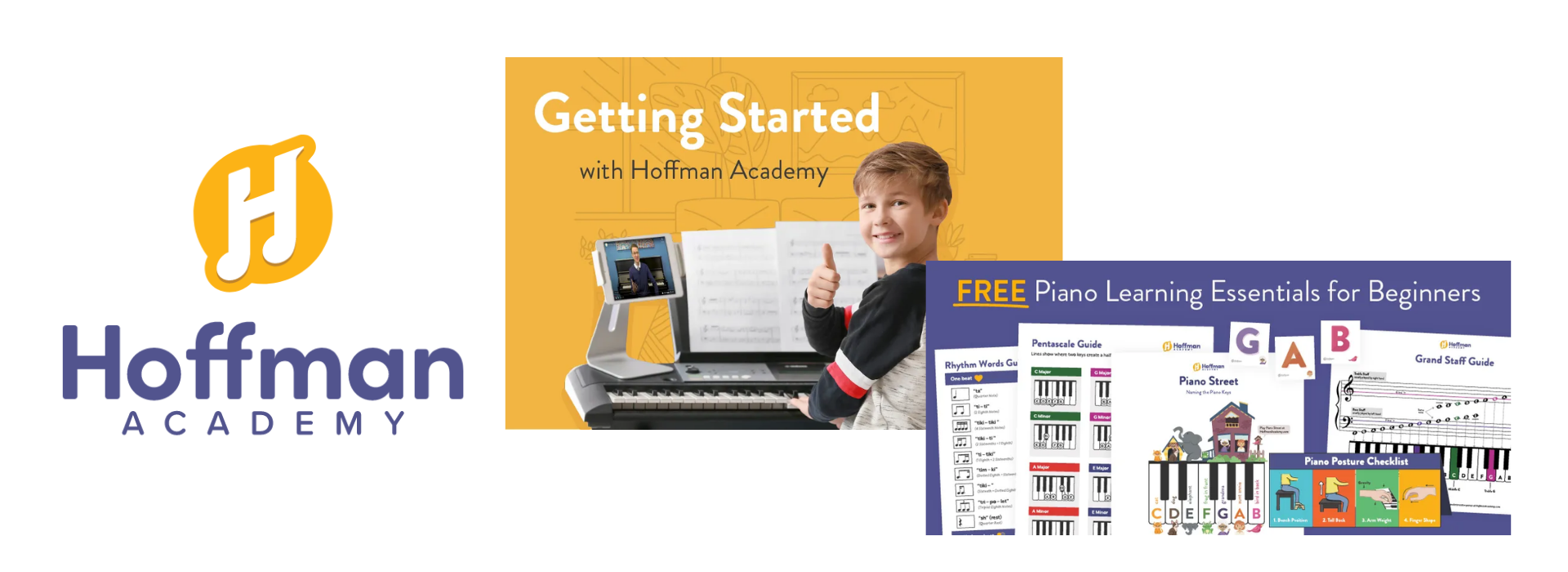
If you're looking for a free piano curriculum, Hoffman Academy (pictured above) is probably the most frequently recommended option among homeschool families.
The program consists of hundreds of structured video lessons that guide students from beginner concepts through increasingly advanced piano skills.
Many parents appreciate that children can learn at their own pace and that the free version offers enough content to get started without making a financial commitment.
While it doesn't have the game-like feel of Simply Piano, it's an excellent option for families on a budget.
3. Piano Marvel
Best for Independent Learners
Format: Online Program
Price: Approximately $15–$20 per month
Parent Involvement: Low
Christian? No
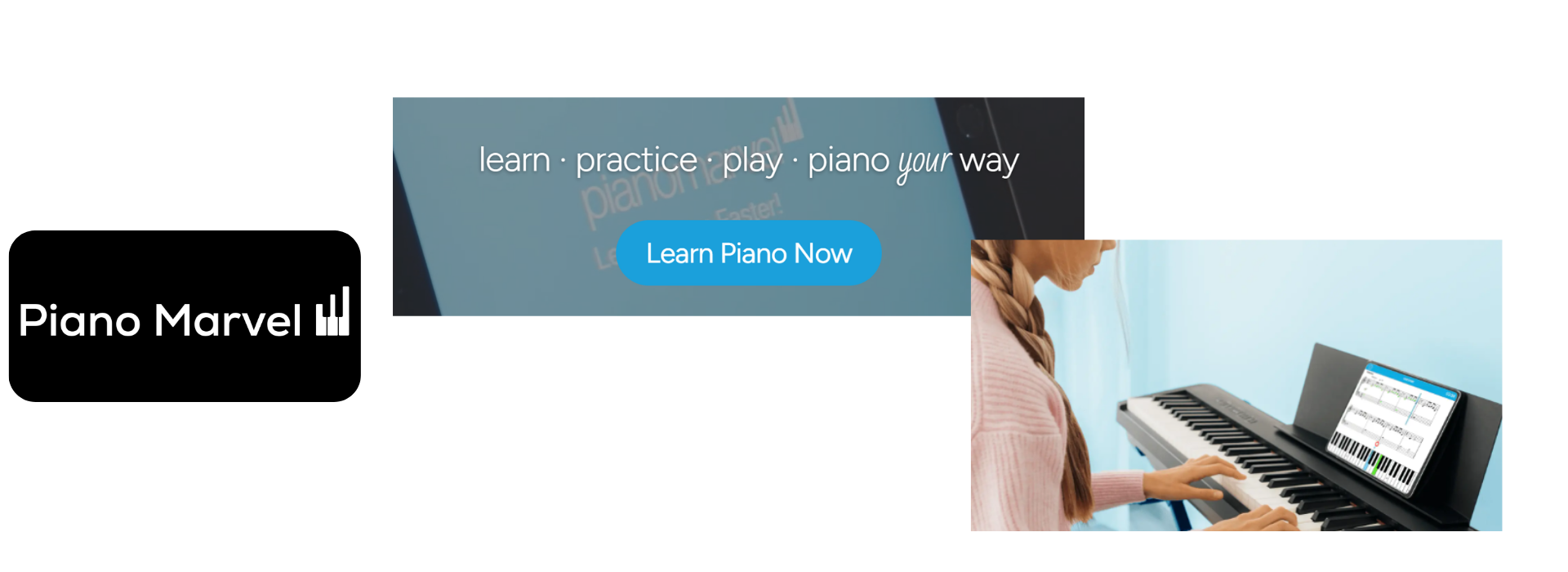
Piano Marvel (pictured above) combines traditional piano instruction with modern technology.
Students work through lessons, technique exercises, and songs while receiving feedback from the software. It's often used by piano teachers as a supplement to lessons but can also work well for motivated homeschool students.
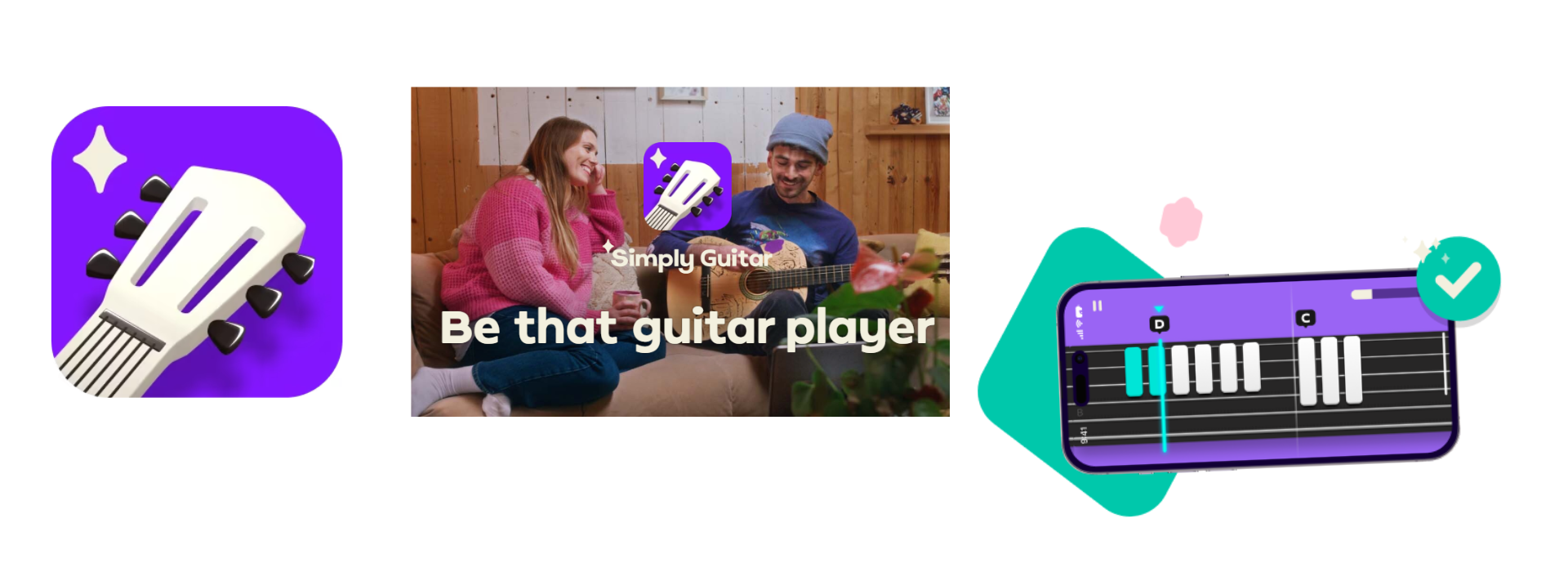
Simply Guitar is a homeschool music curriculum designed to help children and adults learn guitar using an app. It's fun and easy to use!
4. Simply Guitar
Best Guitar Curriculum for Homeschoolers
Format: App
Price: Approximately $150 per year
Parent Involvement: Low
Christian? No
If your child would rather learn guitar than piano, Simply Guitar (pictured above) is one of the most popular homeschool options available.
Created by the same company behind Simply Piano, it uses a similar interactive approach. Students progress through structured lessons while receiving instant feedback as they play.
Many homeschool parents report that their children stay engaged because lessons feel more like a game than a traditional course.
For families wanting an affordable alternative to weekly guitar lessons, Simply Guitar is well worth considering.
5. Master Your Theory
Best Music Theory Curriculum
Format: Workbooks
Price: Approximately $10–$20 per level
Parent Involvement: Medium
Christian? No
For students who want to understand how music works, Master Your Theory is one of the most widely recommended music theory programs.
Lessons cover note reading, rhythm, scales, intervals, key signatures, and other foundational music concepts.
It's especially useful for older students and teens who want a stronger understanding of written music.
6. Zeezok Music Appreciation
Best Composer Studies Program
Format: Vidoes, Books and Activity Guides
Price: Varies by study
Parent Involvement: High
Christian? Christian
Zeezok is particularly popular among Charlotte Mason homeschoolers.
The program pairs beautifully with the well-loved Opal Wheeler composer biographies and introduces students to famous composers through stories, listening activities, and notebooking.
Families looking for a rich composer-study experience often find Zeezok hard to beat.
7. Music in Our Homeschool
Best Supplement for Building a Love of Music
Format: Online Video Lesson Course
Price: Varies
Parent Involvement: Very Low
Christian? Yes
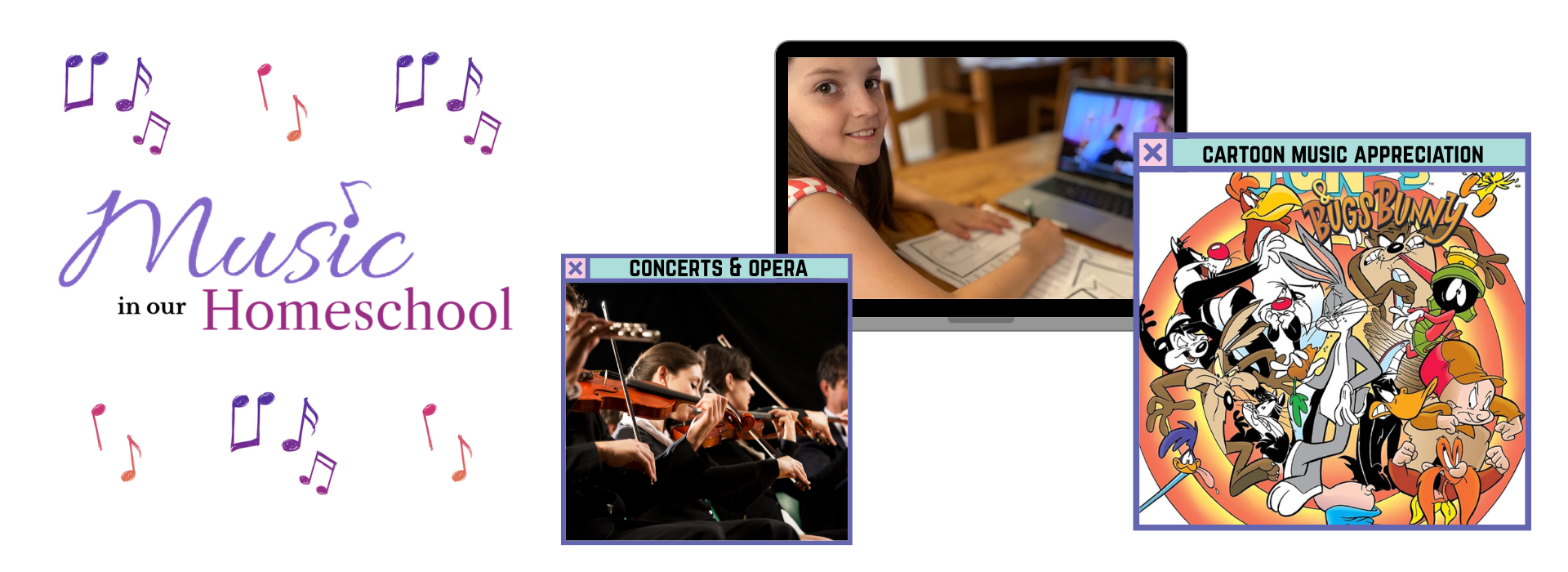
Although I wouldn't classify Music in Our Homeschool (pictured above) primarily as an instrument program, it's one of my favourite music resources for homeschoolers.
The video lessons are visually engaging and cover a wide range of musical topics. As a parent without a strong musical background, I found the lessons easy to follow and surprisingly interesting.
Penny loved learning about composers, instruments, and musical concepts, and even Luke often found himself interested in the lessons despite not being especially musical.
If your goal is helping children develop a broader appreciation of music, this is an excellent option.
For a deeper comparison of music appreciation programs, be sure to read my guide to the best homeschool music appreciation curriculum options.
8. SQUILT
Best Interactive Music Program
Format: Audio Lessons and Activities (some videos)
Price: Varies
Parent Involvement: Medium
Christian: Yes
SQUILT stands for Super Quiet UnInterrupted Listening Time.
The program helps children actively listen to music while learning about instruments, composers, and musical concepts.
Many families find it a gentle introduction to music education that doesn't require learning an instrument.
9. Voetberg Music Academy
Best Christian Music Program
Format: Online Video Lessons
Price: Approximately $37 per month
Parent Involvement: Low to Medium
Christian? No
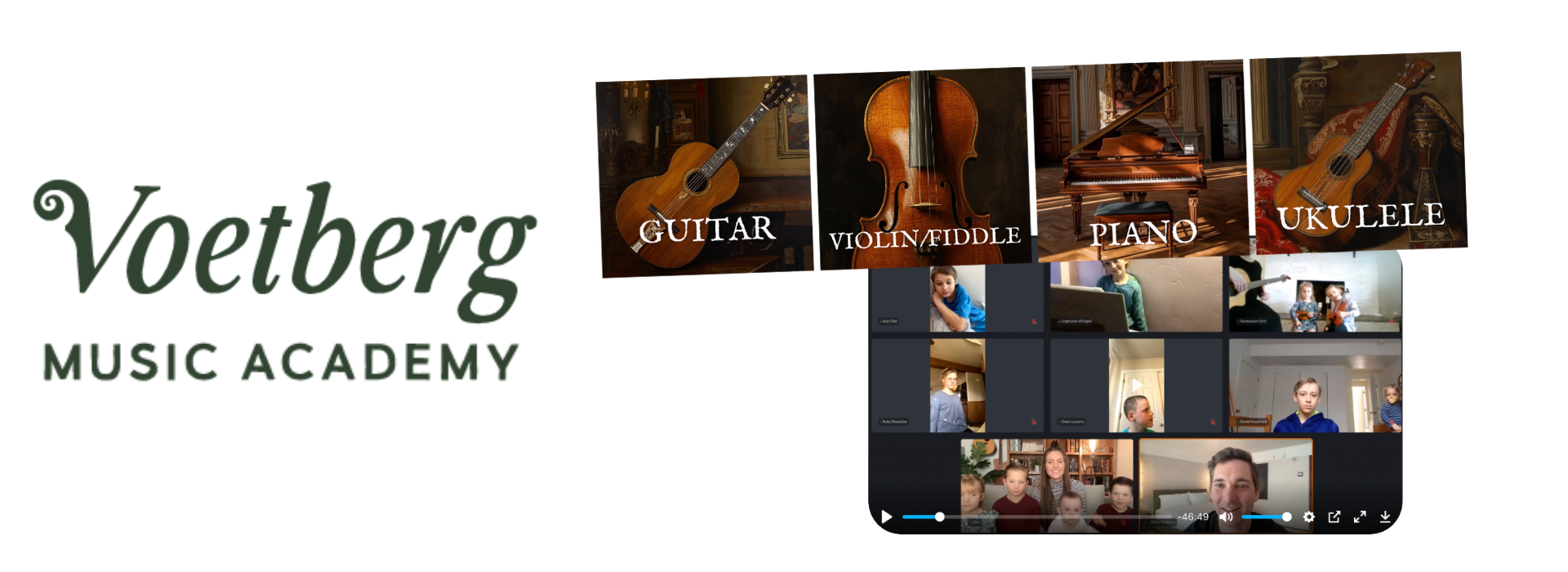
Voetberg Music Academy offers music instruction with an emphasis on piano and musicianship.
Families appreciate the structured lessons, family-friendly approach, and strong musical instruction.

10. Easy Peasy Music
Best Budget Music Curriculum
Format: Online
Price: Free
Parent Involvement: Medium
Christian: Christian
Easy Peasy includes music instruction as part of its free homeschool curriculum.
While it isn't as polished as dedicated music programs, it's a useful option for families wanting to add music to their homeschool without spending additional money.
Final Verdict
Best Homeschool Music Curriculum Overall
Simply Piano remains my top recommendation because it makes learning music approachable, enjoyable, and genuinely achievable for both children and adults.
Best Free Homeschool Music Curriculum
If budget is your biggest concern, Hoffman Academy offers an impressive amount of quality instruction for free.
Best Music Appreciation Curriculum
If your goal is helping children understand and enjoy music rather than primarily learn an instrument, Music in Our Homeschool is my favourite option out of all the homeschool music appreciation curriculums.
No matter which curriculum you choose, remember that success in music isn't measured by how quickly your child progresses. The real goal is helping them develop skills and a lifelong appreciation for music.
How We Do Music in Our Homeschool
Over the years, I've learned that homeschool music doesn't need to look like a formal school music class.
For us, music is a combination of learning an instrument, listening to great music, and simply enjoying it together.
Penny currently spends far more time at the piano than I ever expected. Some days she'll happily work through Simply Piano lessons for long stretches without any prompting from me. That's one of the reasons I'm such a fan of the program—it feels more like a hobby than school.
Luke has never been as interested in music, and that's okay too. One of the benefits of homeschooling is being able to tailor subjects to each child's interests and strengths.
My biggest advice?
Don't get so caught up in finding the perfect homeschool music curriculum that you forget the goal. The goal isn't raising a concert pianist. The goal is helping your child develop skills, confidence, creativity, and a lifelong enjoyment of music.
Looking for a Music Appreciation Curriculum?
This article focused primarily on piano, guitar, music theory, and practical music instruction.
If you're specifically looking for a program that teaches children about composers, instruments, music history, and great works of music, be sure to read my guide to the best homeschool music appreciation curriculum options.
That's where you'll find a more detailed comparison of programs such as Music in Our Homeschool, SQUILT, Zeezok, and other music appreciation resources.
👉 Read: Best Music Appreciation Curriculum for Homeschoolers
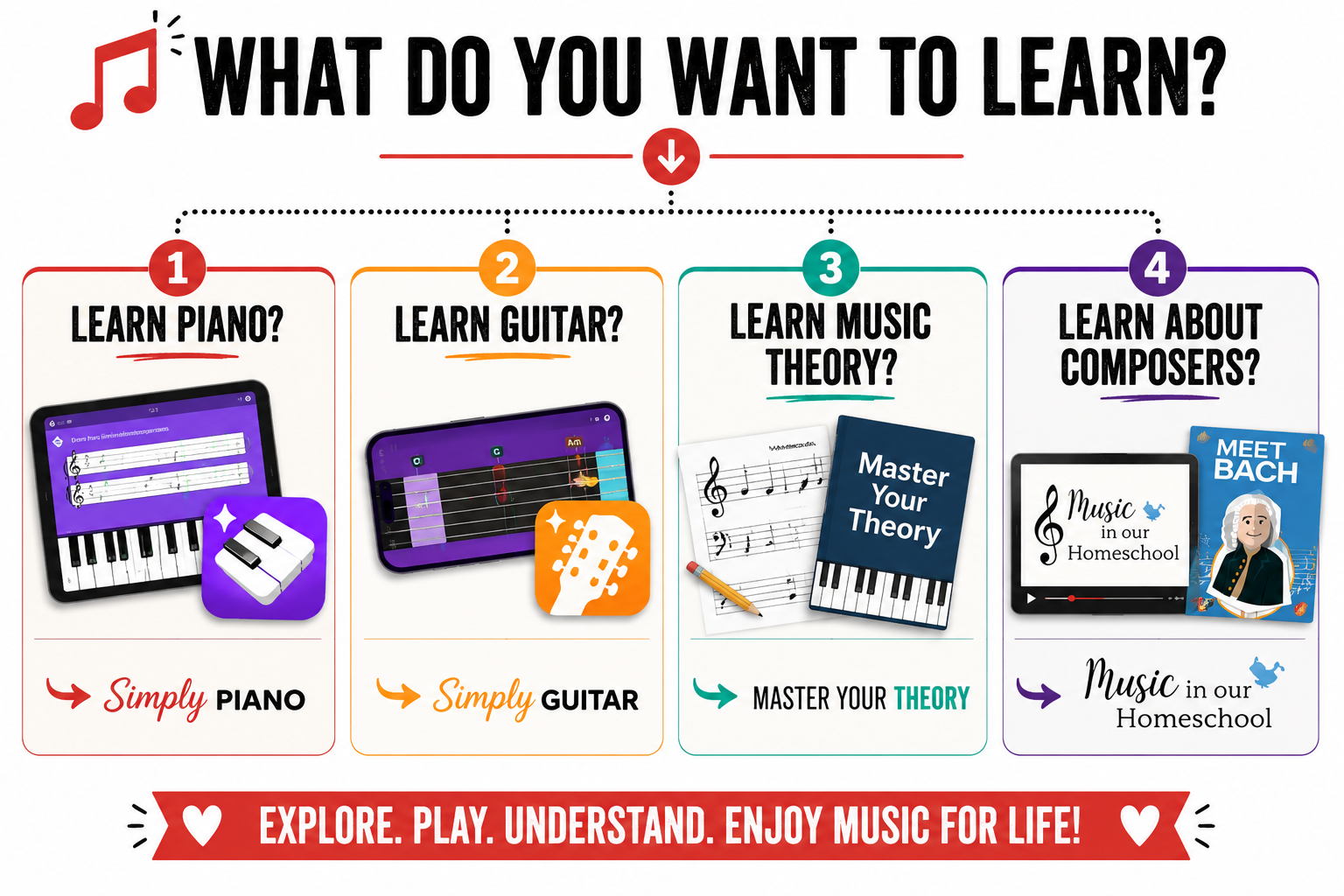
Not sure where to start? Choose the type of music education your child is most interested in, then pick a curriculum designed specifically for that goal.
What's the Best Homeschool Music Curriculum?
If you're still unsure where to start, here's my advice:
🥇 Simply Piano — Best overall homeschool music curriculum
💰 Hoffman Academy — Best free music curriculum
🎵 Music in Our Homeschool — Best music appreciation curriculum
🎸 Simply Guitar — Best guitar curriculum
For most families, I'd start with Simply Piano. It's the program that helped me learn piano as an adult, and it's the one my daughter continues to love today.
And honestly, when a homeschool curriculum can get a child voluntarily practicing music, that's usually a pretty good sign you've found a winner.
Frequently Asked Questions About Homeschool Music Curriculum
Do Homeschoolers Need a Music Curriculum?
No, but many families choose to include music because it helps children develop creativity, discipline, listening skills, and an appreciation for the arts.
Music can be as simple as listening to great composers, learning an instrument, singing in church, or working through a structured homeschool music curriculum.
How Do You Teach Music in Homeschool?
The easiest way is to start with a structured program.
For example, many homeschool families use an app like Simply Piano for instrument instruction or a program like Music in Our Homeschool for music appreciation.
You don't need a music degree—or even the ability to read sheet music yourself—to successfully teach music at home.
How Do I Create a Homeschool Music Curriculum Plan?
A simple homeschool music curriculum plan might include:
Instrument practice (2–5 times per week)
Music theory (1–2 times per week)
Composer or music appreciation study (once per week)
Listening to quality music regularly
For younger children, even 10–15 minutes a few times a week can be enough to build skills and interest over time.
Can Children Learn Piano Without Private Lessons?
Yes.
While private lessons provide personalized feedback, many children successfully learn piano using programs such as Simply Piano or Hoffman Academy.
My daughter Penny actually prefers learning through Simply Piano over the traditional lessons we previously tried.
How Much Time Should Homeschoolers Spend on Music?
That depends on the child's age and interest level.
Most elementary students can make steady progress with 10–20 minutes several times per week.
Children who enjoy music often choose to spend much longer. My daughter frequently spends extra time at the piano simply because she enjoys it.
Should Homeschoolers Learn Music Theory?
Learning some music theory is helpful because it teaches students how music works.
However, it doesn't need to be a separate subject in the early years. Programs such as Simply Piano naturally introduce note reading, rhythm, and other music concepts as children progress through lessons.
What Is the Best Free Homeschool Music Curriculum?
Hoffman Academy is probably the strongest free music curriculum currently available for homeschoolers.
It provides structured piano instruction through video lessons and has helped many families get started without the cost of private lessons.
So Now You Know About Homeschool Music…
Music doesn't have to be another complicated subject on your homeschool to-do list.
Whether your child wants to learn piano through Simply Piano, explore music theory, or develop a love of music through programs like Music in Our Homeschool, there's an option to fit almost every family and budget.
For our family, Simply Piano has been the clear winner—but the best homeschool music curriculum is ultimately the one your child enjoys enough to keep coming back to.