Homeschooling for BEGINNERS | How to QUICKLY Start Homeschooling
Have you suddenly found yourself responsible for your child’s entire education—and now you’re quietly wondering whether you need to buy twelve textbooks, create a colour-coded timetable and turn your dining room into a small private school?
Take a breath.
You don’t need to have everything figured out before you begin homeschooling. In fact, sometimes the hardest part is simply deciding to start.
Everything after that can be worked out one step at a time.
I was homeschooled from the age of eight, and now I homeschool my own children (see pic below of our little family; My husband is at work).
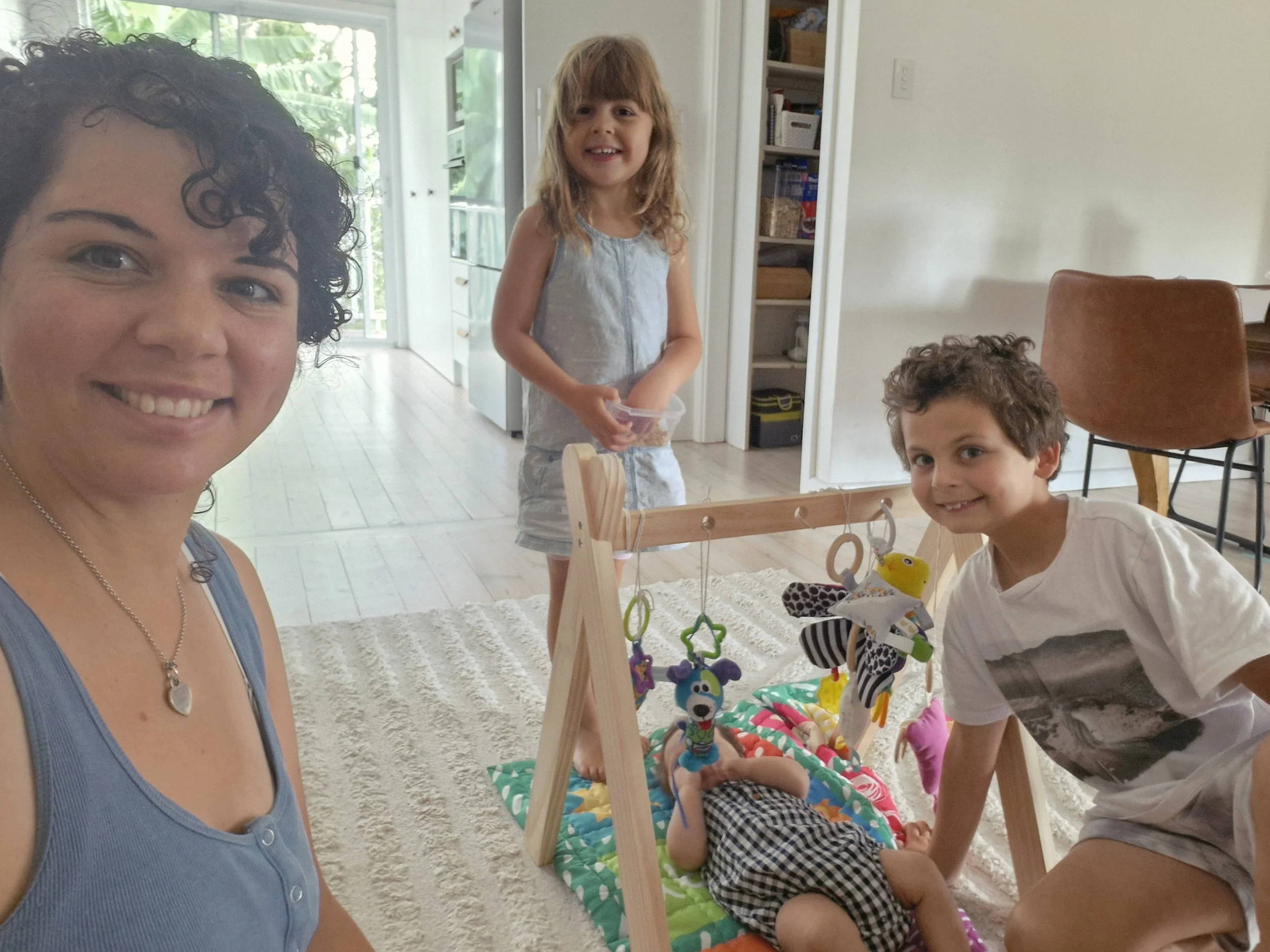
So after around 31 years of being involved in homeschooling, here is one of the biggest things I’ve learned:
A successful homeschool is not necessarily the one with the fanciest curriculum, the fullest timetable or the most impressive homeschool room.
It is the one where your children are learning, your relationships are intact, and you are not waking up every morning dreading the day ahead.
So today, I’m walking you through how to start homeschooling without becoming completely overwhelmed—and how to create a homeschool life your family can actually enjoy.
“And don’t worry—you do not need to complete all six steps before lunch.”
1. Stop Trying to Recreate School at Home
So, first, stop trying to recreate school at home. When families first begin homeschooling, they often recreate the only education system they know.
They set up little desks.
They create a timetable divided into neat 30-minute blocks.
And they try to squeeze in six or seven subjects every day.
And then, three days later, everyone is tired, crying, and the timetable has disappeared underneath a pile of laundry.
Homeschooling does not need to look like a classroom.
You are teaching a much smaller number of children, which means lessons can often be completed FAR MORE QUICKLY.
Your child does not need to sit at a desk from nine until three simply because that is what happens in school.
You can read together on the lounge, practice maths while cooking, listen to an audiobook in the car, or take a nature walk in the middle of the day.
You have the freedom to create an education that works around your family rather than squeezing your family into a school-shaped box.
2. Check the Homeschooling Requirements Where You Live
The second thing is to check the homeschooling requirements where you live…homeschooling is currently legal in all American and Australian states.
But the rules vary depending on your state, territory, or country, so this is one part you need to investigate properly.
If you live in the United States, the HSLDA website has a helpful map where you can select your state and see its homeschooling requirements.
If you live elsewhere, go directly to your state, territory, or national education authority website rather than relying entirely on comments in a Facebook group.
I’m a registered homeschooler here in Australia, and I found the whole process a little scary when I first started.
But I’ve now had three homeschool inspectors, and every one of them has been genuinely encouraging.
One even told me to relax and do less!
So do not panic when you first see the paperwork.
3. Begin With a Simple Routine
Next, begin with a simple routine.
You do not need a minute-by-minute schedule, but having a basic rhythm makes homeschooling a lot easier.
In our home, we begin lessons at around 7:45 in the morning. My third grader generally works until about 11 o’clock, while my Kindergartener only does around an hour.
That is our formal learning time, but of course, plenty of informal learning continues throughout the day through books, conversations, hobbies, outings, (and approximately 900 questions the children ask before dinner.)
We also put in lots of breaks so their brains don’t get tired.
And your routine may look completely different, and that is fine.
The important thing is to create a rhythm that suits your children’s ages and that your family can realistically repeat.
A beautiful schedule that lasts three days is not nearly as useful as a simple routine you can maintain throughout the year.
And yep…sometimes children need to persevere. But sometimes the best decision is to close the book, have a snack and try again later.
Your curriculum should serve your family—not the other way around.
4. Start With the Essentials
Then, you want to start with the essentials… You do not have to introduce every possible subject during your first week.
For us as Christians, the true essentials are Bible and prayer. They’re the foundation of our homeschool.
Then, focus on reading, writing and maths - the THREE R’s.
Once those are running smoothly, you can gradually add subjects such as science, history, geography, art, music or languages.
I love that with homeschooling, you can slow down when your child needs more time or move ahead when they understand something.
You can also stop doing twenty identical questions when they have clearly demonstrated mastery.
5. Deliberately Make Homeschooling Enjoyable
Another important thing is you want to deliberately make homeschooling enjoyable.
Homeschooling should involve real work, but that doesn’t mean it needs to feel miserable.
One of the best things about homeschooling is the time and freedom it gives your family.
Go to the beach. Read excellent books aloud.
Build a cubby house.
I recently asked my son what he wanted to learn, and he said he wanted to build a sturdy teepee he could keep returning to. So we found an overgrown patch of bush and started building a secret cubby house.
The kids are thrilled—and without even realizing it, they are measuring, planning, problem-solving and learning to use tools safely.
That is one of the joys of homeschooling: learning does not always look like a worksheet.
So follow your children’s interests and make room for books, outings, hobbies and friendships.
Not every lesson needs to be entertaining, but the overall culture of your homeschool can still be warm, curious and enjoyable.
6. Expect an Adjustment Period
And then… expect an adjustment period when you start homeschooling.
If your children are coming out of school, begin with a period of deschooling (video below if you’re curious).
Deschooling simply means giving your child—and yourself—some time to step away from school routines before trying to build a new homeschool rhythm.
Spend that time reading together, going on outings, following interests, and reconnecting as a family.
It’s not wasted time.
You’re discovering how your child thinks, what interests them, and when they learn best.
You do not need to withdraw your child on Friday and recreate a full school day at the kitchen table on Monday.
And remember, your first plan will probably change - it’s not a lifelong contract.
It is simply a starting point.
Finally
And…you do not need to become a perfect homeschool parent before you begin.
Start homeschooling simply, focus on the essentials, and make room for faith, relationships, and ordinary family life.
And for help with your next step of your homeschool journey, click on my Starting Homeschooling playlist.
I’ll walk you through the practical decisions that come next—without adding to the overwhelm…see you over there…(you can also start watching it on the video below).