You’ve probably wondered whether your child is a visual, auditory, or kinesthetic learner — especially when a lesson just isn’t clicking.
And before you know it, you’re changing how you teach, reconsidering your curriculum, and taking yet another quiz to figure out how your child’s brain apparently works.
But if learning styles aren’t actually the problem, you could spend hours fixing the wrong thing while your child keeps struggling — and starts wondering if they’re simply bad at learning.
So in this post, we’re going to look at how much your child’s “learning style” really matters, and what you should be paying attention to instead.
Because the goal isn’t to squeeze your child into the correct learning-style box — it’s to notice what genuinely helps them learn, so you can teach with more confidence and make curriculum decisions without needing seventeen tabs open first.
I don’t know if it’s helpful to simplistically ask, ‘Which learning style are you?’ There’s MORE to it…
This post contains affiliate links. If you buy through them, I may earn a commission at no extra cost to you.
Look at the child, not the label 🔎
So if you don’t need to perfectly diagnose whether your child is visual, auditory or kinesthetic before choosing a curriculum, what should you be looking at instead?
I think the mistake we can make here is starting with the label and then working backwards.
So you decide, “Okay, my child is a visual learner.”
And suddenly you’re looking at every curriculum through that one filter.
Is it visual enough? Are there enough videos? Are there enough diagrams? Is there enough colour? Should I immediately remove anything involving lengthy read-alouds from my shopping cart?
And before long, you’ve narrowed your options down so much that you haven’t even considered whether you actually like the curriculum.
Or whether it fits your homeschool philosophy, budget…or whether you’re going to need three coffees and the patience of Job to teach it every morning.
Instead, start with the things you can actually observe about your child.
What do they prefer?
Where do they struggle?
What seems to come fairly naturally to them?
And where do they need a bit more help?
What I notice about Luke and Penny
Because I can see very clear differences between my homeschool children, Luke and Penny.
Luke gravitates much more towards listening, reading and watching videos.
Penny is much more likely to get restless. She wants to handle things, make things and physically interact with what she’s learning.
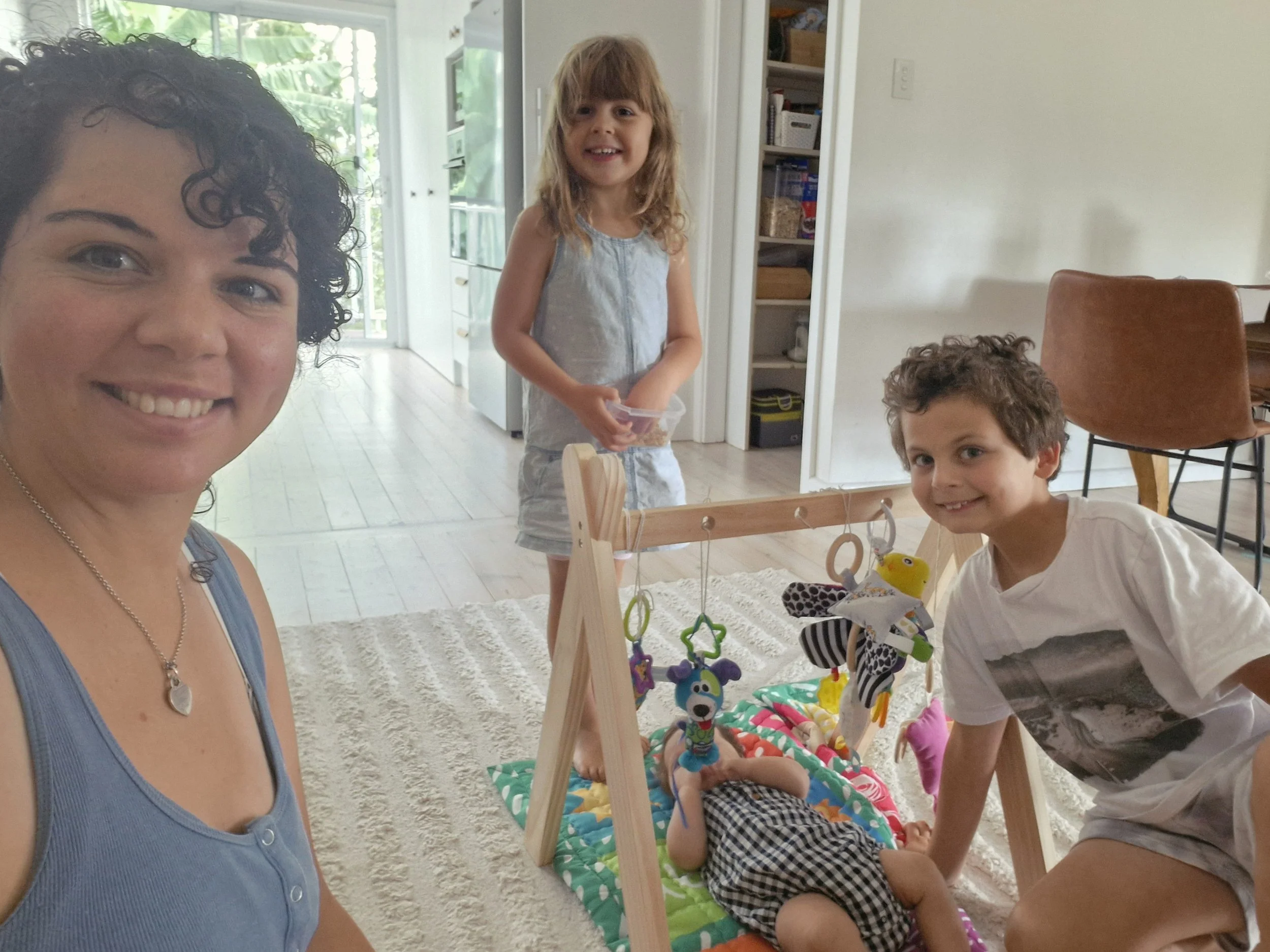
My kids learn in very different ways!
And that is really useful information for me.
If I know that Penny is struggling with something and I can put it in front of her in a way that lets her physically work with it, I’m probably going to try that.
But I don’t need to take that useful observation and turn it into, “Penny is a kinesthetic learner, therefore every curriculum we buy from now until graduation must be designed for kinesthetic learners.”
Because now I’ve taken something that was supposed to help me make a decision and turned it into another rule I have to obey.
And homeschool mums already have quite enough criteria to work through when choosing curriculum.
You’re considering the academics, the price, how much teaching you have to do, whether your child can work independently, whether you have three other children running around, and whether it talks about Jesus…
But we do not need to add an entrance examination before we’re allowed to buy maths.
Preferences can guide your choice without controlling it
And this is particularly important because the curriculum that supposedly matches your child perfectly may not match the way you actually want to homeschool.
You might have a child who loves hands-on learning, but you want a fairly traditional, structured homeschool.
That doesn’t automatically mean you have to abandon the way you want to homeschool and choose an entirely different method.
It just means you now know something useful about your child that can help you teach them better.
Instead of trying to perfectly diagnose a fixed learning style, pay attention to your child’s actual preferences, strengths, struggles and needs, then use those observations to guide your curriculum choice without letting them control it.
And this becomes particularly useful when a child is actually struggling, because you do not necessarily need a different curriculum.
Before you replace anything, first ask whether the whole program is the problem or whether one part of the lesson simply needs to be taught differently.
Luke’s spelling is a good example of this.
Modify before you replace
Adapting Luke’s spelling lessons
Luke is using BJU Press Spelling, but writing can be particularly difficult for him.
Now, I could look at that struggle and immediately conclude that BJU Press Spelling is the wrong curriculum.
He’s finding the writing hard.
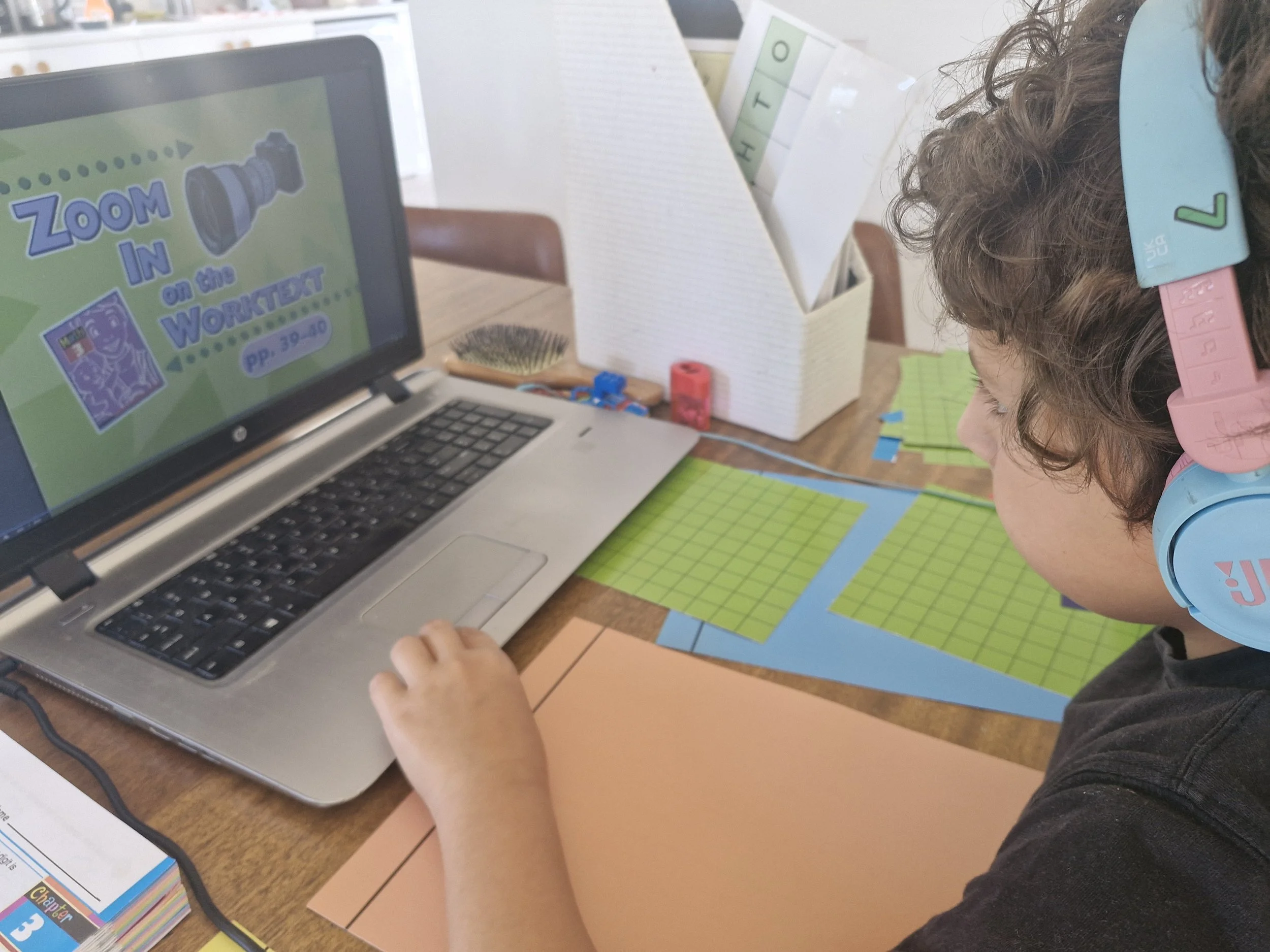
Luke, my son, loves math, but finds writing hard. So he loves manipulatives that helps him through.
Therefore, curriculum out.
Back to seventeen tabs, six YouTube reviews and a shopping cart full of alternatives.
But the real question is: is the spelling curriculum the problem, or is there one part of the way he has to interact with it that is particularly difficult for him?
Those are very different problems.
Because if the curriculum is broadly working but writing is making a particular activity difficult, I can modify the activity.
We have these manipulatives from Amazon, and sometimes I’ll bring those in so he can physically work with the letters rather than having to do everything through writing.
And he finds that easier.
Now, I want to be clear: easier does not mean suddenly effortless.
Spelling is still hard for him.
The manipulatives do not descend upon the spelling lesson and miraculously solve every difficulty.
But they give him another way to work with the same material.
So I haven’t had to throw out the spelling curriculum.
I haven’t had to buy an entirely different program.
And I haven’t had to decide that because one part is difficult for him, the whole thing is a bad fit.
I can keep the parts that are working and modify the part that isn’t.
Making room for hands-on learning with Penny
Penny is another example.
She loves writing, drawing and building things with Play-Doh, and she tends to enjoy getting her hands involved.
Thankfully, some of the early years of BJU Press — particularly maths — have more hands-on elements anyway, so there are opportunities for her to do that.
Again, I’m not choosing every curriculum according to a label.
I’m noticing what helps the child I actually have.
And I think that distinction can save you a lot of unnecessary curriculum changes.
Because when something is difficult, particularly when you’re fairly new to homeschooling, it’s very easy to assume you bought the wrong thing.
Sometimes you did.
I have certainly bought curriculum that simply wasn’t a good fit.
But sometimes the curriculum is fine and your child just needs one part taught differently.
So before you replace an entire program, ask whether you can modify the point of difficulty first.
You may already have something at home that will help. And if you don’t, sometimes adding one inexpensive resource is a lot easier than buying an entirely new curriculum.
With Luke, I can keep BJU Press Spelling and simply bring in the Amazon manipulatives when writing is hard for him.
They’ve been really useful for us.
Sometimes a small adjustment is all you need.
But it raises another question: if we can accommodate the way a child prefers to learn without replacing everything, does doing that actually make much difference?
What happens when you accommodate how they learn
In my experience with Luke and Penny, yes — it can make them much more engaged in what they’re learning.
Because I also don’t want to go too far in the opposite direction here.
I don’t think the answer is, “Learning-style labels aren’t particularly useful, therefore I’m going to completely ignore the fact that my children clearly prefer learning in different ways.”
Imagine if I gave Luke and Penny exactly the same lesson, in exactly the same format, every single time.
And then when one of them started getting restless or disengaging, I just kept pushing through because, technically, they should be able to learn this way.
I could do that.
I’m just not sure why I would.
Luke is generally happier when he can listen, read or watch an explanation, while Penny engages much more easily when she can touch, move or make something.
So if a small adjustment helps either of them engage with the lesson, I’ll make it.
I’m not rebuilding our homeschool around a learning-style label; I’m simply using what I already know about the child sitting in front of me.
And the biggest difference isn’t that one format has magically unlocked their brain so information can finally enter.
They’re simply less bored, which makes them more curious and much more willing to engage with what we’re learning.
Penny isn’t spending the entire lesson waiting for the moment she’s finally allowed to move again.
Luke isn’t struggling with a format that makes learning unnecessarily difficult when I can make a small adjustment that helps him.
So I’m not changing the whole curriculum. I’m just changing how I teach certain parts of it.
That’s the distinction I’d make.
I’m accommodating a preference because I can see that it helps this particular child.
I’m not accommodating a label because somebody told me this is the only way this child can learn.
And that takes a lot of pressure off.
You don’t have to redesign every lesson.
You’re simply paying attention to the child sitting in front of you and asking, “Is there a way I could make this easier for them to engage with?”
Sometimes there is.
Sometimes there isn’t. But when there is, those fairly small changes can make a surprisingly big difference.
And even then, I would hold those preferences fairly loosely, because children have an inconvenient habit of refusing to stay inside the categories we make for them.
Your child probably won’t fit neatly into one box anyway 🎧
Even with two children who clearly lean in different directions, the lines aren’t nearly as neat as you might expect.
Because they both love audiobooks.
And I mean, really love audiobooks.
Audiobooks have been incredibly valuable in our homeschool, and they’re a fairly useful reminder that children refuse to stay inside the tidy categories we make for them.
Luke may prefer listening more often and Penny may prefer doing, but that does not mean either of them learns in only one way.
A child might want manipulatives for maths, happily listen to history for an hour, and then need something completely different when the work gets harder.
Their preferences can also change depending on their age, the subject and how difficult the material is.
So when both of my children love audiobooks, I’m not going to stop and think, “Hang on. Does this comply with Penny’s designated learning-style category?”
I’m going to play the audiobook.
How audiobooks have helped their language grow
And one of the things I’ve noticed from doing that is how much their language has grown.
They hear words they probably wouldn’t encounter in ordinary conversation, they absorb different sentence structures, and then those words start appearing in real life.
Sometimes correctly.
Sometimes almost correctly.
Which is possibly my favourite stage, because there is nothing quite like a small child confidently dropping an enormous word into conversation while being ever so slightly unclear about what it means.
But that is learning.
And it happened because I paid attention to something they both genuinely enjoyed rather than assuming that a resource was only suitable for the child whose learning-style label supposedly matched it.
So keep the preferences and use them, but hold the categories fairly loosely.
My free audiobook list includes books you can find on YouTube for free.
And knowing your kids’ learning styles — but holding those labels loosely — matters when you’re choosing curriculum. Because if you have children who prefer completely different ways of learning, do you really need a different curriculum for each one?
You don’t need a different curriculum for every learning style
Thankfully, no. Because trying to match every child with a separate curriculum can get expensive very quickly.
One program can easily cost $500 to $1,500, and by child number three your curriculum shelf may be developing its own retirement portfolio.
Learning preference matters, but it has to sit alongside other important curriculum decisions.
So I really don’t want you thinking you need a separate visual curriculum, auditory curriculum and kinesthetic curriculum just to teach three children who happen to prefer different things.
Because learning preference is only one part of choosing curriculum.
The curriculum also has to fit your Christian worldview.
It has to be academically appropriate.
It has to fit your budget.
It has to work with the amount of time you have available. And it has to broadly fit the kind of homeschool you actually want to run.
That last one is really important.
Because you can find something that looks like a perfect match for your child on paper and discover that it is completely wrong for your family in real life.
Maybe your child loves hands-on work, so you buy something packed with projects, crafts and activities.
But every lesson requires preparation, supplies and direct involvement from you.
If you’ve got other young children, a baby, work commitments or simply no desire to locate fourteen craft supplies before 9 a.m., that matters.
A curriculum can suit one characteristic of your child beautifully and still be a terrible fit for your homeschool.
Choose for your family, then adapt for your child
So I’d reverse the process.
Choose a curriculum that broadly fits your family, your Christian faith, your homeschool philosophy and the practical realities of your home.
Then look at the individual child.
Where do they need something different?
Can you adapt that part? Can you add a video?
Can you explain something aloud?
Can you bring in manipulatives?
Can you let them listen to a book instead of reading every single page themselves?
Those are much smaller adjustments than starting from scratch every time one child learns differently from another.
But there’s someone else you need to consider when choosing curriculum: you.
The curriculum has to work for you too.
The curriculum has to work for you too
Let’s say your child absolutely loves hands-on learning.
They love crafts.
They love manipulatives.
They want to build things, cut things out, glue things together and generally transform your dining table into something that requires a small excavation team before dinner.
So naturally, you find a heavily hands-on curriculum.
Perfect fit for the child. Except you hate crafts.
You don’t want to spend Sunday evening preparing activities for the week. You don’t want to collect twelve different supplies for one history lesson.
And if one more teacher guide casually says, “Before the lesson, construct a model village,” suddenly you need a mental health retreat. Somewhere in a forest. Far away from the model village.
And that matters.
Your preferences matter too, because you are the person who has to prepare the curriculum, teach it and keep it going consistently.
If your child loves crafts but you dread preparing them, a heavily hands-on program can still be a poor fit for your homeschool.
Something can look perfect for your child in the brochure and still be completely unsustainable in your actual home.
This doesn’t mean we never do things we dislike.
Obviously.
There are plenty of parts of homeschooling — and parenting generally — that we do because they’re good for our children, not because they’re how we would personally choose to spend a Tuesday morning.
But there is a difference between occasionally doing something inconvenient and deliberately building your entire homeschool around a method you cannot stand.
Maybe your child would enjoy a very hands-on curriculum.
But they might also do perfectly well with a more traditional curriculum that you can actually teach consistently, particularly if you add hands-on activities where they’re genuinely useful.
That may be a much better fit for your whole family.
Can you realistically teach it?
So when you’re choosing curriculum, don’t only ask, “Will my child like this?”
Ask, “Can I realistically teach this?”
“What will this look like in our home?”
“Can I keep doing this in February when the new-curriculum smell has worn off and everyone still insists on eating three times a day?”
Because the curriculum has to survive real life.
If manipulatives and crafts drive you crazy, a hands-on curriculum can still be the wrong choice for your homeschool even if it looks like the perfect match for your child.
And getting that balance wrong can leave you with a curriculum that looks perfect on paper but makes homeschooling harder every day.
If you want help figuring out what actually works for your family, that’s exactly what I help you do inside the Homeschool Parenting Program.
But even when you’ve considered everyone’s needs, sometimes there still isn’t an obvious right answer.
You don’t have to get this decision perfectly right 🙏
So what do you do when you’ve considered everything you can and you’re still worried about getting it wrong?
Because sometimes you can do all the research.
You can look at your child’s preferences.
You can consider the price, read the samples, work out whether it fits your homeschool philosophy.
You can compare two perfectly reasonable options until the tabs across the top of your browser are approximately the width of individual peas.
And you still don’t know.
This is where, for me, prayer becomes a very real part of the decision.
When I’m at a crossroads and I genuinely don’t know what to do, I give it to God.
And I can encourage my child to pray too.
Because ultimately, I don’t believe the success of my children’s education rests entirely on my ability to make a flawless curriculum decision every single time.
We can spend so much time worrying that if we choose the wrong maths curriculum, or don’t accommodate a preference perfectly, or make a decision that we later change, we’ve somehow damaged our child’s entire education.
You have time to notice and adjust
But homeschooling gives us time to notice our kids’ learning preferences and time to adjust.
It gives us time to teach something again…
…and, remember, some things are simply going to be difficult.
A child struggling with something doesn’t automatically mean you chose the wrong curriculum.
And changing how you teach something doesn’t mean the original decision was a disaster either.
Sometimes you keep going. Sometimes you modify.
Sometimes you do eventually replace the curriculum because, after giving it a fair chance, you can see that it really isn’t working.
But you don’t have to know all of that perfectly before you begin.
So pay attention to what helps your child, hold the learning-style categories loosely, and choose something that works for your family as a whole.
Adapt the parts that make learning unnecessarily difficult, and if you later discover that the curriculum genuinely is not working, you can change it.
And when you have two reasonable options and still do not know which way to go, pray.
You are making the best decision you can with what you know, and homeschooling gives you time to notice, adjust and teach something again.
What should you base your curriculum choices on?
And now that you know you don’t need to diagnose your child’s learning style before you’re allowed to buy maths, what should you actually base your curriculum choices on?
Because before you open another seventeen tabs and accidentally turn curriculum research into a part-time job, there’s one decision that can eliminate a huge number of the wrong options. In my post on six homeschool methods, I walk you through the options and help you narrow them down to the two that actually fit your family.