The Truth About “Open-and-Go” Christian Curriculum
You buy an “open-and-go” curriculum because you want homeschool to feel simpler… then two weeks in, you’re still printing extras, finding supplies, and changing lessons just to make it work for your child.
And after spending all that money, it’s hard not to wonder whether you chose badly—or whether you’re somehow the problem, because this was supposed to be the easy option.
(You opened it. You’re just still waiting for the “go” part…)
So…the wrong curriculum can cost you more than money: it can add hours of planning to your week, frustrate your child, and leave you second-guessing every curriculum decision you make.
So in this post, I’m going to show you what “open-and-go” actually looks like in real life, where the extra work tends to show up, and how to tell whether a curriculum will genuinely lighten your load before you buy it.
By the end, you’ll know exactly what to look for—and whether open-and-go is right for your family—so you can choose with confidence instead of spending money on another curriculum you end up replacing.
This post contains affiliate links. If you buy through them, I may earn a commission at no extra cost to you.
“Open-and-go” does not necessarily mean low-work for Mum 📚
Before we compare any curriculum, we need to clear up the phrase causing most of the confusion. When another homeschool mum says something is open-and-go, what exactly does she mean?
Because after years of using and researching curriculum, I've been genuinely surprised by some of the programs mums describe as open-and-go.
You might hear “open-and-go” and think, “Brilliant. I hand this to my ten-year-old and go teach the six-year-old.”
But another mum simply means the lessons have already been planned—which is lovely, until you realise Mum is still the teacher, printer, marker and supply department.
So throughout this comparison, those are the things we're looking at: planning, preparation, teaching, grading, supervision, printing and gathering.
Because having your lessons planned is not the same as having your workload removed.
So we’re going to go through 10 popular curricula described as open-and-go and Christian and look at what “open-and-go” actually means for Mum in each one—what’s already done for you, what work is still yours, and how independent your child can realistically be.
1. BJU Press — one curriculum with two completely different workloads
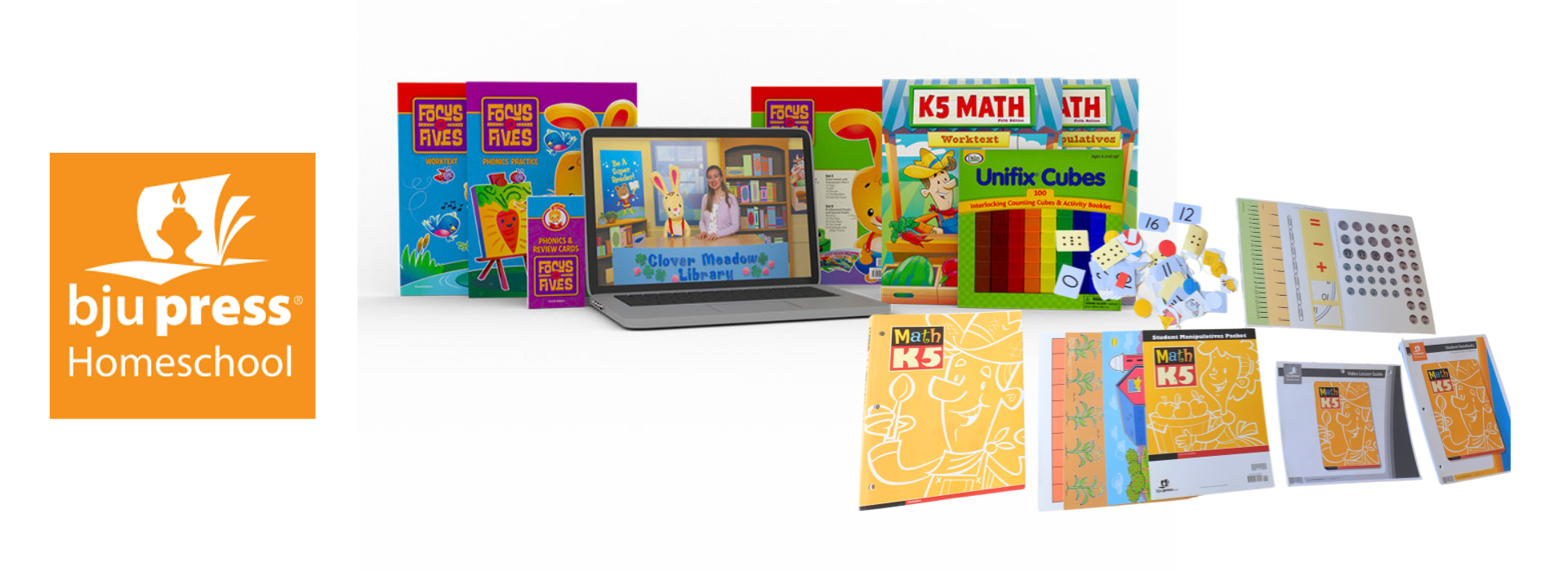
This is BJU’s open-and-go kindergarten curriculum. We’ve used it and love it!
And BJU is probably the best place to start and the clearest example of why that distinction matters, because one version can create a lot of work for Mum while another removes most of it. So what changes?
We use BJU Press, and there are two very different ways to do it.
With the parent-led books, your lessons are planned—but Mum still has to read the enormous Teacher Edition, decide what to use, teach it and mark the work.
The video courses are completely different. Mum can finally resign from her position as Entire Teaching Faculty.
The online teacher teaches the lesson and tells your child what to do. As children get older, they can become very independent.
That's why it works so well for us. I can work, look after a younger child or do housework while my older children are still receiving proper instruction.
I still check their work and help when needed. And I don't make them complete every repeated exercise if they've clearly mastered something.
The curriculum police haven't appeared yet.
And there’s actually a third option I really love: BJU’s newer Teacher Edition Companions. They give you each lesson at a glance, so you can do more offline learning with your kids without wading through those enormous Teacher Editions every day.
2. Christian Light Education — extremely low prep once your child can work independently
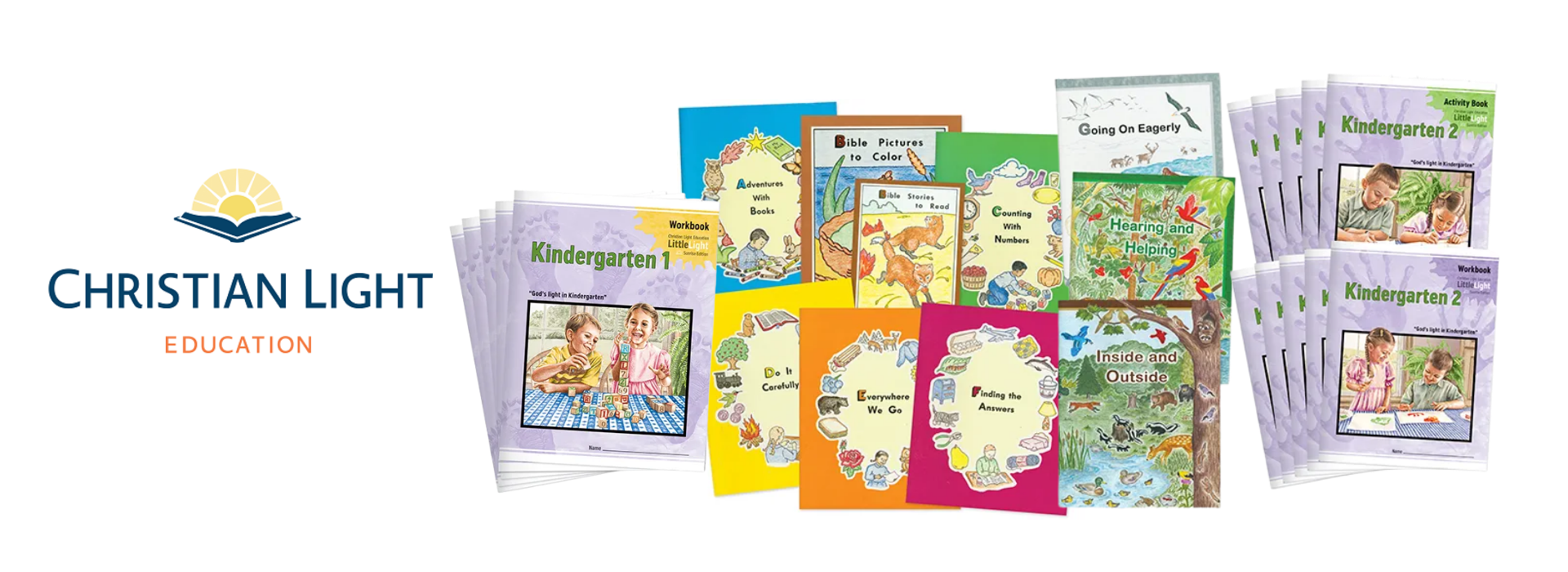
But you don’t need a video teacher to get that level of independence. What if you would rather hand your child a book and have them simply get on with it?
CLE gets very close to that.
Once children read confidently, the LightUnits are written directly to them. They open the workbook, read the lesson and complete the questions.
There's virtually no cutting or printing, and you don't need to gather a miniature homeschool warehouse first.
Mum still checks work, administers tests and helps when they're confused.
The trade-off is that CLE is quite workbook-heavy. Your workbook-loving child may think it’s perfect. Your hands-on child may be asking where the science experiment is before they’ve finished page one.
Spoiler alert: it’s not there.
So, CLE is one of the most genuinely open-and-go options here because confident readers can open a LightUnit, read the lesson and complete their work with very little printing, cutting or gathering from Mum.

3. Easy Peasy — low workload without the big curriculum bill
Now, CLE is affordable, but what if your budget needs to be even lower? Can a free curriculum genuinely save money without simply handing Mum a different kind of workload?
Easy Peasy is free, and once you've selected the courses, an older child can work through the scheduled online lessons fairly independently.
The catch is printing and internet navigation.
I’d print or purchase the worksheets in advance, unless you particularly enjoy being summoned to the printer every twelve minutes.
Younger children will also need more help navigating everything.
But once a child reads well and can use the computer independently, your daily workload can become very low.
Easy Peasy can also become very independent once your child reads and navigates the computer well, although you’re trading the cost of a boxed curriculum for some printing, internet navigation and parental checking.
Basically, Easy Peasy is free. However, your ink cartridge would like to dispute that claim.
And Master Books has almost the opposite problem. Instead of your printer demanding more from you, you may decide the curriculum isn’t demanding enough from your child.

4. Master Books — easy to use, but you may create work by adding more
Because so far, the hidden work has mostly come from delivering or organising the curriculum. But what happens when the curriculum itself feels so gentle that you start wondering whether you should add to it?
Master Books has the schedule, lessons and worksheets ready, and many courses become increasingly independent.
But its academic pace is deliberately gentle.
Some parents love that. Their children aren't doing unnecessary busywork and homeschool doesn't consume the entire day.
Others start worrying it's not enough.
Then they add another workbook. And another resource. And suddenly, their nice simple curriculum has three assistants and a filing cabinet.
Whether that happens depends on your child, the subject and your academic expectations.
Master Books has very low planning and daily preparation, but because its lessons are deliberately gentle, the hidden workload for some families is supplementation when Mum decides her child needs more.
5. Generations — independence without removing Mum from discipleship
But maybe the goal isn’t to remove yourself from your child’s education completely. What if you want enough independence to manage the rest of your home while still being able to step back in for the parts that matter most to you?
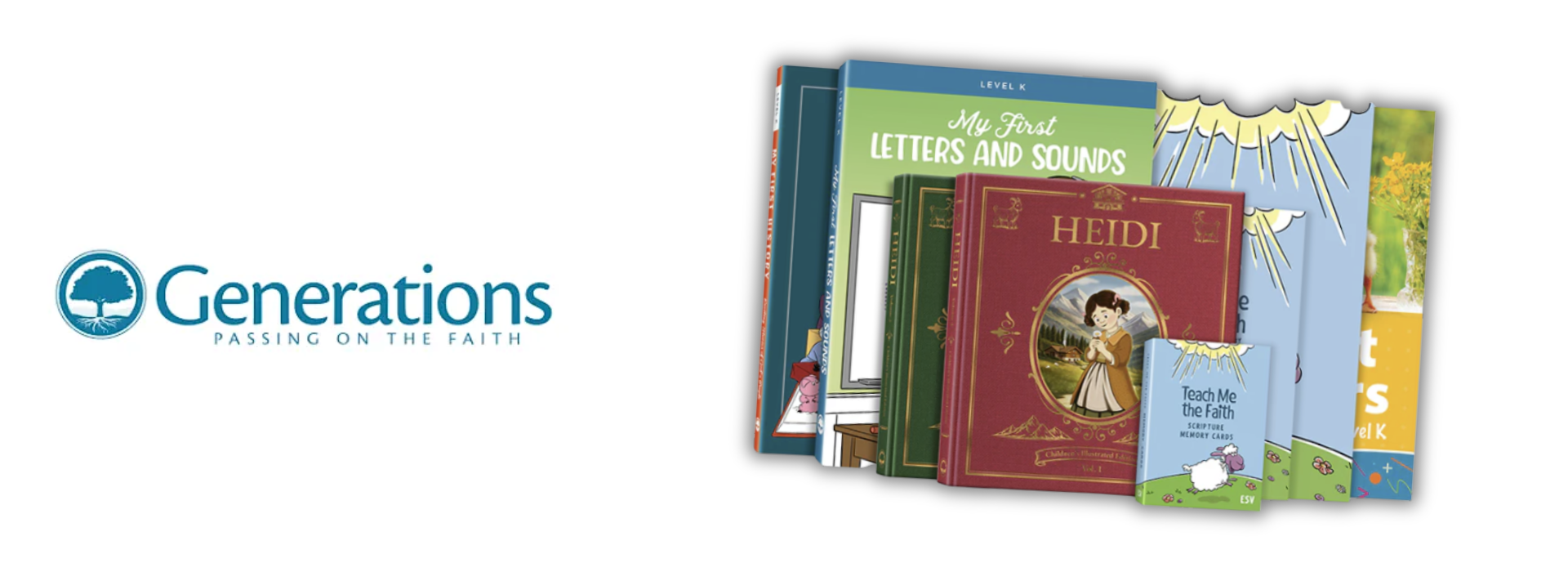
This is something I really like about Generations.
Many courses are written directly to older children, with inbuilt schedules and answer keys, and there’s very little cutting, printing or gathering—which is excellent news if your printer is already in therapy after the last curriculum.
But Generations also deliberately encourages Mum to come back in for conversations, biblical application and discipleship.
And I think that's a useful middle ground.
I don't necessarily want to personally deliver every page. But I do want to be involved where my involvement matters—especially when we're talking about Scripture and how my children understand the world.
Generations gives children plenty they can complete directly from their own books while still encouraging Mum to step back in for conversations, biblical application and discipleship instead of requiring her to deliver every lesson.

6. SchoolhouseTeachers — potentially very open-and-go, after you do the choosing
Now, Generations gives you a fairly defined path, but there’s another curriculum that I like that’s almost the opposite… SchoolhouseTeachers.
This program gives you many ways to use it. Can that flexibility actually make homeschool easier?
Well, it can—especially when you’re buying curriculum once for the whole family instead of taking out a small mortgage for each child—but the hidden workload comes first.
You have hundreds of courses, including student-led PDFs, videos and interactive options.
So you can deliberately build a very independent homeschool.
But first, Mum has to choose everything, organize the files, and decide what needs printing.
Now, don’t worry. If you want those decisions made for you, their School Boxes can reduce most of those decisions for you.
But, in reality, the preparation varies enormously with this program. I've looked at courses requiring almost nothing, and maths options where I realized I'd have to gather all the manipulatives myself.
If you're printing heavily, you'll also want a sturdy printer and an indefatigable ink cartridge.
SchoolhouseTeachers can give you highly independent video, PDF, and interactive courses, but its hidden workload is choosing, organizing, and sometimes printing everything before it starts feeling open-and-go.

7. The Good and the Beautiful — low prep, but not necessarily independent
And this brings us to another distinction that gets missed constantly: a curriculum can be very easy for Mum to teach without being something the child can do alone.
So where does The Good and the Beautiful fall?
The lessons are scripted, so planning is low, but younger children still need Mum beside them teaching, and some courses require printing, manipulatives, and activity supplies.
My bigger issue with this program as a Christian… is the worldview.
Although The Good and the Beautiful describes itself as Christian, I’d describe it as closer to a secular curriculum with moral teaching and references to “God”.
It was created by a member of the Church of Jesus Christ of Latter-day Saints, and while it doesn’t teach LDS doctrine, it also doesn’t introduce my children to the Jesus and gospel we find in Scripture.
And that’s why I don’t personally use it or recommend it.
The Good and the Beautiful makes daily teaching simple because the lessons are scripted, but younger children still need Mum beside them—and while it calls itself Christian, I wouldn’t use it as Christian curriculum because it doesn’t teach the biblical gospel or point children to the Jesus we find in Scripture.

8. My Father’s World — open the guide…and then gather the supplies
So let’s move on to the program that really made me question what people mean by open-and-go.
Because yes, you can open the guide and know exactly what to do next—but what had to happen before you opened it?
The daily lesson plan is completely written.
But the lesson might require a craft, recipe, science activity or hands-on project.
The supply list tells you what you'll need, but somebody still has to gather it.
(That’s you!)
So yes, it's open-and-go—provided you've already found the glue, printed the student sheets and located whatever mysterious household object today's activity requires.
You can skip projects, but if you skip all of them, you're also removing some of what makes the curriculum distinctive.
The big time-saving advantage is that many subjects are family-style, so you can teach several children at once instead of repeating the same lesson until Mum can recite it in her sleep.
My Father’s World is open-and-go in the sense that the daily plan is already written, but the crafts, projects and hands-on activities mean there can still be considerable preparation before you actually teach it.
9. Simply Charlotte Mason — low planning does not mean low involvement
Now, My Father’s World actually borrows quite a few ideas from Charlotte Mason, with living books, narration and family-style learning.
But what happens when you go with a curriculum that follows the Charlotte Mason approach much more fully? Does having the lessons planned actually mean less work for Mum?
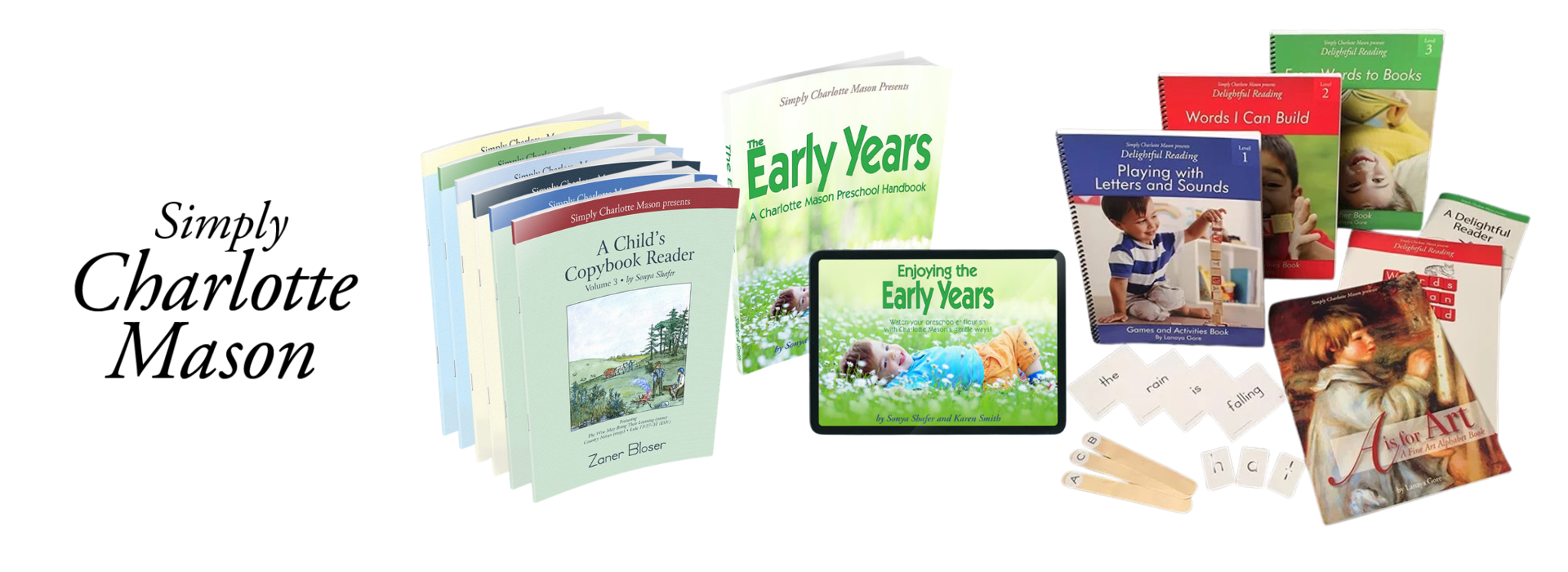
Simply Charlotte Mason gives you schedules and lets you combine children for family-style subjects, which can save a lot of duplicated teaching.
There is relatively little cutting and printing.
But Mum is still reading aloud, listening to narrations, supervising copywork, teaching skill subjects and doing nature study.
For some families, that's exactly the homeschool they want.
But if what you need is three hours where your older child works independently while you stop the toddler dismantling the house, this isn't the same kind of open-and-go as CLE or BJU video.
Simply Charlotte Mason removes a lot of lesson planning and lets you teach several children together, but Mum is still doing much of the reading, narrations, teaching and nature study, so the daily parent involvement stays high.

10. Memoria Press — the education is planned, but Mum still delivers it
Now, compared to Simply Charlotte Mason, Memoria Press takes even more of the planning off your plate because the whole academic path is laid out for you in high detail. But does that make it hands-off?
Not really.
If you buy the complete package, the books and sequence have been chosen for you, and there's relatively little gathering.
But Mum still teaches lessons, leads recitation, listens to answers and marks workbook pages and tests.
And if you're teaching something unfamiliar like Latin, congratulations—you may discover that Memoria Press is homeschooling you as well as your child.
Older children can become more independent, but the standard curriculum still assumes an active teacher.
Memoria Press does almost all of the curriculum planning for you and requires very little gathering, but its traditional classical approach still leaves Mum with a moderate-to-high teaching and grading workload.
So which curricula genuinely require the least from Mum? ⏱️
Once you separate planning from teaching, printing, gathering and supervision, the pattern becomes much clearer. If your main goal really is to remove as much daily work from Mum as possible, which options rise to the top?
For maximum independence, my top two are BJU Press video lessons and CLE.
BJU actually outsources much of the teaching. CLE lets confident readers work directly from their books.
Easy Peasy comes close behind once your child can navigate the online lessons and you've organised the printing.
My Father's World, Simply Charlotte Mason and Memoria Press solve a different problem.
They remove substantial planning, but Mum remains actively involved.
And that's not bad. It's simply important to know what you're buying.
So the curriculum might be open-and-go. The real question is whether Mum gets to go anywhere—or whether she’s still at the kitchen table marking Latin.
But “least work” isn’t automatically the right goal
And this is where I don’t want you to walk away thinking the winner is simply whichever curriculum lets Mum disappear from the school day. What kind of work are you actually trying to remove?
If you’ve got younger children, you work from home or you’re in a particularly demanding season, you may desperately need a curriculum that encourages independent work.
Another mum may actively want read-alouds, crafts and family lessons.
And, don’t forget, children are different too.
One child loves predictable independent work. Another wants interaction, colour and hands-on learning.
So don't ask how to remove all the work.
Ask which work you don't want—and which work is actually part of why you homeschool.
So, you don’t need a curriculum that makes Mum redundant. You just need one that doesn’t list her as a required material for every single lesson.
And biblical worldview changes the decision too
And of course, the workload still isn’t the only thing I’m considering here, because a curriculum can be wonderfully convenient and still not be the right choice for your family.
If it saves me three hours a day but doesn’t point my children towards Jesus, is it actually doing what I need it to do?
For me…I'm increasingly focusing on curricula that can support a genuinely Christ-centred homeschool.
And “Christian” can mean very different things between publishers.
Some integrate Scripture deeply. Others broadly talk about “God” or morals. And some come from theological traditions you'll want to examine for yourself.
For our family, references to God or good character aren't the same thing as teaching children who Jesus is and continually pointing them towards the gospel.
So look at worldview alongside workload.
Convenience is useful. But it isn't our ultimate goal.
I’m focusing on curricula that can support a Christ-centred homeschool because, for our family, the goal isn’t merely finding the easiest way to finish schoolwork, but choosing resources that help point our children towards Jesus.
My own choice
So after looking at all these different kinds of workload, where have I personally landed? Which compromise actually works in my real home?
For us, it's BJU Press with the video lessons.
I can work, look after younger children and run our home while my older children are still receiving proper instruction.
I'm not completely removed.
I check their work, help when they're stuck and cut repetition when they've clearly mastered something.
But it removes the workload I most need removed: personally delivering every lesson to every child.
And that’s the point. I’m not choosing BJU because it’s universally the easiest curriculum. No matter what you choose, you’re going to tweak something. We certainly do.
(Read enough of my posts and you’ll see I treat curriculum instructions more like… enthusiastic suggestions.)
But I choose BJU because it makes our particular homeschool sustainable.
I use BJU Press because the video lessons let me work, look after younger children and run our home while my older children still receive proper instruction, and that balance is what genuinely lightens my load.
The real winner is the curriculum whose workload matches your family ✅
So before you buy, ask: what work do I actually need this curriculum to remove?
Planning? Teaching? Grading? Printing? Or needing Mum there for every lesson?
And does it actually suit your child, your convictions and the time you have?
To make that easier, I’ve made you a completely free printable PDF with all these questions in one place. You can put it beside the curricula you’re considering and work out what each one will actually require from you before you spend the money and discover the answer the expensive way.
Because the best open-and-go curriculum isn’t the one that needs the least Mum. It’s the one that needs Mum for the things she actually wants to be there for.
Does your child’s learning style matter?
So finding the right curriculum isn’t just about how much work it creates for Mum — it also has to work for the child you’re actually teaching.
But does that mean you need to work out whether they’re visual, auditory or kinesthetic before you’re allowed to buy maths?
In my blog on learning styles, I explain how much they actually matter — and what you should be looking at instead.